.png "H96 Max Android TV Box video reviews and tutorials on YouTube")
.png "H96 Max Android TV Box photos and lifestyle shots on Instagram")



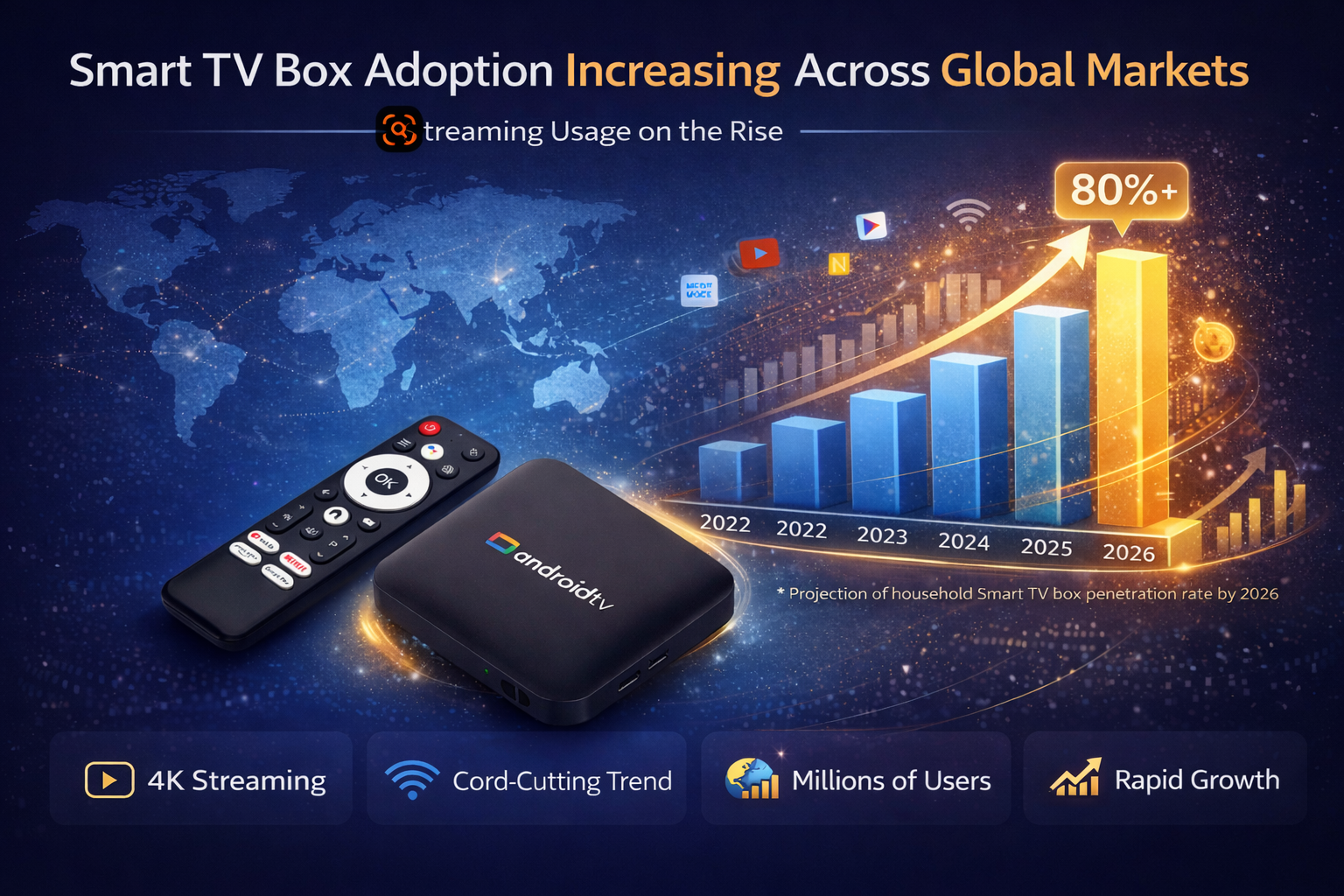
2026 Global TV Box Market Demand: Which Countries Are Still Growing?
The Global TV Box Market Demand is evolving rapidly as we approach 2026, influenced by significant technological advancements, changing consumer habits, and the relentless rise of streaming services. The need for advanced TV box solutions is stronger than ever as users demand seamless content delivery and integration with smart devices. According to Statista, the global TV box sector is forecasted to experience healthy growth, especially in regions adapting quickly to digital content consumption. This article dissects the main drivers behind market expansion, compares the pace of growth across countries, and unpacks pain points and future trends, focusing on insights backed by industry experts and authoritative media.
Key Drivers of Global TV Box Market Demand
The rising popularity of over-the-top (OTT) streaming, increasing broadband penetration, and consumers’ shifting preference away from traditional cable are core forces driving Global TV Box Market Demand. Many users now favor flexible streaming over rigid cable packages. According to Digital TV Research, nearly 1.2 billion connected TV boxes are expected to be in use globally by 2026, with the Android TV box market, IPTV box market, and OTT TV box market contributing significantly. Customers also expect smart functionality, app ecosystems, and AI-powered features, fueling demand for devices such as Android TV boxes and Smart TV boxes.
In a 2025 survey by the Consumer Technology Association, over 50% of buyers rated support for diverse streaming platforms as their top purchasing reason, closely followed by device longevity and regular updates. The Smart TV box market is further stimulated by integrated voice controls and compatibility with smart home devices. Countries investing heavily in fiber and 5G infrastructure, such as South Korea and Germany, are seeing the fastest adoption rates for premium TV box solutions.
Which Countries Are Still Experiencing Growth?
While North America and Western Europe show signs of maturing demand, there are notable hotspots of ongoing growth. In the United States, rural and semi-urban areas continue to adopt TV boxes at an accelerating pace, supported by new broadband initiatives. According to Pew Research Center, rural adoption rates climbed 14% year-on-year. In Germany and the UK, the IPTV box market leads, thanks to aggressive fiber rollouts and bundled offers from telecom operators. In Eastern Europe, affordability and open-source TV box platforms are helping younger demographics shift away from cable, fueling sales in Poland, Romania, and Hungary.
Asia-Pacific represents the epicenter of TV box expansion. India, Indonesia, and Vietnam are posting double-digit annual growth, a trend confirmed by Bloomberg. Rapid internet penetration and an emerging middle class drive demand, especially for Android TV boxes. Meanwhile, China’s influence as an Android TV box manufacturer in China remains unrivaled, as global buyers increasingly seek reliable partners. CNNIC data reports over 350 million Chinese households now using TV boxes to access streaming and local content, underscoring both local and export market power.
In Latin America and Africa, affordable OTT and Android TV box options are helping millions of new users access digital content. Deloitte’s analysis of TV box demand in emerging markets finds local content partnerships and cheaper internet as decisive factors. Brazil and Mexico benefit from government-backed connectivity projects, while Nigeria, South Africa, and Kenya show the highest new user adoption in Africa.
Customer Pain Points and Market Barriers
Despite impressive demand, several pain points remain for the Global TV Box Market Demand. Key complaints include complicated setup processes, software update issues, and limited after-sales support, particularly for imported models. Consumer Reports notes that frustration is highest in markets where device compatibility with local streaming apps is inconsistent. In emerging markets, high upfront costs and unreliable service further challenge adoption.
Security and privacy are increasing concerns, with TechCrunch highlighting growing regulatory pressures and data privacy expectations. GDPR in Europe and similar regulations elsewhere mean buyers now demand clear privacy guarantees. Brands addressing these pain points—offering secure, regularly updated, and user-friendly TV box options—are gaining an edge, especially among enterprise and commercial customers.
Media and Authority Insights
Authoritative sources like Reuters and Bloomberg reinforce the role of the Android TV box market and OTT TV box market as pillars of global digital transformation. Statista’s 2026 report on TV box market trends 2026 points to the rising impact of AI, integrated content recommendations, and environmental sustainability as leading innovation drivers. IDC finds direct correlation between fiber broadband and Smart TV box market demand in Western Europe. Middle Eastern nations are also witnessing a surge in OTT TV box sales, tied closely to exclusive content launches and new local streaming services.
In China, TV box manufacturers are adding smart home integration, voice control, and gaming support to differentiate their export models. This makes “Android TV box manufacturer in China” a top query for importers and brands worldwide. Deloitte’s future outlook for TV box demand in emerging markets emphasizes ongoing government and private sector investment in local content ecosystems as a vital growth factor.
2026 and Beyond: Growth Prospects and Future Trends
Looking to 2026 and beyond, the Global TV Box Market Demand will remain dynamic. Developed markets will focus on value-added experiences, integration with other smart home devices, and enhanced software ecosystems, while price sensitivity and internet penetration will drive growth in emerging regions. Experts from Digital TV Research project a compound annual growth rate of 7-9% globally, with Asia-Pacific and Africa likely to see the highest upticks.
AI features, such as predictive content discovery and hands-free operation, are set to become standard across both the OTT TV box market and Smart TV box market. Manufacturers in China will continue to dominate production, while partnerships between local telecom operators and global content providers will remain central in developing markets. As environmental concerns rise, companies are already investing in sustainable, energy-efficient hardware—setting a new bar for the industry.
In summary, a regionally nuanced, data-driven strategy—grounded in real customer pain points and backed by trusted industry data—will be essential to winning in the evolving Global TV Box Market Demand landscape through 2026.
READ MORE
Android TV Box Market vs Smart TV Market: Competition Landscape Analysis 2026
2026 OTT Device Market Outlook: Will Android TV Box Be Obsolete?
Can the Android TV Box Market Still Thrive in 2026? Real Market Data and Profit Analysis
2026 Overseas Android TV Box Market Trends: A Comprehensive Risk and Opportunity Review
Will Fire TV and Roku Push Android TV Box Out of the Low-End Market?
Android TV Box Content Partnership: Global Expansion Opportunity?
White Label Android TV Box vs Private Mold Customization: Which Is Better for Overseas Clients?
Is Android TV Box Manufacturing Still Profitable in 2026 or Is the Real Value in Solutions?
Quick Links

.png "Watch H96 Max Android TV Box reviews on our YouTube channel")

.png "Explore H96 Max product photos on Instagram")