.png "H96 Max Android TV Box video reviews and tutorials on YouTube")
.png "H96 Max Android TV Box photos and lifestyle shots on Instagram")



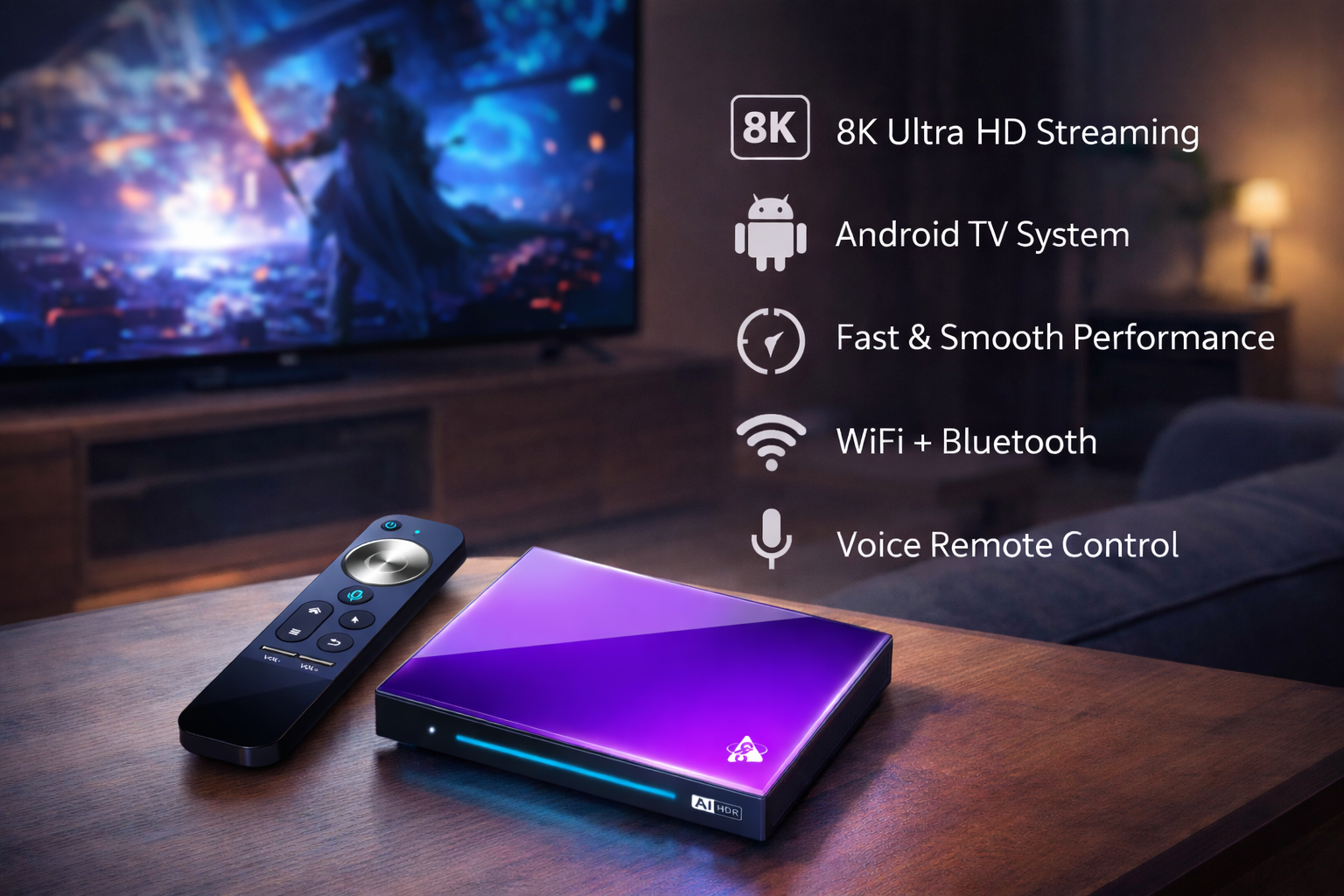
The Real Value of 8K Android TV Box Label for Overseas Users
Introduction: The Rise of 8K and Its Global Significance
In the current landscape of smart home entertainment, the 8K Android TV Box is frequently highlighted as a technological benchmark for media streaming devices. With television manufacturers and streaming platforms promoting 8K as the next evolution in visual experience, global consumers are increasingly exposed to products boasting 8K compatibility. However, beyond the impressive numbers, does the "8K" label genuinely matter for overseas users? This article will dissect the practical significance of the 8K Android TV Box, exploring whether it is worth the investment, what technological barriers remain, and how the reality compares to the promise.
Understanding the 8K Android TV Box Label
The core function of an 8K Android TV Box is to process and output video at an ultra-high resolution of 7680 × 4320 pixels, which is four times the pixel count of 4K. Such technical prowess promises crystal-clear image quality, high detail, and immersive large-screen experiences. Yet, the actual viewing benefits depend on multiple factors: native 8K content, display compatibility, and the user's viewing environment.
For overseas users, device labels like "8K Android TV Box" signal support for the latest media formats and codecs, including AV1 and HEVC, and the potential for future-proofing against rapid technological change. But, is the label a true differentiator, or merely a marketing term in regions where 8K content and hardware penetration remain limited?
Is 8K TV Box Worth It? Practical Benefits vs. Marketing
The fundamental question for any buyer is: Is 8K TV box worth it? For most overseas users in 2026, the answer hinges on the interplay between content availability, hardware readiness, and streaming infrastructure.
Content Availability: Despite the growing number of 8K-capable devices, native 8K content remains scarce worldwide. Leading platforms like YouTube and some premium streaming services offer a handful of 8K videos, but the majority of movies and series are produced in 4K or even lower resolutions. Unless you are specifically seeking demo content or niche sports broadcasts, the benefit of owning an 8K Android TV Box is not yet fully realized.
Hardware Compatibility: To experience true 8K, users require not only an 8K streaming device but also an 8K TV or monitor. As of 2026, global 8K display adoption is growing slowly due to high costs and marginal real-world improvement over 4K on most screen sizes. For average living room setups, especially in regions outside East Asia and North America, 8K TVs are still considered premium.
Streaming Infrastructure: High-resolution streaming demands robust internet connections. For a seamless 8K streaming experience, internet bandwidth upwards of 50 Mbps is often recommended. Many overseas regions, especially developing markets, still face bandwidth limitations, making 8K streaming device usage more aspirational than practical.
Technical Realities: Android TV Box 8K Resolution and Beyond
The “8K” capability of an Android TV box 8K resolution is more than just a hardware specification—it also depends on decoding capability, storage, thermal management, and software optimization. Modern chipsets support 8K decoding, but sustained performance and compatibility with advanced codecs like AV1 require high-end processing power.
Storage and buffering are further bottlenecks. Streaming or playing native 8K content—especially uncompressed or lossless media—places heavy demands on storage speed and capacity. 8K media player Android devices must support high-speed external storage solutions to keep up with such data loads.
Software also plays a crucial role. Not all Android TV apps or media players are optimized for 8K playback, and firmware updates often lag behind rapid hardware advancements. For international users, language support, app localization, and region-specific DRM can also affect the real-world experience of using an 8K Android TV Box.
Global Market Perspective: Does 8K Really Matter for Android TV Box?
The global adoption rate of 8K streaming devices is influenced by economic, cultural, and infrastructural differences. Does 8K really matter for Android TV box users outside of high-income markets? For tech enthusiasts and early adopters, 8K capability is a statement of readiness for future content. For the mainstream user, however, price-to-performance ratio and compatibility with 4K and HDR content may outweigh the appeal of “future-proof” specs.
In regions where 4K is still maturing or where internet speeds remain modest, the utility of an 8K Android TV Box is limited. The global value of the 8K label will grow as more native content becomes available, display prices decrease, and broadband infrastructure improves.
8K TV Box for Streaming: Real-World Scenarios
8K TV box for streaming offers several potential use cases: live sports, high-end home cinema, and public display applications. In professional AV setups, 8K resolution can provide stunning detail for large screens. For home users, the difference between 4K and 8K is only perceptible at very close viewing distances or on extremely large TVs.
Advanced Android TV boxes also bring support for next-generation audio codecs, AI-based upscaling, and improved HDMI standards, all of which enhance the user experience even if 8K content is not widely available. Upscaling lower-resolution content to 8K can produce crisper visuals, but the improvement may be subtle for everyday use.
Is 8K Streaming Worth It in 2026?
Is 8K streaming worth it in 2026? For the majority of overseas users, investing in 8K today is primarily about preparing for the future rather than immediate benefits. If your content consumption is mostly limited to 4K streaming services or local media, a high-end 4K Android TV box remains a more practical choice. However, as 8K cameras, production, and distribution become more mainstream, early adopters will benefit from devices that support 8K natively.
The value of the 8K Android TV Box label will increase as content libraries expand and infrastructure matures. For professional users or those with access to the fastest internet connections and the latest 8K displays, the investment is justified. For everyone else, the upgrade path should be evaluated carefully based on actual use cases.
Conclusion: Should Overseas Users Prioritize 8K Android TV Box?
In conclusion, the 8K Android TV Box label serves as both a technological milestone and a marketing differentiator. For overseas users, its practical value in 2026 is still emerging. While the promise of ultra-high-definition streaming is appealing, current content availability, hardware costs, and bandwidth constraints mean that the 8K label is most relevant to forward-looking users and professionals.
For the general overseas market, investing in an 8K Android TV Box makes sense if you are future-oriented, already own 8K-capable hardware, or demand the very best in AV performance. For mainstream users, focusing on high-quality 4K streaming devices may be more cost-effective and practical—at least until the global 8K ecosystem catches up with the marketing claims.
READ MORE
Why Are “Stable + Simple” Android TV Boxes Preferred in the Market?
IPTV Users vs OTT Users: Completely Different Logics in Choosing TV Boxes
Gaming-Optimized Android TV Box: Real Demand or Market Hype?
Is Voice Remote Truly Boosting Conversion, or Just “High-Tech Looking”?
European Clients Move to 'Streaming Box + Legal Content': Industry Signals and Market Value
How Many Years Can Low Cost Android TV Box Remain Competitive in Africa?
Why the Middle East Market Continues to Prefer High Configuration Android TV Boxes
Deep Dive: Real Android TV Box Demand Trends in Mexico, Brazil, and Chile
Is North America’s Android TV Box Market Really Saturated? Entry Points & Analysis
Quick Links

.png "Watch H96 Max Android TV Box reviews on our YouTube channel")

.png "Explore H96 Max product photos on Instagram")