
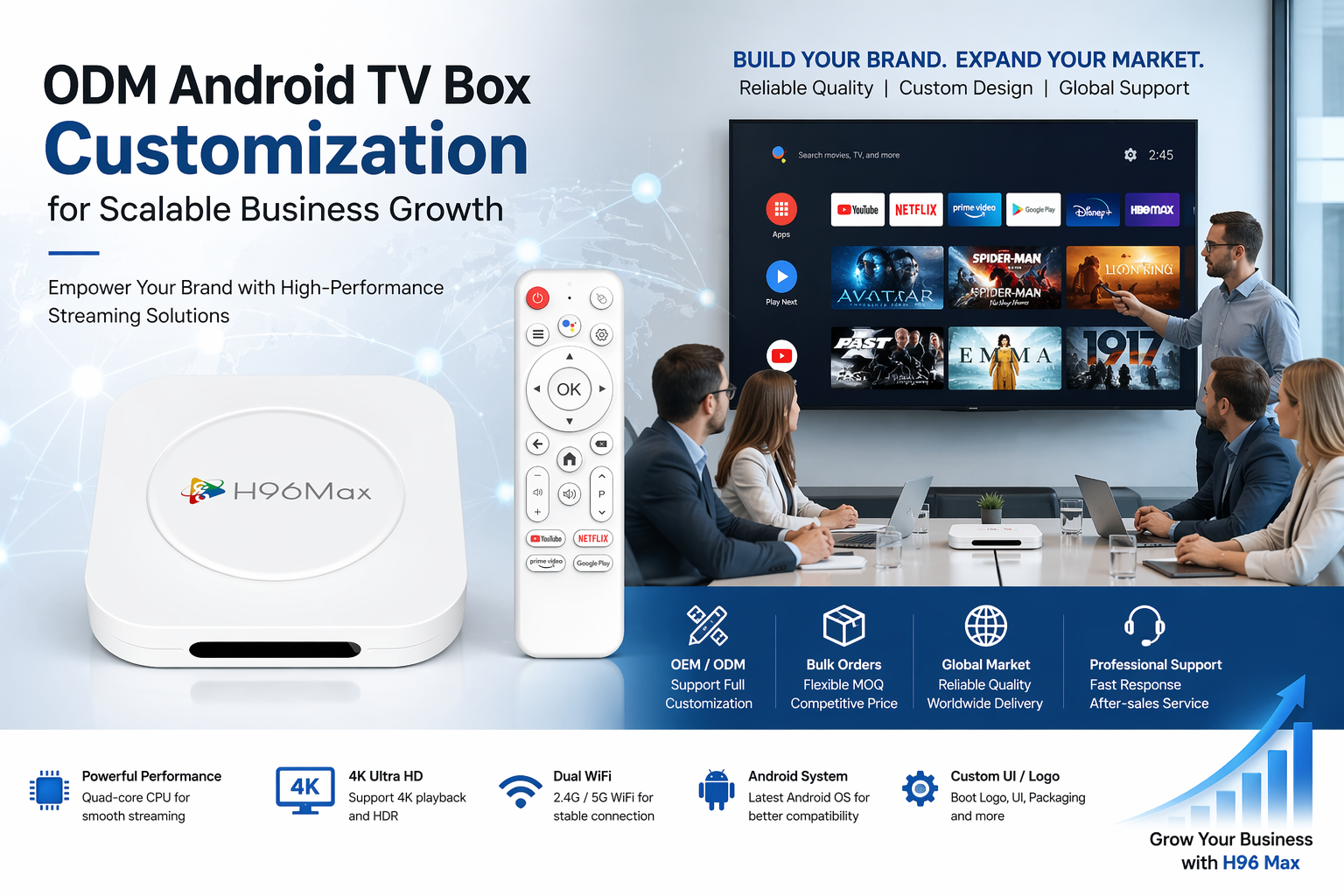
A Strategic Guide to OEM and ODM Models in Android TV Box Manufacturing
Choosing between OEM and ODM when working with an Android TV Box Factory is a critical decision that directly impacts profit margins, brand control, and long-term scalability. As the global demand for streaming devices continues to grow, businesses are increasingly looking for flexible manufacturing models that align with their strategic goals. However, many buyers misunderstand the fundamental differences between OEM and ODM, leading to suboptimal decisions that limit growth potential or increase operational risk.
According to industry insights from Deloitte and McKinsey, companies that select the right manufacturing model based on their business stage and resources are more likely to achieve sustainable growth and higher profitability. Understanding how to choose Android TV Box factory partnerships based on OEM or ODM structures requires a clear evaluation of cost, customization capability, intellectual property control, and time-to-market considerations.
Understanding OEM and ODM Models
OEM, or Original Equipment Manufacturer, refers to a model where the buyer provides product specifications, branding, and design requirements, while the Android TV Box manufacturer handles production. This approach offers maximum customization and control over the final product.
ODM, or Original Design Manufacturer, involves the factory providing pre-designed products that buyers can rebrand with minimal modifications. This model reduces development time and cost but limits customization options. Both models are widely used in the Android TV Box industry, and each has distinct advantages depending on business objectives.
Profit Potential: OEM vs ODM
Profitability is one of the most important factors when choosing between OEM and ODM. OEM typically requires higher upfront investment in product development, including design, engineering, and testing. However, it allows businesses to create unique products with higher perceived value, enabling premium pricing and stronger margins.
ODM, on the other hand, offers lower initial costs and faster market entry. Buyers can leverage existing designs from a custom Android TV Box factory, reducing development expenses. However, because ODM products are often similar across multiple brands, price competition can be intense, limiting profit margins.
Control Over Product and Brand
Control is another key differentiator. Working with an Android TV Box OEM supplier gives buyers full control over product specifications, user interface, and branding. This level of control is essential for companies aiming to build a strong brand identity and differentiate their products in the market.
In contrast, ODM limits control because the core product design is owned by the factory. While branding can be customized, fundamental features and design elements remain largely unchanged. For businesses prioritizing speed over uniqueness, this trade-off may be acceptable.
Time-to-Market Considerations
Speed is a critical factor in competitive markets. ODM offers a significant advantage in time-to-market, as products are already developed and tested. Buyers can launch products quickly by working with an IPTV box manufacturer that provides ready-made solutions.
OEM requires longer development cycles due to customization and testing processes. However, the resulting product is tailored to specific market needs, which can lead to stronger long-term performance despite the initial delay.
Cost Structure and Investment
The cost structure of OEM and ODM differs significantly. OEM involves higher upfront costs for design, prototyping, and engineering. These costs are justified by the ability to create differentiated products with higher margins.
ODM reduces upfront investment by leveraging existing designs from a TV box wholesale supplier. However, lower development costs often come with reduced pricing power and increased competition. Harvard Business Review emphasizes that total cost of ownership, including long-term profitability, should guide decision-making rather than initial cost alone.
Risk Management and Flexibility
Risk management is another important consideration. OEM projects carry higher risk due to development complexity and longer timelines. Delays in design or testing can impact launch schedules and increase costs.
ODM reduces these risks by offering proven designs with established performance. However, reliance on standardized products can limit flexibility and responsiveness to market changes. A balanced approach may involve starting with ODM and transitioning to OEM as the business grows.
Supply Chain and Production Efficiency
A reliable Android TV Box Factory plays a crucial role in both OEM and ODM models. Strong supply chain management ensures consistent component availability and stable production timelines.
PwC reports that companies with resilient supply chains are more likely to achieve on-time delivery and cost efficiency. Whether choosing OEM or ODM, buyers should evaluate the factory’s sourcing strategy, production capacity, and quality control systems.
Real-World Scenario Comparison
Consider a startup entering the IPTV market with limited resources. ODM allows rapid entry with minimal investment, enabling the company to test market demand. As sales grow, transitioning to OEM can provide greater differentiation and higher margins.
In contrast, an established brand with strong distribution channels may benefit from OEM from the outset, leveraging customization to strengthen brand identity and command premium pricing.
Decision Framework for Buyers
When deciding between OEM and ODM, buyers should evaluate factors such as budget, timeline, customization requirements, and long-term strategy. A structured decision framework helps align the manufacturing model with business goals.
For those learning how to choose Android TV Box factory partnerships, it is essential to balance short-term efficiency with long-term value creation. The right model depends on the stage of the business and its competitive positioning.
Conclusion: Choosing the Right Path for Growth
Selecting between OEM and ODM is not just a manufacturing decision but a strategic choice that shapes product differentiation, profitability, and market positioning. By understanding the strengths and limitations of each model, businesses can make informed decisions that support sustainable growth.
H96 Max, as a professional Android TV Box Factory, offers both OEM and ODM solutions with advanced technology, strong engineering support, and strict quality control. Whether you prioritize speed or customization, we provide flexible options to meet your business needs. Partner with H96 Max today to maximize profit and build a competitive advantage.
READ MORE
How to Build Your Own Brand with an Android TV Box Factory (Private Label Strategy)
Android TV Box Factory Lead Time Explained (How to Avoid Delays and Lost Sales)
Android TV Box Factory Certification Guide (CE, FCC, RoHS for Global Importers)
How Android TV Box Factories Control Quality (Avoid Defects Before Bulk Order)
How to Negotiate Android TV Box Factory MOQ (Reduce Cost Without Losing Quality)
Why Android TV Box Factory Prices Differ So Much (Hidden Costs Buyers Must Know)
10 Must-Check Factors Before Choosing an Android TV Box Factory (Avoid Bad Suppliers)
Android TV Box Factory vs Trading Company: Which Saves You More Cost and Risk?
How to Choose a Reliable Android TV Box Factory (2026 Guide to Avoid Costly Mistakes)
Quick Links

.png "Watch H96 Max Android TV Box reviews on our YouTube channel")

.png "Explore H96 Max product photos on Instagram")