.png "H96 Max Android TV Box video reviews and tutorials on YouTube")
.png "H96 Max Android TV Box photos and lifestyle shots on Instagram")



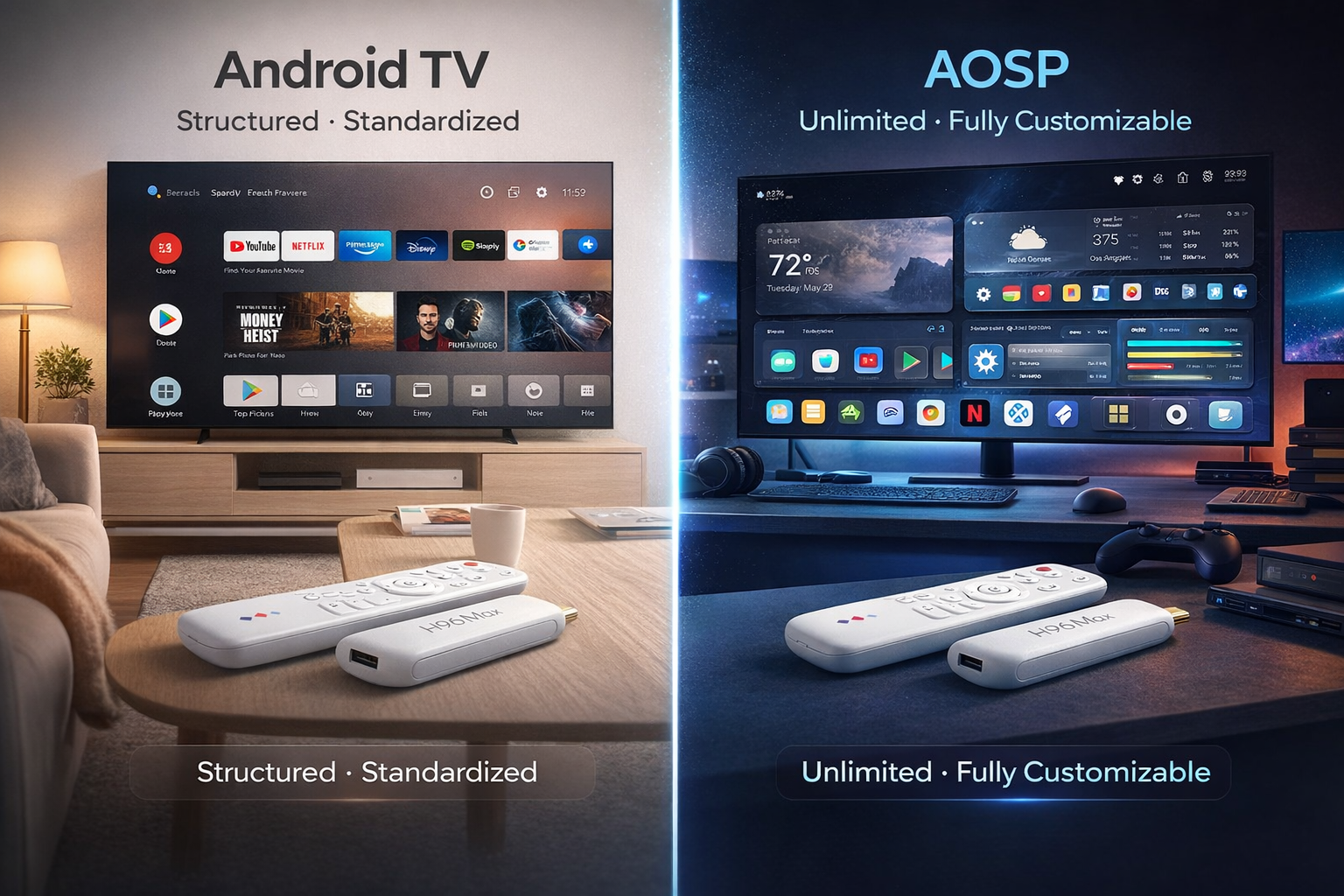
Which System Wins for Home Cinema? Android TV vs AOSP Differences Explained
For anyone building a modern home cinema, understanding Android TV vs AOSP Differences is essential. Whether you’re a tech-savvy enthusiast or a casual movie lover, knowing how these two smart TV platforms compare will help you invest wisely. Both systems power various Android TV Box models, but their user experiences, compatibility, and long-term value are quite distinct.
Understanding Android TV: A Curated Streaming Experience
Android TV is Google’s official smart TV operating system. It’s designed to deliver a seamless experience, with a curated interface, certified apps, and deep integration with Google Assistant. If you want a plug-and-play Android TV Box that works perfectly out of the box, Android TV is likely the answer.
Certified Apps & Security: Official Android TV Boxes support Netflix, Prime Video, Disney+, and more, all in high definition with regular security updates.
Google Services: Built-in Google Assistant, Play Store access, and Chromecast make it easy to search, install, and cast your favorite content.
Home Integration: Supports smart home devices, making it a strong centerpiece for a connected living room.
AOSP: Open-Source Power and Flexibility
AOSP, or Android Open Source Project, forms the foundation for Android TV but is much more flexible. Many generic Android TV Boxes run on AOSP, offering custom firmware and broader app sideloading options. However, this flexibility can lead to mixed results.
App Variety: AOSP boxes can install almost any Android app, not just those designed for TVs. But some streaming apps may not support HD or run as smoothly.
Customization: Tech enthusiasts can tweak the interface, automate routines, and even root the device for advanced controls.
Lack of Certification: Many AOSP-based Android TV Boxes do not pass Google’s certification, limiting access to certain apps and updates.
Key Differences: User Interface, Apps, and Updates
The biggest Android TV vs AOSP Differences come down to everyday experience. Android TV provides a consistent, user-friendly layout. The navigation is optimized for remotes, with rows for recommendations, trending movies, and favorite apps. AOSP, by contrast, often has a tablet-like interface, less polished for big screens, and inconsistent updates from the manufacturer.
UI Consistency: Android TV Boxes with Google certification offer smoother, more predictable navigation than most AOSP alternatives.
App Support: With Android TV, you get official support for major streaming platforms. AOSP is better for those wanting to experiment with niche apps or advanced customizations.
Update Frequency: Google regularly updates Android TV, while AOSP boxes may lag behind or require manual firmware flashing.
Smart Home and Voice Control Integration
With smart homes on the rise, integrating your TV system is a priority. Android TV Boxes excel here: you get Google Assistant voice control, home automation features, and compatibility with devices like Nest and Philips Hue. AOSP boxes may support Google Assistant, but often lack full-featured voice control or easy setup.
Gaming, Performance, and Hardware Options
Both Android TV and AOSP boxes can be powerful gaming hubs. Certified Android TV Boxes tend to offer smoother game streaming via Stadia or GeForce NOW and support Bluetooth controllers out of the box. AOSP boxes might allow broader emulator use or tweaks for retro gaming but may struggle with app optimization.
App Compatibility: What Works Best for Streaming?
For movie and TV fans, streaming quality matters. Official Android TV Boxes support all major platforms in high resolution—Netflix, Disney+, YouTube, and more. AOSP boxes often can install these apps but might miss out on 4K support, Dolby Audio, or DRM-protected streams.
Value for Money: Which Should You Buy?
When considering cost, AOSP Android TV Boxes are often cheaper up front and appeal to those who love to tinker. However, Android TV’s stability, security, and streaming quality make it worth the premium for most home cinema fans. If you just want everything to work right, Android TV is the safer bet.
Future-Proofing Your Home Cinema
With smart TVs evolving rapidly, choosing a system that will stay updated and compatible with new services is key. Android TV offers strong long-term value with consistent updates and broad industry support. AOSP is great for short-term experimentation but may fall behind on future features and compatibility.
Choosing the Right Android TV Box for Your Needs
Summing up the Android TV vs AOSP Differences: Android TV delivers reliability, official app support, and a streamlined experience—ideal for most home cinemas. AOSP gives techies more flexibility and lower initial cost, but at the risk of inconsistent updates and potential streaming issues. Weigh your needs: do you value plug-and-play performance, or are you ready to tinker?
READ MORE
Quick Links

.png "Watch H96 Max Android TV Box reviews on our YouTube channel")

.png "Explore H96 Max product photos on Instagram")