.png "H96 Max Android TV Box video reviews and tutorials on YouTube")
.png "H96 Max Android TV Box photos and lifestyle shots on Instagram")



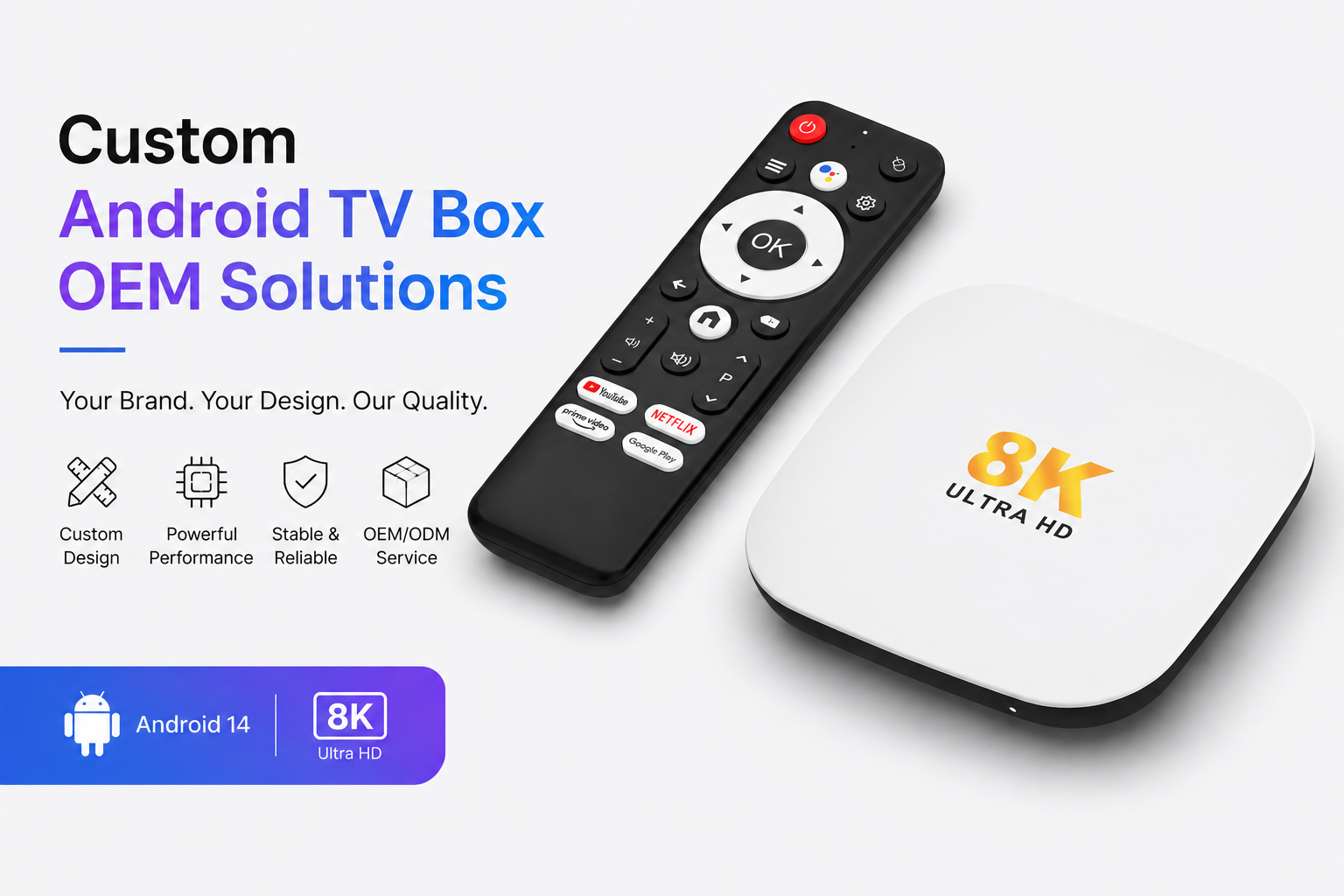
From Chipset to Certification: The Technical Questions Buyers Should Ask
An OTT TV Box Manufacturer should be evaluated through technical questions that connect directly to business outcomes. Buyers often ask for the newest chipset, the highest memory, or the lowest price, but a profitable product line depends on a more precise conversation. The chipset affects decoding, app compatibility, thermal behavior, and software support. Memory affects multitasking and perceived speed. Wi-Fi affects support tickets. Power adapters affect safety and regional readiness. Certification awareness affects market access. None of these decisions should be made as isolated specifications.
Begin with the user environment, not the spec sheet
The best configuration depends on where and how the device will be used. A retail box for price-sensitive households does not need the same bill of materials as an operator box that must run a controlled launcher and receive updates. A hotel deployment may need simple setup, strong Wi-Fi, and locked settings. A private-label product may need a premium remote, clean packaging, and a stable UI. A professional OTT TV Box Manufacturer should ask these questions before recommending hardware.
Buyers should describe the network conditions, app list, expected resolution, language needs, storage behavior, accessory requirements, and after-sales model. If the factory recommends the same model for every scenario, the recommendation may be driven by inventory rather than engineering fit. A capable OTT Android Box Manufacturer can explain why a certain chipset, RAM level, Wi-Fi solution, or Bluetooth remote is appropriate for a specific market.
The market rewards good technical decisions. Grand View Research reported that the global over-the-top devices and services market was worth USD 298.84 billion in 2024 and forecast strong growth to 2033. That growth creates room for brands, distributors, and operators, but only if devices meet real expectations. Consumers may not read a technical sheet, but they feel the consequences of weak decisions within minutes.
Chipset selection is a lifecycle decision
Chipset choice should be discussed in terms of performance, stability, firmware availability, codec support, thermals, and product lifecycle. A buyer should ask how long the platform is expected to remain available, what Android versions are supported, whether AV1 or other decoding requirements matter for the target apps, and how the chipset behaves under extended playback. Cheap hardware can become expensive when app compatibility or thermal issues appear after launch.
Ask the OTT TV Box Supplier for evidence: previous projects, firmware maturity, test results, and known limitations. Good suppliers do not pretend every chipset is perfect. They explain trade-offs. One option may be more affordable but better for basic retail. Another may be stronger for operators that need long-term software support. Another may improve UI speed but increase cost. The buyer’s goal is not to buy the most powerful box; it is to buy the right box for the channel.
Memory and storage should also be matched to behavior. A box that only streams a fixed set of apps has different needs from a box sold to users who install multiple applications. Insufficient storage creates app update problems. Too much memory can inflate cost without increasing conversion. A mature OTT TV Box Manufacturer helps buyers avoid both under-specification and waste.
Wi-Fi performance is often the real complaint
Many negative user experiences are blamed on the box even when the home network is poor. Still, buyers can reduce risk by choosing stronger wireless design and testing it properly. Ask whether the device supports 2.4G and 5G Wi-Fi, what antenna design is used, how the housing affects signal, and how performance changes at distance. Test the box behind a TV, across a room, and in crowded network conditions.
An OTT TV Box Factory should not only show that the device connects to Wi-Fi near a router. It should be able to run practical checks during production and explain how antenna placement is controlled. A small change in housing, antenna cable, or module supplier can affect the user experience. If your customers are families, hotels, or regional subscribers with mixed router quality, Wi-Fi discipline is commercial protection.
Bluetooth remote performance also matters. A premium-looking product feels cheap if the remote is slow, noisy, or inconsistent. Ask about key mapping, voice control if applicable, pairing stability, battery expectations, and replacement availability. Accessories are not side items. They are part of the daily touchpoint between the user and your brand.
Certification and compliance should be discussed early
Certification needs vary by market, product type, adapter, wireless module, and sales channel. Buyers should not leave this topic until the shipment is ready. Ask which certificates are available, whether they apply to the exact configuration being shipped, and whether the adapter, packaging, and labels match the destination market. If a supplier sends generic documents unrelated to the actual model, the risk remains with the buyer.
A professional OTT TV Box Manufacturer should be honest about what it can support and what requires third-party testing. Certification is not only about customs clearance. It also affects distributor trust, online marketplace approval, retail conversations, and operator procurement. A product that looks cheaper because compliance was ignored may become more expensive when it cannot be sold smoothly.
Packaging claims should also match reality. Do not print unsupported performance claims, misleading app logos, or specifications that may change later. In mature streaming markets, consumers and platforms are more sensitive to exaggerated claims. Accuracy protects credibility.
Firmware, OTA, and security are technical deal breakers
The firmware plan should be reviewed before mass production. Buyers should ask who maintains the firmware, how changes are approved, whether OTA is supported, whether rollback is possible, and how bugs are escalated. A box that cannot be updated or supported may be acceptable for a very basic channel, but it is risky for a brand that wants repeat business.
Academic research on connected TV ecosystems has shown that connected viewing environments can involve complex data and privacy questions. For OEM/ODM buyers, the lesson is not to panic; it is to demand clean firmware, authorized apps, transparent permissions, and responsible preloads. Avoid mystery APK packages and unclear software sources. An OTT Media Box Manufacturer that takes software seriously protects both performance and trust.
For operator deployments, discuss device management early. App whitelisting, locked settings, update control, and remote troubleshooting may influence hardware and software choices. Adding these requirements after production starts creates delay and cost. A capable OTT TV Box Manufacturer will identify these dependencies during the first technical conversation.
Thermal design affects stability and returns
Heat is not always visible during a short demo, but it affects long playback, component life, and user confidence. Ask how thermal behavior is tested, whether the housing has enough ventilation, whether internal layout has been validated, and how the device performs after hours of video. A box that runs well for ten minutes may behave differently during a full evening of streaming.
Buyers should test heat in realistic conditions: installed near a TV, placed in a cabinet, used with common apps, and connected to actual accessories. If the device becomes too hot to touch or performance drops, the problem will become a support issue. A strong OTT TV Box Manufacturer can discuss thermal design as part of engineering, not as an afterthought.
The factory should also explain aging tests. How long are units tested? Which functions are checked? Are failures recorded and analyzed? Does the production line test Wi-Fi, HDMI, USB, remote, and power behavior? These details help buyers distinguish between real manufacturing capability and simple assembly.
One final technical question should be asked before approval: which decision in this configuration is most likely to create future support cost? A transparent OTT TV Box Manufacturer will identify the weak point, whether it is Wi-Fi environment, app workload, power adapter selection, or firmware maintenance. That honesty is more valuable than a perfect sales answer because it helps the buyer prevent problems before real customers experience them and before the sales channel gradually loses confidence in the product line.
Turn technical review into a buying decision
A technical review should lead to a clear purchasing decision. The buyer should compare suppliers across chipset fit, firmware maturity, Wi-Fi performance, accessory quality, certification awareness, thermal design, production testing, documentation, and after-sales support. The cheapest offer rarely wins all categories. The best choice is the supplier whose strengths match your channel risk.
For OTT TV Box Wholesale, the priority may be stable stock and controlled price. For a private-label brand, it may be packaging, UI, and accessory quality. For an operator, firmware and remote management may matter most. The right OTT TV Box Manufacturer understands these differences and helps buyers make technical decisions that support commercial goals.
H96 Max works as a source factory for OEM/ODM Android TV box projects, supporting hardware configuration, firmware adaptation, packaging customization, production coordination, and wholesale supply for global buyers. If your next project requires more than a model list, Partner with H96 Max today and build your TV box program with technical choices that make sense from chipset to shipment.
READ MORE
Factory Audit Questions That Reveal the Right TV Box Partner
Good Samples, Bad Shipments: Avoid This OEM TV Box Sourcing Trap
How to Choose an OTT TV Box Manufacturer That Won’t Cost You the Market
Quick Links

.png "Watch H96 Max Android TV Box reviews on our YouTube channel")

.png "Explore H96 Max product photos on Instagram")