.png "H96 Max Android TV Box video reviews and tutorials on YouTube")
.png "H96 Max Android TV Box photos and lifestyle shots on Instagram")



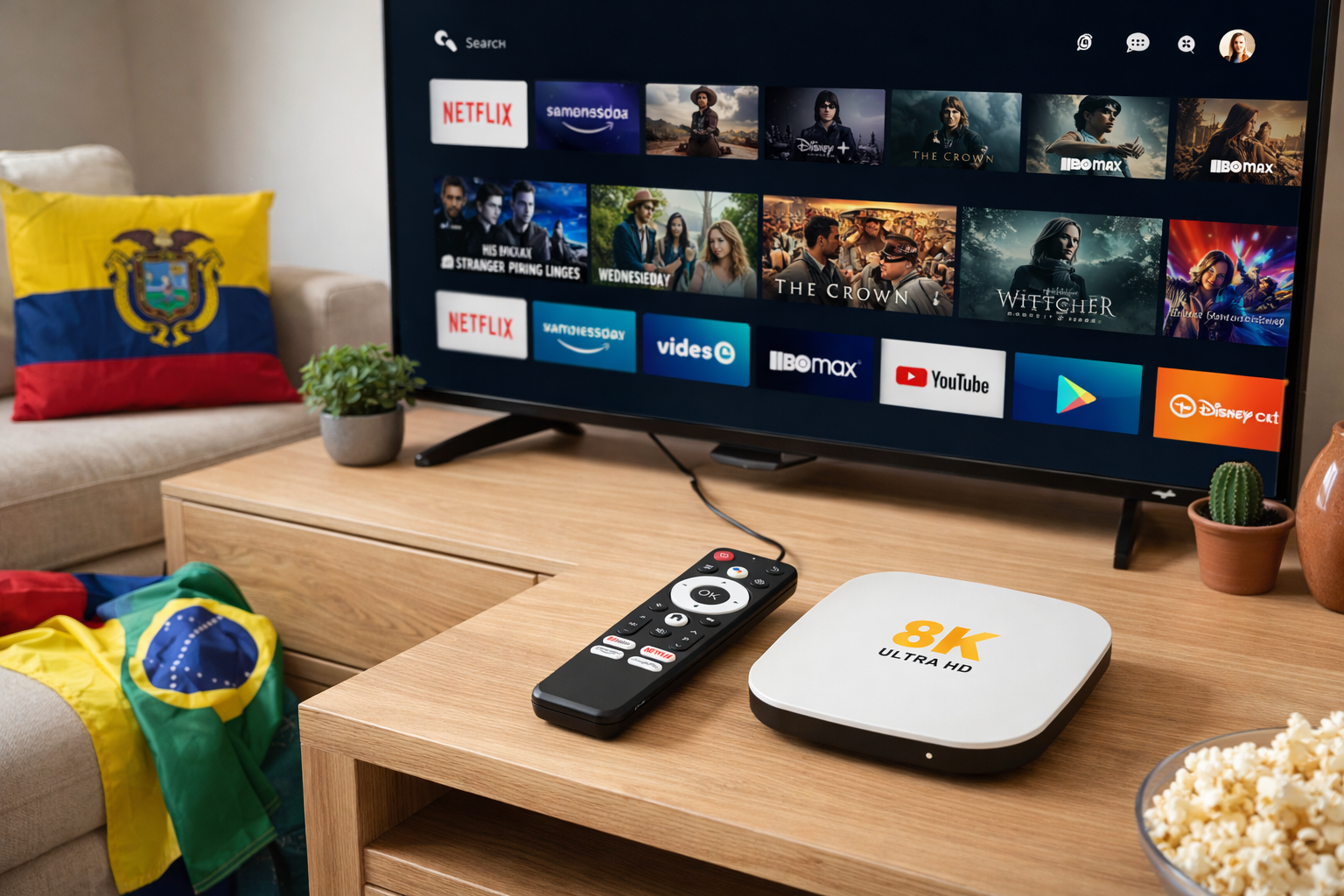
Android TV Box Market 2026: Regional Growth, Saturation, and Strategic Shifts
The Android TV Box Market 2026 is entering a structurally different phase compared with the rapid expansion cycles of the late 2010s. Global shipment growth is no longer uniform. Instead, demand is diverging significantly by region, income level, broadband penetration, and streaming ecosystem maturity. For manufacturers, brand owners, and distributors evaluating medium-term strategy, understanding where real incremental demand still exists—and where the market is stabilizing—is critical. According to multiple industry analyses from IDC, Statista, and regional telecom regulators, Global Android TV Box demand continues to expand overall, but at a moderated compound annual growth rate compared to the pandemic-driven surge years. The shift is not a contraction; rather, it is a redistribution of volume across geographies and product tiers.
Structural Drivers Behind Demand Changes
Several macro-level forces are shaping Android TV Box market growth 2026: expansion of fiber and 4G/5G infrastructure in developing economies; rising OTT platform penetration outside traditional cable ecosystems; price sensitivity in lower-income markets; replacement cycles in mature regions; and migration toward higher-spec, AI-enhanced, or certified devices. The Android TV Box market by country now reflects economic stratification more clearly than ever before. Growth is strongest where smart TV penetration remains moderate and disposable income does not support frequent smart TV replacement. In these regions, Android TV boxes serve as a cost-effective digital upgrade layer. Conversely, in markets where smart TVs are already deeply embedded, growth increasingly shifts toward premium-certified, Dolby-enabled, AI-upscaling devices rather than entry-level boxes.
High-Growth Regions in 2026
Parts of Sub-Saharan Africa remain among the most compelling Emerging Android TV Box markets. Countries such as Nigeria, Kenya, Ghana, and Tanzania are seeing consistent broadband expansion. GSMA mobile economy reports highlight rising smartphone and mobile broadband usage, which directly correlates with OTT consumption patterns. In these markets, consumers often bypass traditional cable infrastructure entirely. Android TV boxes provide an affordable entry point into streaming ecosystems. The price-to-performance ratio remains decisive, and distributors report strong sell-through for mid-range devices supporting 4K decoding but priced competitively. India continues to be a structurally significant contributor to Android TV Box market growth 2026, particularly in Tier 2 and Tier 3 cities. While smart TV penetration is rising, millions of LCD and LED televisions remain in use. Bangladesh and Sri Lanka also show incremental volume expansion due to broadband rollout and growing youth demographics. Southeast Asia represents one of the most balanced demand profiles. Indonesia, the Philippines, and Vietnam demonstrate strong OTT consumption growth supported by expanding middle-class income levels and ISP competition. Latin America presents mixed signals. Brazil and Mexico remain stable large markets, but incremental growth is stronger in Colombia and Peru. Inflationary pressures have made affordable streaming alternatives attractive. The Middle East shows divergence, with Gulf Cooperation Council countries exhibiting more premium demand patterns, while parts of North Africa continue to adopt entry- and mid-tier devices.
Mature Markets: Stabilization and Premium Shift
The United States and Canada represent mature ecosystems with high smart TV penetration. Growth in standalone Android TV box shipments has slowed compared to pre-2022 levels. However, replacement cycles and feature-driven upgrades dominate. Consumers increasingly expect Dolby Vision and Atmos support, AI upscaling, certified Android TV or Google TV systems, and seamless voice assistant integration. Western Europe mirrors North America in maturity. Germany, France, the UK, and the Nordics show slower volume growth but steady demand for compliant, CE-certified, high-specification devices. Regulatory alignment under EU standards affects sourcing decisions and shapes the Android TV Box market by country across the region.
Comparing Growth vs. Saturation Dynamics
When comparing high-growth and mature regions, structural contrasts emerge. Emerging markets remain highly price sensitive, and small cost reductions significantly impact sell-through rates. Mature regions prioritize compliance and official licensing. Developing regions are moving from entry-level to mid-range devices, while mature markets are shifting from mid-range to premium tiers. In Africa and parts of South Asia, first-time adoption still drives Global Android TV Box demand. In North America and Western Europe, replacement cycles dominate. These differences define clear Android TV Box export opportunities and reinforce that export strategy cannot rely on uniform product portfolios.
Data-Backed Market Perspective
Statista’s digital media outlook indicates steady global OTT revenue growth through 2026, particularly in Asia-Pacific and Africa. IDC reports suggest that while global smart device growth moderates, streaming device categories maintain resilience due to content consumption shifts. Telecom authority data from India and Indonesia confirms ongoing fiber expansion, supporting device adoption. Meanwhile, North American retail analytics show ASP increases even as unit growth stabilizes, evidence of premium migration. These signals collectively reinforce that the Android TV Box Market 2026 is fragmenting into differentiated regional opportunity clusters rather than declining.
Conclusion
The Android TV Box Market 2026 reflects redistribution rather than decline. Emerging Android TV Box markets continue to generate incremental volume driven by digital infrastructure growth and cost-sensitive consumers seeking streaming access. Mature regions, while stable in unit terms, are upgrading technologically and prioritizing quality, compliance, and ecosystem integration. For businesses evaluating Which countries are buying Android TV Boxes in 2026 and identifying the Best countries to export Android TV Box in 2026, granular regional analysis is essential. As Global Android TV Box demand evolves, collaboration with experienced manufacturing partners becomes increasingly important. Working directly with H96 Max source factory can provide operational flexibility and scalable manufacturing aligned with regional market requirements.
READ MORE
Three Certain Structural Trends in the Android TV Box Industry in 2026
Are Emerging Markets Still a Strategic Opportunity for Android TV Boxes?
Overseas Home Entertainment Device Trends in 2026: Where Does the Android TV Box Rank?
North America vs Europe vs Latin America: A Comparative Analysis of Android TV Box Market Maturity
2026 Android TV Box vs Built-in Smart TV Systems: Who Will Lead the Market in the Next Three Years?
From Fire TV to Android Box: The Shifting Landscape of Global Streaming Hardware
Overseas Smart TV Box Market in 2026: Who Is Being Threatened by Substitutes?
How Many More Years Can Android TV Boxes Thrive? An Industry Lifecycle Analysis for 2026–2028
Overseas Android TV Box Market Trends in 2026: Where Is the Next Wave of Growth?
Quick Links

.png "Watch H96 Max Android TV Box reviews on our YouTube channel")

.png "Explore H96 Max product photos on Instagram")