.png "H96 Max Android TV Box video reviews and tutorials on YouTube")
.png "H96 Max Android TV Box photos and lifestyle shots on Instagram")



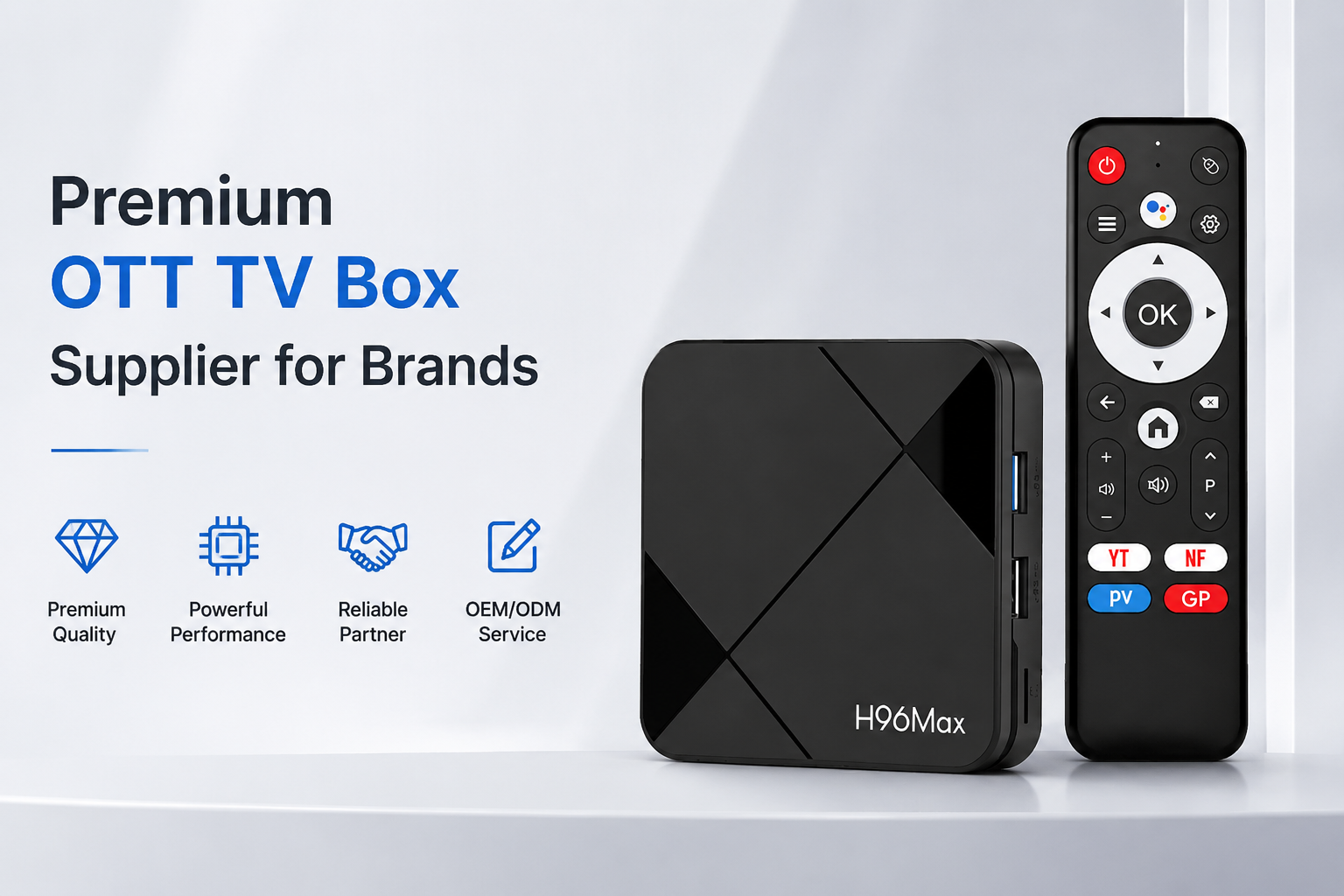
Why OEM TV Box Projects Fail After Good Samples
An OTT TV Box Manufacturer can impress a buyer with a smooth sample and still fail the project after mass production begins. This is one of the most expensive lessons in OEM/ODM sourcing. The buyer approves a device, prepares marketing, promises resellers a launch date, and then receives production units that feel different from the sample. The boot time is slower, the launcher behaves differently, the remote has weaker response, or the Wi-Fi performance drops. The problem is not always fraud. Sometimes it is weak process control, unclear approval rules, or a factory that never understood the commercial risk behind the order.
The practical conclusion is simple: every OTT TV Box Manufacturer should be evaluated on repeatability before volume, especially when brand reputation and reseller confidence depend on every production batch. A buyer that cannot define repeatability will struggle to enforce it. A buyer that asks an OTT TV Box Manufacturer to document repeatability early gains leverage before the shipment is at risk.
The sample is a conversation, not a guarantee
A sample should start the verification process, not end it. Buyers often treat a good sample as proof that the supplier is ready. Experienced procurement teams treat it as one data point. They ask how the sample was built, which components were used, which firmware version is installed, whether the unit was randomly selected, and what will be identical in mass production. If these answers are not documented, the sample becomes a showroom object instead of a production reference.
A serious OTT TV Box Manufacturer should be willing to lock the critical details before deposit: chipset, RAM, storage, Wi-Fi module, Bluetooth version, remote solution, power adapter, housing material, packaging, firmware version, app list, boot logo, and carton requirements. Without that lock, a buyer may receive a product that matches the model name but not the buying decision. The specification sheet may look similar while the user experience changes.
The most dangerous phrase in sourcing is “same as sample.” It sounds simple, but it is incomplete. Same in which parts? Same firmware? Same accessory supplier? Same Wi-Fi antenna position? Same adapter quality? Same packaging materials? A professional OTT TV Box Supplier will help define sameness in measurable terms. A risky supplier will use the phrase to avoid detail.
When price pressure creates hidden substitutions
Low price does not automatically mean low quality, but aggressive price pressure creates incentives for substitution. A factory may change flash memory, use a cheaper adapter, alter the remote control, or select an alternative Wi-Fi module if approval rules are unclear. The buyer may only notice after customer complaints begin. By then, the channel cost is already higher than the savings.
This is why buyers should negotiate total value rather than only unit price. In OTT TV Box Wholesale, a few cents saved on accessories can create disproportionate after-sales cost. A weak adapter may raise failure rates. A poor remote can make the whole device feel cheap. Inconsistent flash memory can affect boot time and app performance. These are not cosmetic details; they shape customer perception.
Grand View Research’s estimate of a USD 298.84 billion OTT devices and services market in 2024 shows how large the category has become. Large markets attract buyers, but they also attract opportunistic suppliers. The buyer’s best defense is not suspicion; it is documentation. A reliable OTT TV Box Manufacturer should make substitutions visible, controlled, and approved before production.
Firmware drift is a silent conversion killer
A private-label product can lose credibility when the interface changes without notice. Firmware drift may happen when engineering teams update a build, remove or add apps, change launcher settings, or use a different base version for production. The device may still work, but the buyer’s screenshots, manual, training material, and support scripts no longer match the product.
A capable OTT Android Box Manufacturer should maintain firmware version control. Ask for version names, release notes, approval steps, and a golden sample. Ask whether the factory can keep a stable build for repeat orders and whether OTA updates are tested before release. Ask who decides when a firmware change is necessary. If the answer is informal, the buyer is exposed.
Firmware discipline also affects market compliance and trust. Users are more aware of privacy, app permissions, and unwanted software. Academic work on connected TV ecosystems has highlighted complex tracking behavior and the importance of privacy controls. OEM buyers should therefore avoid casual firmware packages, unauthorized preloads, and unclear app sources. Software is now part of brand protection.
Quality testing must copy the real use environment
Factory testing often confirms that the device powers on, connects, plays video, and passes basic functions. That is not enough for commercial readiness. End users do not operate devices in ideal test conditions. They use weak routers, crowded Wi-Fi environments, old televisions, regional apps, different languages, and inconsistent power supplies. A buyer’s test plan should reflect that reality.
Before approving mass production, test the box for long playback sessions, repeated boot cycles, network interruption, app switching, HDMI compatibility, Bluetooth remote performance, thermal behavior, and standby recovery. Include the exact accessories that will ship. Test packaging by opening and repacking it. Check the manual as if the reader has never used an Android box. A strong OTT TV Box Factory will respect this process because it reduces disputes later.
Buyers should also run a small pilot when possible. Send units to selected resellers, installers, or internal staff before the main launch. Ask for structured feedback: setup time, app clarity, remote feel, heat, Wi-Fi strength, packaging impression, and support questions. Real field feedback often reveals issues that laboratory testing misses.
The approval chain should be written, not assumed
OEM/ODM projects fail when too many decisions live in chat history. A buyer asks for a logo change. The supplier sends a new file. Someone confirms verbally. Production uses an older file. The carton label is different. The boot animation is wrong. The remote keys do not match the user guide. These mistakes are common, and most are preventable.
Create a pre-production approval checklist. It should include product photos, internal configuration, firmware screenshots, UI flow, packaging artwork, label layout, accessories, carton mark, certification marks if applicable, and inspection standards. Each item should have a final approved version. This is not bureaucracy; it is how an OTT TV Box Manufacturer converts a custom project into repeatable production.
For larger orders, ask for a production sample after the line is set up but before full output begins. This sample is more valuable than the early sales sample because it comes from the actual production path. Approve it carefully. Keep one unit with the buyer and one with the factory for comparison. If a dispute arises, the golden sample becomes a practical reference.
Look beyond the device to the service model
A buyer should ask how the factory handles issues after delivery. Does it provide technical analysis for defective units? Can it supply replacement remotes and adapters? Can it support firmware patches? How fast does it respond to batch problems? Does it distinguish user error from hardware defect? An OTT TV Box Manufacturer that disappears after shipment is not a partner.
This matters because streaming adoption is mature in many markets. TV Technology reported Parks Associates data showing that 91% of U.S. internet households had at least one streaming subscription by late 2025. Consumers are no longer forgiving early adopters. They expect a box to behave smoothly from the first evening. If the product disappoints, the channel receives the blame before the factory ever hears about it.
A serious OTT Media Box Manufacturer understands this chain of responsibility. It helps the buyer reduce avoidable support issues through better packaging, clearer setup, controlled firmware, stable accessories, and realistic specifications. It also helps the buyer choose what not to customize when a change adds risk but little commercial value.
The buyer’s corrective sourcing plan
If a past project failed, do not only change suppliers. Change the process. Start with a clearer use case. Build a controlled sample test. Document fixed components. Approve firmware in writing. Create packaging and accessory standards. Define after-sales responsibility. Use pilot feedback before scaling. Score suppliers on engineering transparency and communication, not only price.
When you evaluate the next OTT TV Box Manufacturer, ask the questions that the previous failure taught you. Which detail changed? Which approval was missing? Which test was too shallow? Which promise was not written? The goal is not to find a perfect factory. The goal is to build a sourcing system that makes quality repeatable.
H96 Max supports OEM/ODM buyers with factory-direct Android TV box manufacturing, practical customization, firmware adaptation, packaging options, and production coordination for wholesale, brand, and project channels. If you want a source factory that understands the gap between a good sample and a profitable launch, Partner with H96 Max today and build your next TV box program with stronger control from approval to delivery.
READ MORE
Factory Audit Questions That Reveal the Right TV Box Partner
How to Choose an OTT TV Box Manufacturer That Won’t Cost You the Market
Quick Links

.png "Watch H96 Max Android TV Box reviews on our YouTube channel")

.png "Explore H96 Max product photos on Instagram")