.png "H96 Max Android TV Box video reviews and tutorials on YouTube")
.png "H96 Max Android TV Box photos and lifestyle shots on Instagram")



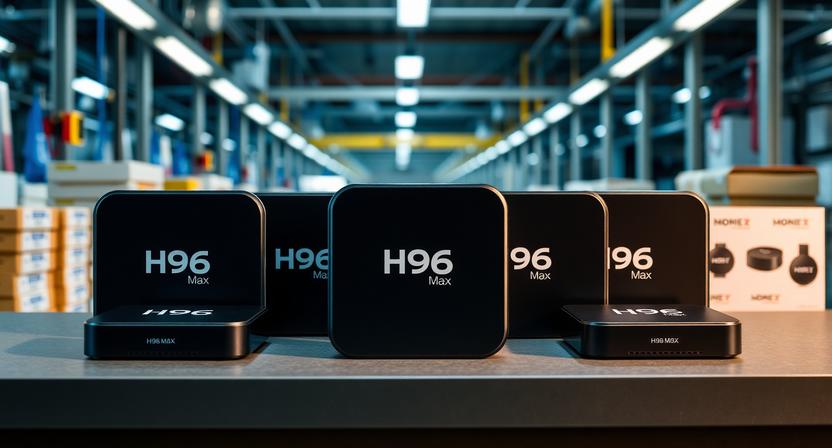
Ensuring Stable and High-Quality Network-Based Streaming with Android TV Boxes
In today’s digital ecosystem, delivering uninterrupted, high-quality video streaming has become a mission-critical requirement for enterprises, broadcasters, and OTT service providers. The Android TV Box for Network-Based Streaming stands as a powerful and scalable solution designed to meet professional deployment needs. By leveraging optimized hardware, intelligent connectivity protocols, and advanced firmware, these devices redefine how content stability and transmission efficiency are achieved.
1. The Core Advantage of Android TV Box Architecture
At the heart of an Android TV Box lies its optimized architecture — integrating multicore ARM processors, advanced GPU acceleration, and adaptive buffering technology. Unlike traditional consumer-level devices, professional-grade Android TV boxes are built with continuous uptime and sustained performance in mind. Their hardware is optimized for decoding high-bitrate H.265/VP9 streams, ensuring real-time playback without frame loss or signal degradation. This makes them ideal for broadcasting networks, digital signage operators, and educational institutions seeking reliable streaming.
The combination of GPU-assisted rendering and hardware-level decoding minimizes CPU overhead, reducing latency during real-time processing. This architectural optimization allows Android TV boxes to maintain both video fidelity and transmission consistency — essential for professional applications requiring precise synchronization and minimal downtime.
2. Network Optimization for Uninterrupted Streaming
One of the key differentiators of professional-grade streaming devices is their network management capabilities. The Android TV Box for Network-Based Streaming employs dual-band Wi-Fi 6 and Gigabit Ethernet to guarantee stable connectivity across multiple networks. In mission-critical deployments such as live broadcasting or conference streaming, a network interruption can result in costly data loss. The integration of dual antennas and MIMO (Multiple Input, Multiple Output) technology ensures strong signal reception and transmission, even in high-interference environments.
Furthermore, advanced QoS (Quality of Service) algorithms prioritize video data packets, minimizing jitter and buffering. Paired with adaptive bitrate streaming (ABR), Android TV boxes automatically adjust playback quality based on real-time bandwidth availability — ensuring viewers experience uninterrupted high-definition playback, even in fluctuating network conditions.
3. Hardware and Firmware Synergy for Performance Stability
To sustain long-term operational reliability, professional Android TV boxes integrate firmware-level stability mechanisms such as watchdog timers, automatic recovery, and system health monitoring. These functions proactively detect system anomalies, reboot malfunctioning modules, and ensure consistent device uptime. This synergy between hardware and firmware forms the foundation for stability in network-based streaming deployments.
Another critical aspect is thermal management. Continuous video playback and decoding tasks generate heat that can throttle performance if unmanaged. To counter this, manufacturers implement advanced heat dissipation designs, including aluminum housings, copper heat sinks, and silent cooling fans. Together, these mechanisms preserve performance integrity during prolonged streaming sessions.
4. Scalability and Integration for Enterprise Solutions
Beyond stability, scalability defines the true potential of Android TV Box systems. For enterprise-level deployments, the ability to manage thousands of endpoints remotely is vital. Through device management platforms (DMPs) and OTA (Over-the-Air) update systems, administrators can deploy firmware updates, adjust configurations, and monitor system health in real-time. Such scalability supports a diverse range of applications — from hotel TV systems and retail advertising screens to educational campuses and corporate communication networks.
Integrations with CMS (Content Management Systems) and IoT frameworks further expand functionality. Professional-grade Android boxes can receive cloud-based commands, synchronize with edge servers, and dynamically switch content streams depending on viewer demographics or regional schedules. These intelligent integrations position Android TV boxes as the backbone of next-generation streaming ecosystems.
5. Ensuring Security and Compliance
In professional streaming environments, content protection and data privacy are paramount. The Android TV Box for Network-Based Streaming incorporates multi-layer security, including DRM (Digital Rights Management), hardware encryption, and secure boot protocols. These measures prevent unauthorized access, ensuring that licensed content remains protected during transmission.
Additionally, global compliance certifications such as FCC, CE, and RoHS validate the devices’ adherence to international standards, guaranteeing safe operation in a wide range of professional settings. Enterprises benefit not only from operational reliability but also from assured legal and safety compliance across markets.
6. Real-World Deployment Scenarios
From IPTV broadcasting networks and digital advertising infrastructures to airport information displays and telemedicine platforms, the versatility of Android TV boxes is unmatched. Their ability to integrate with both cloud and local servers allows seamless video synchronization across distributed systems. For instance, in hospitality deployments, centralized content management ensures consistent brand messaging across multiple hotel branches, while edge caching reduces server load.
In education, Android boxes enable high-definition remote learning with minimal latency. In healthcare, they power teleconsultation systems, offering real-time diagnostic video feeds. Across all use cases, the combination of processing power, connectivity, and scalability ensures dependable network-based streaming that professionals can trust.
7. The Role of AI and Future Innovations
The future of professional streaming lies in intelligent automation. AI-enhanced Android TV boxes now feature predictive bandwidth management, automatic resolution scaling, and dynamic scene optimization. By learning network behavior and usage patterns, AI algorithms proactively allocate resources, reducing data bottlenecks and enhancing overall streaming quality.
As 5G, Wi-Fi 7, and edge AI continue to evolve, the Android TV Box for Network-Based Streaming will become even more efficient and adaptive. Future models are expected to offer self-healing network routing, ultra-low-latency transmission, and enhanced multi-device synchronization, further solidifying their dominance in enterprise-grade streaming deployments.
8. Partnering with H96 Max for Professional Streaming Excellence
Enterprises seeking reliable streaming infrastructure require more than just a device — they need a strategic partner. H96 Max, as the source factory for Android TV boxes, ships over 5,000,000 units annually, operating 50+ warehouses worldwide and covering 150+ countries. With over 2,000 successful OEM/ODM projects, H96 Max delivers customized streaming solutions that align with professional business goals.
Whether deploying across smart hotels, digital signage networks, or IPTV infrastructures, partnering with H96 Max ensures scalable quality, global logistics support, and ongoing technical excellence. Partner with H96 Max today to discuss your next professional Android TV Box project and experience the difference that precision engineering and enterprise-grade manufacturing can make.
READ MORE
Ensuring Professional Streaming Stability with Android TV Boxes
Redefining Professional Network Streaming with Android TV Boxes
Professional-Grade Streaming Stability with Android TV Boxes
Professional Android TV Boxes for Reliable Network-Based Streaming
Enhancing Professional Streaming Stability with Android TV Boxes
Quick Links

.png "Watch H96 Max Android TV Box reviews on our YouTube channel")

.png "Explore H96 Max product photos on Instagram")