.png "H96 Max Android TV Box video reviews and tutorials on YouTube")
.png "H96 Max Android TV Box photos and lifestyle shots on Instagram")



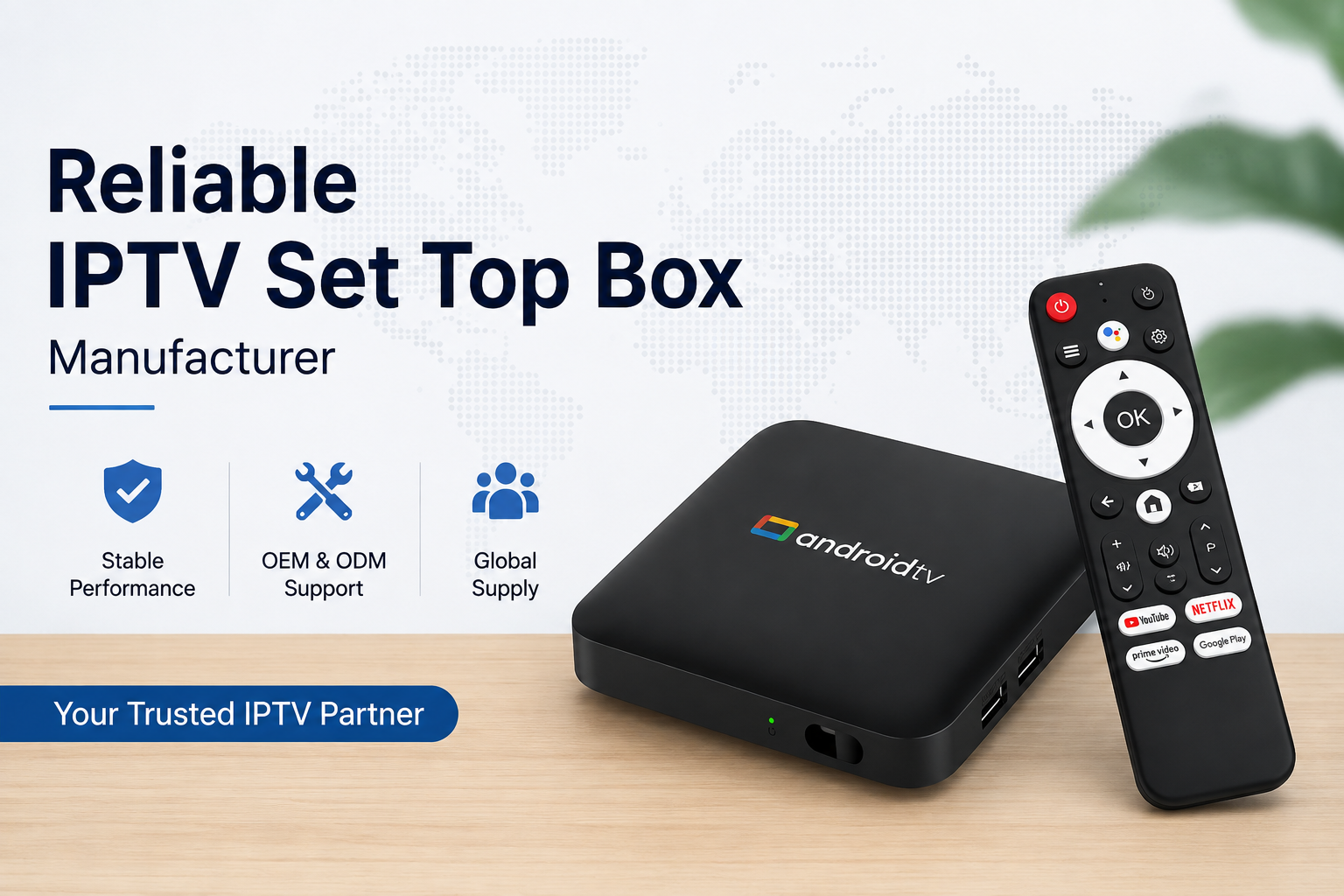
How Should B2B Buyers Evaluate an IPTV Box Manufacturing Partner?
Choosing an IPTV Set Top Box Manufacturer is not simply a search for the lowest hardware quotation. For brands, importers, wholesalers, distributors, telecom operators and OEM/ODM procurement teams, the decision affects firmware stability, application compatibility, product differentiation, delivery continuity and support after deployment. A factory can offer an attractive sample yet still struggle when a project requires custom launcher work, controlled BOM changes, regional compliance, production traceability or thousands of repeat units. The better sourcing approach is to convert commercial requirements into measurable supplier evidence before committing volume. Buyers should examine engineering ownership, software capability, manufacturing control, component strategy, quality systems and lifecycle support as one connected operating model. This guide explains how to perform that evaluation and how to distinguish a genuine long-term manufacturing partner from a supplier that mainly competes on an initial unit price.
Start With the Business Model, Not the Chipset
Before contacting factories, define how the box creates value. A retail streaming device, hotel deployment, regional IPTV service and operator-managed platform can require very different software, remote-control behavior, network performance and support processes. Hardware specifications should follow the use case.
Give the prospective IPTV Set Top Box Supplier target countries, expected annual volume, channel, required applications, network environment and launch date. This information allows engineering teams to recommend an existing platform or identify where custom development is commercially justified.
Separate OEM, ODM and Private-Label Requirements
Buyers often use OEM and ODM interchangeably, but project depth matters more than terminology. Logo printing, boot animation and packaging are relatively light customization. PCB changes, enclosure development, framework modification or device-management integration require substantially more engineering control.
An OEM IPTV Set Top Box Manufacturer should explain which layers can be modified, which are platform dependencies and which changes create new validation work. This prevents a buyer from purchasing a private-label service while expecting a genuinely engineered product.
Verify Who Actually Owns Engineering
A credible IPTV Set Top Box Manufacturer should be able to connect procurement with hardware and software owners who understand the proposed platform. Ask who maintains schematics, firmware builds, production test tools and technical change records.
Request evidence from previous projects without asking the supplier to disclose another customer's confidential information. Revision histories, sample reports, issue trackers and controlled firmware releases reveal more about engineering maturity than a broad claim that “everything can be customized.”
Evaluate the Android Platform Correctly
If Android is part of the product strategy, clarify whether the project is AOSP-based or requires a specific licensed ecosystem. Google’s Android Compatibility Definition Document states that compatible Android implementations must meet the applicable CDD requirements; compatibility is therefore more structured than merely booting Android.
For television implementations, Android documentation describes a ten-foot entertainment interface and remote-control requirements. Buyers should verify the exact commercial software model, application distribution rights and qualification path rather than assuming every Android-based box carries the same services.
Test the User Experience, Not Just Specifications
A specification sheet cannot show launcher responsiveness, remote navigation, wake behavior or application recovery. Ask the Custom IPTV Set Top Box Manufacturer for production-representative samples and create test journeys based on actual customer behavior.
Measure boot time, channel or app switching, Wi-Fi recovery, standby, Bluetooth pairing and remote response where relevant. Repeated testing across several units is more informative than a single demonstration prepared by the sales team.
Assess Firmware Ownership and Release Discipline
Software becomes a major commercial risk when the factory cannot reproduce a build or explain what changed. An IPTV Set Top Box Manufacturer should identify firmware by version, hardware compatibility and release status, with known issues and change notes available to project teams.
Ask how development builds become production releases, who approves them and how regression is performed. A factory that flashes different images informally across batches can create support problems even when the underlying hardware remains identical.
Define OTA and Recovery Before Deployment
For connected fleets, an update mechanism can reduce field-service cost, but only when it is governed carefully. Discuss package integrity, device targeting, staged rollout, update monitoring and failure recovery before mass production.
A strong supplier should test interrupted updates and unsuccessful boot scenarios. Operators should also define who can authorize releases and pause deployment. OTA capability without release control can distribute a software defect faster than manual servicing ever could.
Treat Cybersecurity as a Lifecycle Requirement
Cybersecurity is increasingly connected to product lifecycle obligations. The European Commission states that the EU Cyber Resilience Act reporting obligations apply from September 11, 2026, while its main obligations apply from December 11, 2027.
An IPTV Set Top Box Manufacturer serving European programs should be ready to discuss vulnerability handling, software dependencies, update capability and support periods, while buyers obtain qualified advice on their exact obligations. Security cannot be reduced to one penetration test before shipment.
Examine the BOM and Component Strategy
Request a controlled product configuration covering SoC, memory, storage, wireless module, power adapter and other critical components. Procurement does not always need every commercial detail, but it needs assurance that approved parts will not change silently.
Ask how substitutions are proposed and validated. A cheaper memory device or wireless module can affect performance, firmware and regulatory evidence. Controlled alternatives are valuable; uncontrolled substitutions are a source of inconsistent field behavior.
Look Beyond the Sample Room to Production
A factory audit should follow material from incoming inspection through assembly, flashing, functional testing, aging where applicable, packaging and final release. Observe how work instructions and product revisions are controlled on the line.
For Wholesale IPTV Set Top Box procurement, repeatability matters more than one perfect engineering sample. Ask how the factory prevents firmware mixing, wrong adapters, incorrect labels and packaging variants when multiple customer SKUs run through the same facility.
Demand a Meaningful Pilot Production Run
Before large orders, run a production-intent pilot using the intended BOM, firmware, fixtures, operators and packaging. Track first-pass yield, rework, defect categories and configuration accuracy rather than evaluating only the final units that pass inspection.
An IPTV Set Top Box Manufacturer should use pilot findings to close systemic issues before volume. If every failed unit is simply repaired and shipped, the pilot has not demonstrated that the manufacturing process is stable.
Build Acceptance Criteria Before the Purchase Order
Define what “good” means before production. Criteria can cover appearance, ports, wireless performance, firmware version, applications, remote functions, accessories, labeling and packaging. Requirements should be measurable enough that buyer and supplier reach the same conclusion.
For critical functions, define the test environment as well as the result. Network conditions, router models or display equipment can influence outcomes. Clear criteria reduce disputes and make third-party inspection more useful.
Review Traceability and Corrective Action
When a field issue appears, the buyer should be able to identify affected production. Ask what serial number, batch, firmware and component records the factory preserves and how quickly those records can be retrieved.
A mature IPTV Set Top Box Manufacturer should distinguish containment from root-cause correction. Replacing failed units protects customers temporarily; identifying the mechanism, implementing corrective action and verifying effectiveness protects future production.
Plan Radio and Market Access Early
Wi-Fi and Bluetooth configurations can create regulatory work that differs by destination. In the United States, FCC rules require regulated RF devices to follow applicable equipment-authorization procedures before marketing, and intentional radiators include technologies such as Wi-Fi and Bluetooth.
Buyers should use qualified laboratories or advisers to determine exact requirements for the finished configuration. Existing module approvals can be useful, but they should not be assumed to resolve every host-product, antenna, labeling or market obligation.
Check Power, Packaging and Regional Variants
Regional programs may require different adapters, plugs, labels, languages or carton information. Treat each combination as a controlled SKU rather than allowing packing teams to make last-minute substitutions.
The IPTV Set Top Box Supplier should maintain approved artwork and accessory lists by market. This discipline reduces shipment errors and supports a scalable platform strategy in which common electronics serve several regions without losing configuration control.
Normalize Quotations Before Comparing Prices
Two quotations are comparable only when they cover the same hardware, memory, wireless configuration, accessories, packaging, software scope, testing and commercial terms. Ask suppliers to identify NRE, tooling and other non-recurring charges separately.
Calculate total landed and lifecycle cost rather than focusing only on ex-factory price. Rework, emergency freight, warranty replacements and unsupported firmware can eliminate small unit-price savings over a large deployment.
Understand What Drives MOQ
MOQ may come from PCB procurement, component reels, enclosure finishing, remote printing or customized packaging. Ask the factory which material creates the constraint. That answer can reveal ways to lower launch exposure without damaging manufacturing economics.
For example, common hardware can sometimes be purchased in larger quantities while branded packaging is released in smaller batches. The correct structure depends on demand certainty, material liability and the supplier's production model.
Evaluate Capacity Through Evidence
Do not accept a theoretical monthly capacity number without context. Ask about normal output, peak loading, line allocation, key bottlenecks and how customized programs are scheduled alongside standard products.
A reliable IPTV Set Top Box Manufacturer should connect forecasts with material planning and production slots. Buyers should separate non-binding forecasts from firm commitments so both sides understand inventory and delivery responsibilities.
Test Communication Before You Need an Escalation
During qualification, observe how quickly technical questions reach the correct engineer and whether answers remain consistent. Good communication is not simply fast messaging; it is accurate ownership, documented decisions and visible follow-up.
Ask who handles hardware, firmware, quality, sourcing and logistics escalations. A project becomes fragile when every issue depends on one salesperson who must translate complex engineering discussions between multiple teams.
Define Intellectual Property and Confidentiality Boundaries
Custom projects can include buyer artwork, launcher designs, application credentials, server information and product roadmaps. Contracts should identify confidential materials, permitted use and access responsibilities appropriate to the project.
For deeper ODM work, clarify ownership or usage rights for buyer-funded mechanical designs and other deliverables. Commercial expectations should be settled before development, not after a successful product creates value.
Plan Support After the First Shipment
Ask the IPTV Set Top Box Manufacturer how field defects, firmware issues, component changes and repeat-order configurations are handled after launch. Define the information required for escalation and expected response process for different severity levels.
Long-term support also depends on upstream chipset and component lifecycles. Buyers should understand these dependencies and plan successor platforms before critical parts become unavailable or software maintenance becomes impractical.
Use a Weighted Supplier Scorecard
Score engineering, software, manufacturing, quality, supply continuity, compliance readiness, commercial terms and communication according to business risk. An operator may weight lifecycle software support more heavily, while a wholesaler may emphasize availability and SKU flexibility.
Require evidence behind each score and record unresolved risks. The purpose is not to create mathematical certainty; it is to prevent a low headline price or impressive sales presentation from overwhelming more important operational facts.
What Should the Final Sourcing Decision Prove?
The final decision should demonstrate that the chosen partner can reproduce the required product, control changes, support the software model and scale supply at an acceptable total cost. Samples, audits, pilot results and commercial terms should tell a consistent story.
Selecting an IPTV Set Top Box Manufacturer this way turns procurement from a price comparison into risk management. The best partner is the factory whose operating system matches the buyer's actual channel, deployment and lifecycle requirements.
Discuss Your IPTV Hardware Program With H96 Max
H96 Max is a source factory supporting brands, importers, wholesalers, distributors, operators and OEM/ODM procurement teams. We can discuss platform selection, hardware configuration, firmware and launcher customization, private labeling, packaging, pilot production, quality control and repeat-order planning for IPTV set top box programs. Buyers can share target markets, applications, expected volume, network environment, customization scope and launch objectives so technical and manufacturing requirements are reviewed before major commitments are made. Partner with H96 Max today to explore a practical sourcing program built around controlled engineering, scalable production and long-term B2B supply.
READ MORE
How to Structure an IPTV Set Top Box Manufacturing Agreement for B2B Buyers
How to Manage IPTV Set Top Box Fleets After Large-Scale Deployment
How to Plan IPTV Set Top Box Compliance for International B2B Markets
How to Calculate the True Cost of Bulk IPTV Set Top Box Procurement
How B2B Buyers Can Audit IPTV Set Top Box Quality Before Mass Production
How to Reduce IPTV Set Top Box Supply Chain Risk Before Bulk Orders
How to Control IPTV Set Top Box Software Before Mass Deployment
OEM vs ODM: Which IPTV Set Top Box Manufacturing Model Fits Your Business?
Quick Links

.png "Watch H96 Max Android TV Box reviews on our YouTube channel")

.png "Explore H96 Max product photos on Instagram")