.png "H96 Max Android TV Box video reviews and tutorials on YouTube")
.png "H96 Max Android TV Box photos and lifestyle shots on Instagram")



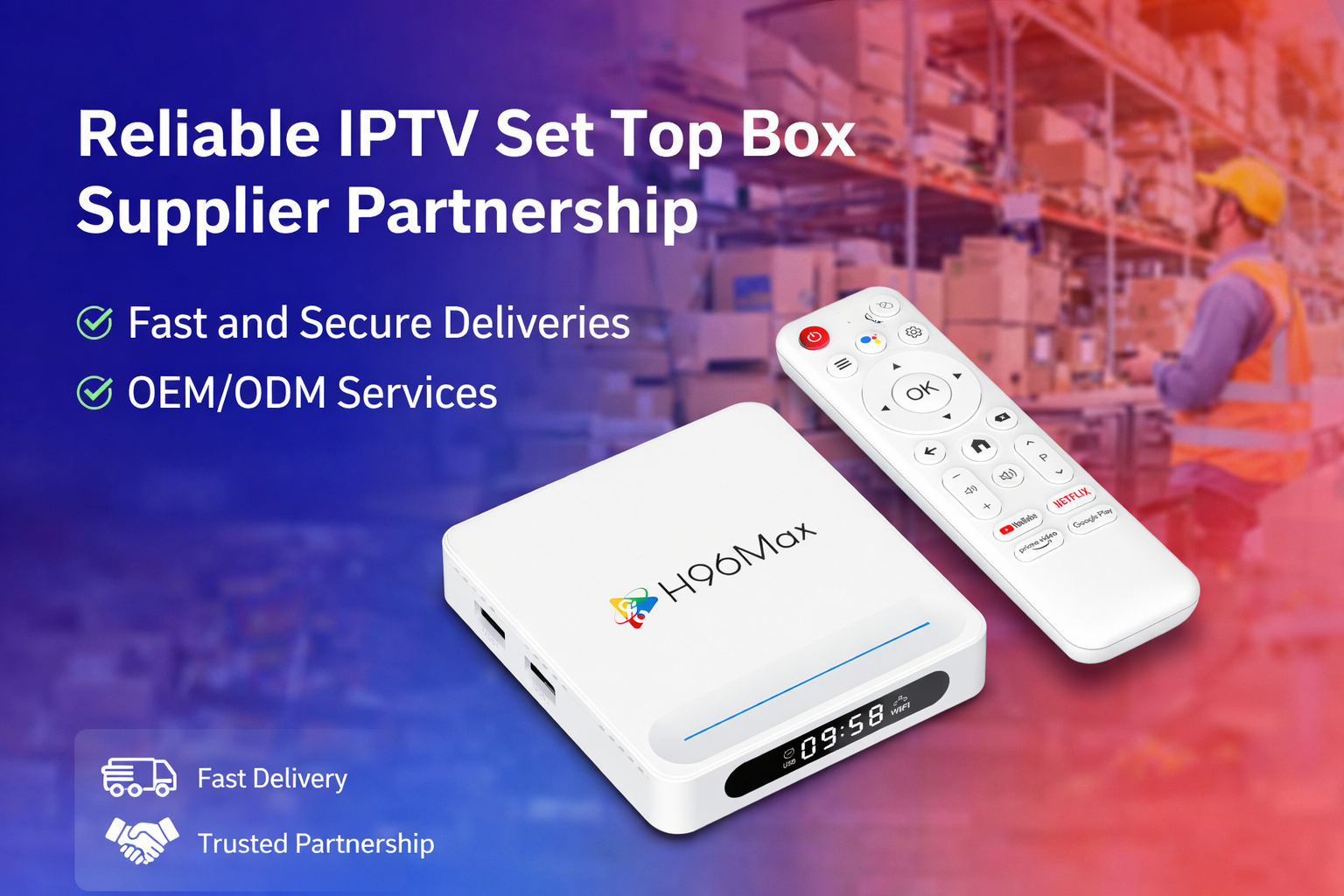
How to Identify Reliable Set Top Box Suppliers and Avoid Hidden Risks
For telecom operators, selecting a carrier-grade set top box supplier is often more challenging than choosing the device itself. While hardware specifications are visible and measurable, supplier reliability, manufacturing consistency, and long-term support capabilities are far less transparent. According to industry research from McKinsey and Omdia, over 65% of IPTV deployment issues are linked not to product design, but to supplier execution failures. This makes supplier evaluation a critical step in procurement strategy.
Understanding how to choose a carrier-grade set top box supplier for IPTV operators requires a structured approach that goes beyond pricing and marketing claims. At the same time, knowing what to consider when buying 4K IPTV set top box for telecom operators ensures alignment between supplier capabilities and evolving technical requirements. Without proper evaluation, operators risk delays, inconsistent product quality, and long-term operational inefficiencies.
1. Manufacturing Capability and Capacity
The foundation of any reliable IPTV set top box supplier is its manufacturing capability. Operators should assess production capacity, factory scale, and automation level. A supplier that cannot scale production efficiently may cause delays during large deployments. Carrier-grade set top box projects often require consistent batch quality, making manufacturing stability essential.
2. Quality Control Systems
Quality control directly impacts device reliability. A qualified supplier must implement strict testing procedures, including aging tests, thermal testing, and performance validation. Industry data shows that poor quality control can increase failure rates by more than 20%, significantly affecting service continuity. A carrier-grade set top box should undergo multiple inspection stages before delivery.
3. Certification and Compliance
Global deployments require compliance with various certifications such as CE, FCC, and RoHS. An operator set top box that lacks proper certification may face regulatory barriers in certain markets. Operators should verify all compliance documentation to ensure smooth deployment and avoid legal complications.
4. R&D and Technical Support Strength
A strong R&D team is essential for long-term success. IPTV technologies evolve rapidly, and suppliers must be able to adapt. Android TV set top box platforms, for example, require continuous software updates and optimization. A capable IPTV set top box supplier should provide firmware customization, middleware integration, and ongoing technical support.
5. Integration Experience and Case Studies
Experience matters when evaluating suppliers. Operators should request detailed case studies demonstrating successful deployments in similar markets. A supplier with proven experience in delivering carrier-grade set top box solutions reduces integration risks and accelerates deployment timelines.
6. Supply Chain Stability
Supply chain disruptions can delay projects and increase costs. Operators should assess component sourcing strategies and inventory management systems. A reliable IPTV set top box supplier should maintain stable relationships with chipset providers and component manufacturers to ensure consistent supply.
7. Software Maintenance and OTA Support
Software support is a critical differentiator. A carrier-grade set top box must support OTA updates, security patches, and feature upgrades. Without continuous software maintenance, devices can quickly become obsolete. Android TV set top box environments particularly require regular updates to remain competitive.
8. Cost Transparency and Pricing Structure
While pricing is important, transparency is even more critical. Operators should evaluate the full cost structure, including hidden costs such as maintenance, customization, and logistics. A low upfront price may result in higher long-term expenses if quality or support is compromised.
9. Communication and Responsiveness
Effective communication is often overlooked but plays a vital role in project success. A responsive IPTV set top box supplier can quickly address issues, provide updates, and support troubleshooting. Poor communication can lead to delays and misunderstandings during deployment.
10. Risk Indicators and Red Flags
Operators should actively look for warning signs when evaluating suppliers. These include inconsistent product samples, lack of documentation, unclear pricing structures, and limited technical support. Identifying these red flags early can prevent costly mistakes in carrier-grade set top box procurement.
In practice, selecting the right IPTV set top box supplier requires a balance between technical evaluation and business assessment. Operators must ensure that the supplier can deliver not only high-quality hardware but also reliable long-term support. A carrier-grade set top box is only as strong as the ecosystem behind it.
A structured supplier evaluation framework enables operators to minimize risks, improve deployment efficiency, and achieve better service stability. From manufacturing capability to communication efficiency, every factor contributes to overall project success.
Ultimately, supplier selection is a strategic decision that directly impacts IPTV service quality and scalability. Operators who invest time in thorough evaluation are better positioned to build resilient and competitive service offerings.
As a professional source factory, H96 Max provides strong manufacturing capabilities, strict quality control, and flexible OEM/ODM services tailored for global telecom operators. Partner with H96 Max today to ensure a reliable and scalable IPTV deployment.
READ MORE
Final Guide to Carrier-Grade Set Top Box Procurement for IPTV Operators
Build vs Buy vs ODM: Set Top Box Strategy for IPTV Operators
Different IPTV Operator Strategies for Set Top Box Procurement
Carrier-Grade Set Top Box Procurement Checklist for Operators
How to Compare Carrier-Grade Set Top Box Solutions for IPTV Operators
Quick Links

.png "Watch H96 Max Android TV Box reviews on our YouTube channel")

.png "Explore H96 Max product photos on Instagram")