.png "H96 Max Android TV Box video reviews and tutorials on YouTube")
.png "H96 Max Android TV Box photos and lifestyle shots on Instagram")



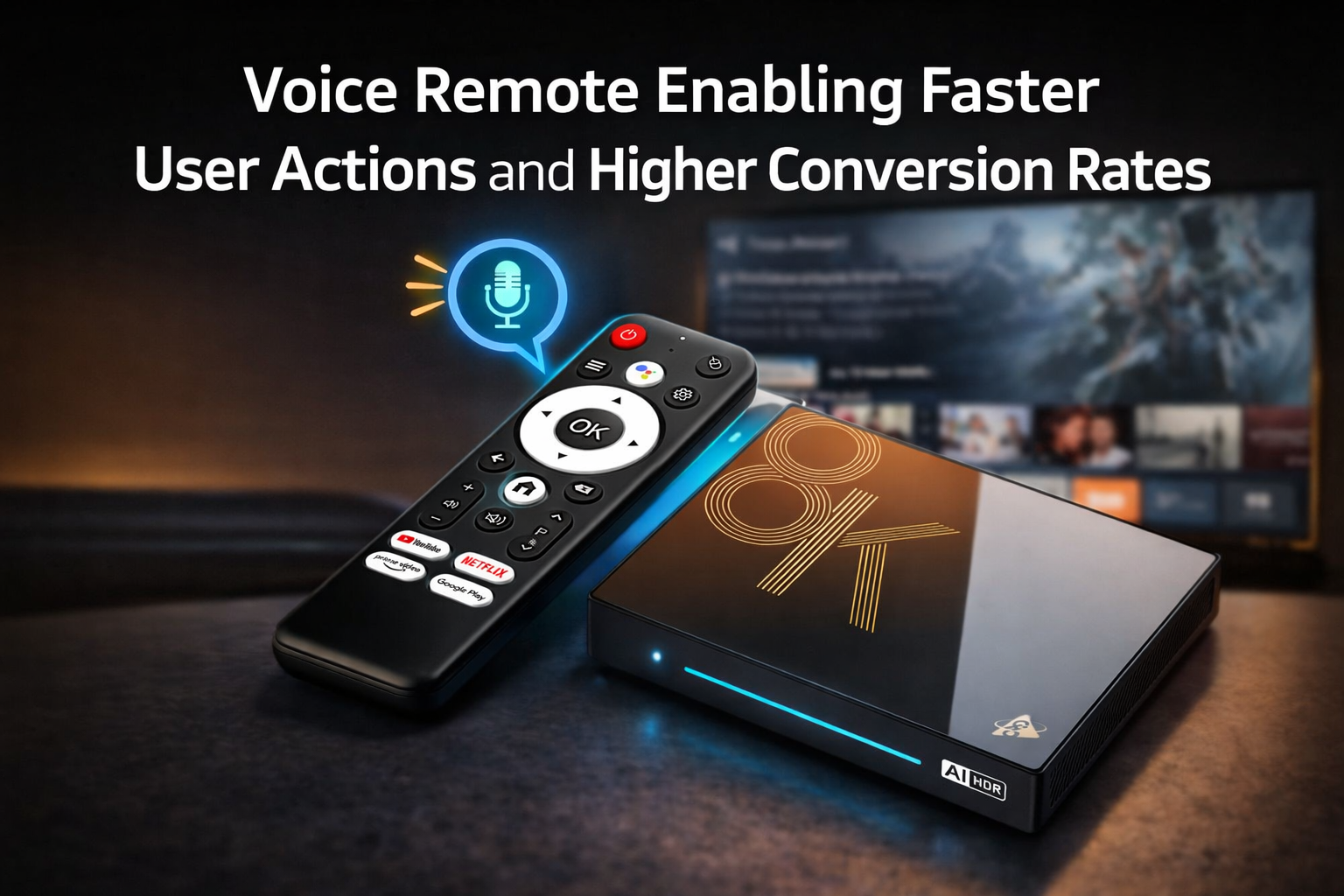
Is Voice Remote Truly Boosting Conversion, or Just “High-Tech Looking”?
Introduction: Rethinking the Voice Remote Hype
Functional Value: Usability Versus Traditional Remotes
Comparative usability studies show that while many first-time users appreciate the novelty, sustained engagement depends on two main factors: the accuracy of voice recognition and the speed of response. If the voice remote control for android tv box offers reliable, low-latency recognition, it can outperform standard remotes for content search and smart home integration. However, inconsistent performance, especially in noisy environments, often drives users back to traditional controls.
Conversion Impact: From Feature to Decisive Factor?
Detailed interviews with buyers show that “smart” accessories, like voice control android tv box, play a greater role as a tie-breaker rather than a core selling point. For value-focused buyers, price, hardware specs, and ecosystem compatibility remain dominant, though voice remote can provide a final nudge in competitive markets.
The Market Perspective: Evolving User Expectations
For manufacturers, the challenge is to align bluetooth voice remote control features with clear communication of value, rather than relying on “high-tech” optics. Differentiators such as advanced microphone arrays, customizable shortcuts, and broad language support all contribute to real user satisfaction. Ultimately, when the smart tv box voice remote functions seamlessly across streaming, browsing, and device management, it can increase product stickiness, which is indirectly linked to conversion rate improvement.
User Journey: Integration, Friction, and Adoption Curves
Case studies from leading smart TV box brands reveal that users most frequently employ voice control for content search, volume adjustment, and app launching. Advanced users go further, leveraging voice control android tv box for smart home automation and device grouping. To sustain engagement, regular over-the-air updates and context-aware voice recognition are essential.
Technical Challenges and Limitations
Security is another underdiscussed aspect. A voice remote control for android tv box with always-listening capability can raise privacy concerns, especially if data transmission is not encrypted. Manufacturers need to be transparent about data use, privacy controls, and compliance with global standards.
Does Voice Remote Impact Smart TV Box Conversion Rate?
Ultimately, the voice remote control for android tv box is an enabler—an enhancer of experience and a competitive advantage when executed well. For brands, the lesson is clear: invest in user-centric design, robust firmware, and transparent privacy practices. Only then does the feature transition from “just high-tech looking” to a real driver of conversion.
Conclusion: Beyond Appearances to Real Value
While the hype around voice remote control for android tv box is often justified, real business value depends on end-to-end execution. Technical excellence, thoughtful UX, and genuine user benefits are what drive conversion and lasting brand loyalty. For buyers, focusing on how well the android tv box voice remote fits their use case is more important than the appeal of the latest feature. For industry stakeholders, it’s about delivering on the promise, not just the pitch.
READ MORE
Why Are “Stable + Simple” Android TV Boxes Preferred in the Market?
IPTV Users vs OTT Users: Completely Different Logics in Choosing TV Boxes
Gaming-Optimized Android TV Box: Real Demand or Market Hype?
European Clients Move to 'Streaming Box + Legal Content': Industry Signals and Market Value
How Many Years Can Low Cost Android TV Box Remain Competitive in Africa?
Why the Middle East Market Continues to Prefer High Configuration Android TV Boxes
Deep Dive: Real Android TV Box Demand Trends in Mexico, Brazil, and Chile
Is North America’s Android TV Box Market Really Saturated? Entry Points & Analysis
Quick Links

.png "Watch H96 Max Android TV Box reviews on our YouTube channel")

.png "Explore H96 Max product photos on Instagram")