.png "H96 Max Android TV Box video reviews and tutorials on YouTube")
.png "H96 Max Android TV Box photos and lifestyle shots on Instagram")



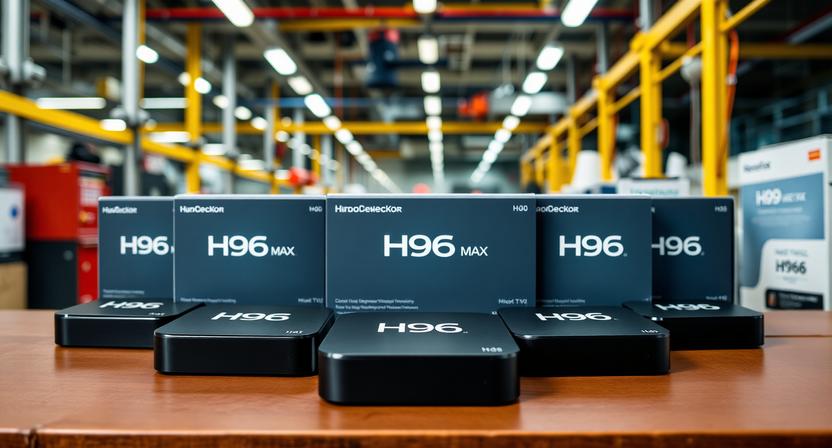
Key Evaluation Points Airlines Must Consider When Choosing an Android TV Box for Airplane Entertainment Systems
In an era where passenger experience defines airline loyalty, the role of technology in the cabin has never been more critical. The Android TV Box for Airplane Entertainment serves as the backbone of next-generation in-flight entertainment (IFE) systems, transforming passenger screens into smart, interactive platforms. As airlines modernize their fleets, they must evaluate multiple aspects of this technology — from hardware reliability to cybersecurity and brand customization — to ensure optimal performance and safety.
1. Hardware Reliability and Processing Power
Hardware capability is the foundation of a dependable IFE system. An advanced Android TV Box for Airplane Entertainment should integrate multi-core processors like Rockchip RK3588 or Amlogic S928X for high-speed performance and 8K video decoding. Devices should also feature strong memory management and efficient heat dissipation, allowing continuous playback across long-haul flights. Testing under extreme environmental conditions — vibration, altitude, and temperature variations — ensures consistent reliability even in demanding airborne operations.
2. Compliance and Aviation Certification
Aviation standards demand strict compliance with safety and electromagnetic regulations. The Android TV Box must be certified under DO-160, CE, and FCC standards to confirm environmental durability and EMI safety. Airlines partnering with certified OEMs mitigate risks and streamline approval processes with aviation authorities. Compliance guarantees system integrity, ensuring safety and performance remain uncompromised throughout the product’s lifecycle.
3. Connectivity and System Integration
Connectivity defines the IFE experience. The Android TV Box for Airplane Entertainment must support Wi-Fi 6, Bluetooth 5.2, and Gigabit Ethernet for seamless data transmission. Integration with onboard networks and passenger service systems ensures synchronized media updates and interactive features such as live maps and real-time communication. Advanced connectivity enables passengers to pair their personal devices for second-screen interactions, enhancing engagement during flights.
4. Software Customization and Brand Experience
Customization is one of the strongest advantages of the Android platform. Airlines can design branded interfaces, localized content menus, and service applications tailored to passenger needs. The Android TV Box supports multiple user interface (UI) configurations, enabling features such as loyalty programs, food ordering, and flight tracking. OTA (over-the-air) software updates allow airlines to maintain system security and refresh content without aircraft downtime, ensuring consistent brand engagement across global routes.
5. Data Security and Privacy Management
With increased connectivity comes the need for strong security. The Android TV Box for Airplane Entertainment should feature secure boot, data encryption, and digital rights management (DRM) for content protection. Airlines must ensure compliance with data protection frameworks such as GDPR to safeguard passenger information. Regular firmware updates and vulnerability monitoring from the manufacturer minimize cybersecurity risks, preserving both system stability and passenger confidence.
6. Passenger Interaction and Accessibility
A smooth user interface defines the passenger experience. The Android TV Box should offer intuitive navigation, quick response times, and support for touchscreens or handheld remotes. Accessibility features — including text scaling, closed captions, and multilingual interfaces — ensure inclusivity for global travelers. Integration with mobile apps allows passengers to control entertainment from their smartphones, synchronize preferences, and even resume playback across devices.
7. Content Management and Streaming Optimization
Managing diverse media content across fleets requires a flexible CMS (Content Management System). The Android TV Box for Airplane Entertainment must support centralized control, regional licensing management, and real-time analytics. Adaptive streaming ensures smooth playback even during connectivity fluctuations, while cloud-based content delivery enables airlines to push updates efficiently. Data insights gathered from viewing habits help airlines tailor entertainment offerings and increase passenger satisfaction.
8. Energy Efficiency and Environmental Performance
Aviation sustainability initiatives demand energy-efficient solutions. The Android TV Box should utilize ARM-based architecture and passive cooling designs to minimize energy consumption and heat generation. Lightweight enclosures reduce aircraft weight, lowering fuel usage and carbon emissions. Airlines committed to sustainability should partner with manufacturers that use recyclable materials and eco-conscious production processes, aligning IFE upgrades with environmental goals.
9. Scalability and Fleet Deployment
Scalable architecture allows airlines to deploy Android TV Boxes across multiple aircraft models. Modular hardware and unified software interfaces simplify installation and upgrades. Centralized control systems enable technicians to manage thousands of devices simultaneously, perform diagnostics, and roll out updates globally. Airlines can future-proof investments by selecting platforms compatible with AI-driven analytics and IoT-based monitoring for predictive maintenance.
10. Partnering with a Proven OEM/ODM Manufacturer
The choice of manufacturing partner determines the overall success of an IFE project. A proven OEM/ODM supplier offers aviation-grade reliability, customization, and support. Collaboration ensures compliance with safety standards, faster product delivery, and continued firmware maintenance. Manufacturers like H96 Max bring technical expertise, large-scale production capacity, and global logistics support, empowering airlines to achieve consistency and excellence in passenger entertainment.
In summary, selecting the right Android TV Box for Airplane Entertainment is essential for airlines aiming to deliver next-level passenger experiences while maintaining safety, scalability, and operational efficiency. By prioritizing certified hardware, secure software, and responsive design, airlines can transform in-flight entertainment into a strategic asset that strengthens brand loyalty and customer satisfaction.
Partner with H96 Max — Your Trusted Android TV Box Aviation Manufacturer
H96 Max produces over 5,000,000 Android TV Boxes annually, supporting 150+ countries through 50+ global warehouses. With over 2,000 OEM/ODM projects, H96 Max provides airlines with certified, energy-efficient, and customizable Android entertainment systems. Partner with H96 Max today to elevate your fleet’s in-flight entertainment experience with factory-direct solutions and cutting-edge technology.
READ MORE
Important Considerations for Airlines Choosing Android TV Box for Airplane Entertainment
Key Requirements Airlines Should Prioritize When Selecting Android TV Box for Airplane Entertainment
Best Practices for Airlines When Choosing Android TV Box for Airplane Entertainment
How Airlines Can Evaluate Android TV Box Solutions for Airplane Entertainment
Critical Aspects Airlines Should Assess When Choosing Android TV Box for Airplane Entertainment
Essential Factors Airlines Should Consider When Choosing Android TV Box for Airplane Entertainment
Top Considerations for Airlines When Selecting Android TV Box for Airplane Entertainment
How Airlines Can Select the Right Android TV Box for Airplane Entertainment
Key Factors Airlines Should Evaluate When Choosing Android TV Box for Airplane Entertainment
Quick Links

.png "Watch H96 Max Android TV Box reviews on our YouTube channel")

.png "Explore H96 Max product photos on Instagram")