.png "H96 Max Android TV Box video reviews and tutorials on YouTube")
.png "H96 Max Android TV Box photos and lifestyle shots on Instagram")



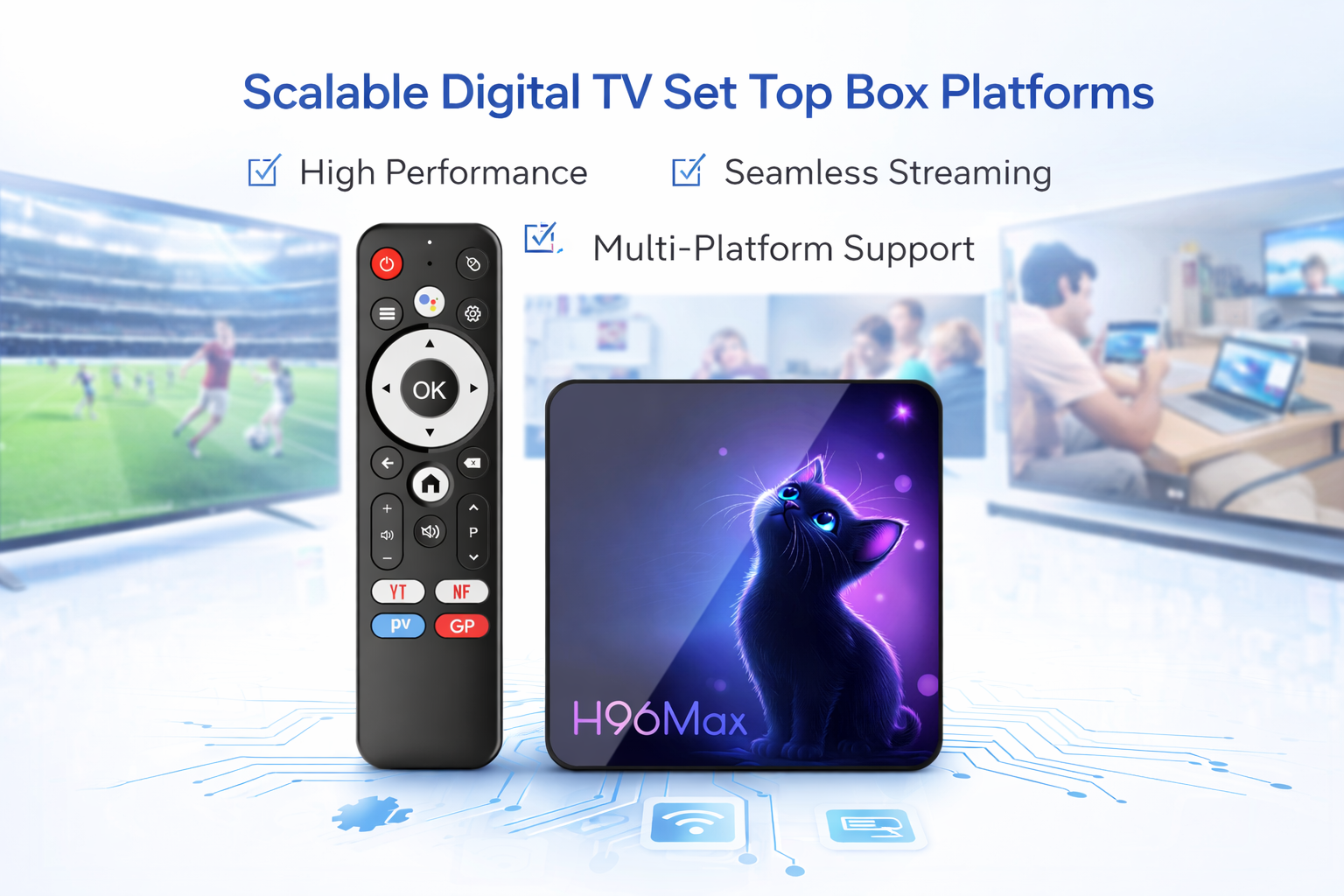
A Strategic Guide to Evaluating Set Top Box Procurement for Operators
For telecom operators, investing in a carrier-grade set top box is a mission-critical decision that directly influences service reliability, subscriber satisfaction, and long-term operational costs. According to data from GSMA and Statista, the global IPTV market continues to expand rapidly, yet nearly 60% of service complaints are still linked to device instability or poor integration. This highlights a crucial reality: selecting the wrong hardware partner or device specification can result in large-scale service disruptions and increased churn. Whether working with an IPTV set top box supplier or evaluating an Android TV set top box ecosystem, operators must take a structured, data-driven approach to procurement.
In today’s competitive environment, understanding how to choose a carrier-grade set top box supplier for IPTV operators is no longer optional. It is essential. Operators must also clearly define what to consider when buying 4K IPTV set top box for telecom operators to meet evolving consumer expectations such as ultra-high-definition streaming, low latency, and seamless UI performance.
1. Hardware Reliability and Lifecycle Assurance
The first and most fundamental question is whether the device truly qualifies as a carrier-grade set top box. Telecom-grade hardware must operate continuously under high load without failure. Industry benchmarks suggest that devices deployed in large IPTV networks should achieve an MTBF of over 50,000 hours. Additionally, operators should evaluate chipset stability, thermal management, and long-term component availability to avoid supply chain disruptions.
2. Middleware and Ecosystem Compatibility
A major challenge for operators is ensuring compatibility with existing middleware systems. Research from Digital TV Europe shows that integration issues can delay deployment timelines by up to 35%. A reliable operator set top box should support widely used middleware platforms and provide flexible SDK access. This is especially critical for Android TV set top box deployments where ecosystem fragmentation can create unexpected challenges.
3. Performance Under Real-World Conditions
Performance testing should go beyond lab conditions. Operators must verify how a 4K IPTV set top box performs under peak traffic scenarios, including high concurrency streaming and network fluctuations. Reports indicate that even a one-second delay in channel switching can significantly impact user satisfaction, making performance optimization a key procurement factor.
4. Security and Content Protection Standards
Content security remains a top priority. A carrier-grade set top box must support advanced DRM systems such as Widevine and PlayReady, along with secure boot and hardware-level encryption. Failure to meet these standards can expose operators to piracy risks and regulatory penalties.
5. Scalability and Cloud Integration
As subscriber bases grow, scalability becomes critical. Operators should ensure that their IPTV set top box supplier provides solutions compatible with cloud-based architectures and supports remote device management. Cloud integration allows for faster updates and improved service flexibility.
6. Software Maintenance and OTA Capability
Long-term success depends heavily on software support. Devices must enable OTA updates, bug fixes, and feature upgrades. Studies show that operators who implement regular OTA strategies reduce maintenance costs by up to 28%. Android TV set top box platforms particularly require consistent updates to maintain app ecosystem compatibility.
7. Supplier Credibility and Manufacturing Strength
Choosing the right IPTV set top box supplier involves evaluating more than pricing. Operators should examine factory certifications, production capacity, and global deployment experience. Supplier instability can lead to delayed deliveries and inconsistent product quality.
8. Total Cost of Ownership Analysis
While initial device pricing is important, the total cost of ownership provides a more accurate picture. Factors such as failure rates, support costs, and upgrade requirements must be considered. Industry data suggests that low-cost devices can increase long-term expenses by over 30% due to higher replacement rates.
9. Future-Proof Technology Support
Technology evolves rapidly, and operators must ensure their carrier-grade set top box supports emerging standards such as AV1 decoding, AI-based recommendations, and voice interaction. Future-proofing reduces the need for frequent hardware replacements.
10. Proven Deployment Case Studies
Finally, real-world validation is essential. Operators should request detailed case studies demonstrating successful deployments. Verified performance in similar markets provides strong evidence of reliability and reduces procurement risks.
Across all these considerations, the importance of selecting a true carrier-grade set top box cannot be overstated. Each decision—from hardware reliability to supplier credibility—directly impacts service continuity and customer satisfaction. As the IPTV industry continues to grow, operators that adopt a structured procurement approach consistently outperform competitors in both service quality and cost efficiency.
In conclusion, procurement is not just about selecting a device but about building a sustainable ecosystem. A well-chosen carrier-grade set top box enables operators to deliver high-quality services, scale efficiently, and adapt to future technological advancements.
As a professional source factory, H96 Max offers strong manufacturing capabilities, strict quality control, and flexible OEM/ODM services for global operators. Partner with H96 Max today to ensure a reliable and future-ready IPTV deployment.
READ MORE
Final Guide to Carrier-Grade Set Top Box Procurement for IPTV Operators
Build vs Buy vs ODM: Set Top Box Strategy for IPTV Operators
Different IPTV Operator Strategies for Set Top Box Procurement
Carrier-Grade Set Top Box Procurement Checklist for Operators
How to Compare Carrier-Grade Set Top Box Solutions for IPTV Operators
How Operators Avoid Failure in Set Top Box Selection
Quick Links

.png "Watch H96 Max Android TV Box reviews on our YouTube channel")

.png "Explore H96 Max product photos on Instagram")