.png "H96 Max Android TV Box video reviews and tutorials on YouTube")
.png "H96 Max Android TV Box photos and lifestyle shots on Instagram")



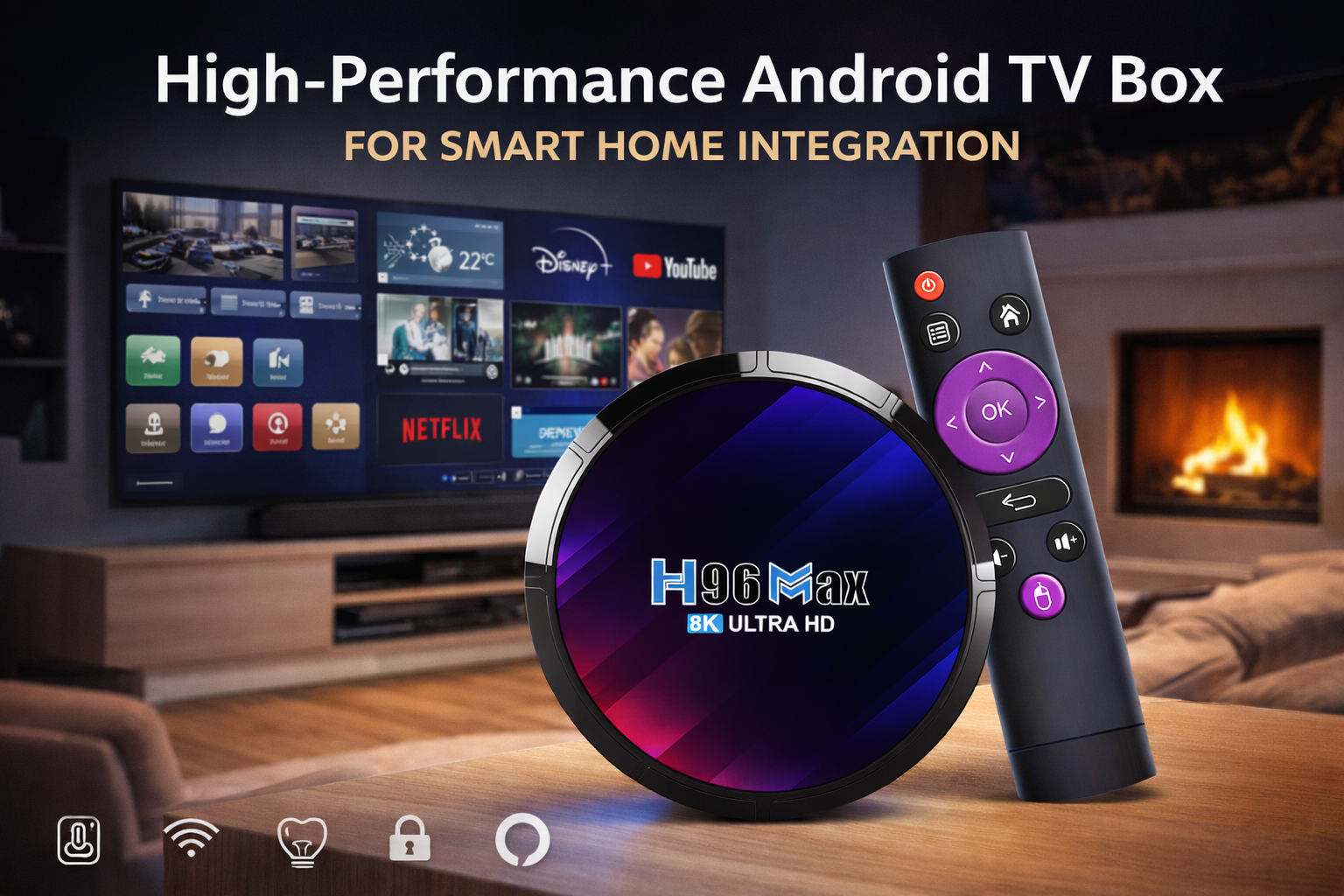
Global Ranking of Home Entertainment Devices in 2026
The Best Android TV Box for Home Entertainment 2026 is no longer judged as a “better remote control” for a TV. In overseas markets, it sits inside a platform economy where operating systems, content rights, ad-tech, and refresh cycles determine what households watch and which brands capture long-term margin. If you’re asking, “Where does Android TV Box rank in home entertainment devices in 2026?”, the answer depends on which metric you prioritize: user growth, ecosystem control, replacement cadence, or monetization power.
This analysis ranks Smart TV built-in systems, streaming sticks (Fire TV/Roku-class devices), gaming consoles, Android TV Box, and smart projectors using four lenses: user growth rate, ecosystem control, hardware replacement cycle, and profit model. It is written to help product managers, distributors, and operators make 2026 decisions without vendor hype.
Ecosystem hierarchy: a ranking that explains the “why”
A practical global hierarchy for 2026 looks like this:
Smart TVs with built-in OS
Streaming sticks (Fire TV, Roku, Chromecast-style dongles)
Gaming consoles (PlayStation, Xbox)
Android TV Box
Smart projectors (as a primary device category)
This is not a shipment league table. It’s a “default experience” ranking. In connected TV, the winner is the device or OS that becomes the first screen a household sees, the app store gatekeeper, and the advertising inventory owner. Programmatic CTV studies based on ad delivery repeatedly show how OS platforms translate identity and measurement into market power; for example, Pixalate’s device market share reporting and related industry coverage has highlighted Roku and Amazon as leading platforms in programmatic CTV delivery, reinforcing the idea that ad-tech integration shapes distribution.
Smart TVs: why they sit at the top
Smart TVs dominate Home Entertainment Device Trends 2026 because the OS is embedded in the display and can claim default placement. Even when a household plugs in an external device, the Smart TV OS still competes through home-screen positioning, native “free channels,” and recommendation rows.
Key structural advantages:
Default interface control (home screen and launcher)
Data advantage (viewing behavior and household signals)
Monetization depth (ads, subscription rev-share, promoted content)
The trade-off is speed. A TV’s replacement cycle is commonly 5–7 years, which is slow in codec evolution, security patching, and app fragmentation. That gap—“the panel is fine, the software is old”—is where external devices keep winning budget.
Streaming sticks: growth through ecosystem subsidies
The Streaming Device Market 2026 keeps expanding, and streaming sticks rank second because they pair low entry price with a platform business model. Fire TV and Roku-class devices are often priced aggressively because the ecosystem monetizes after the sale via ads and service revenue. Industry reporting on major advertising partnerships in the Roku/Amazon orbit illustrates why platforms chase scale: more reachable connected households increases ad yield and justifies hardware subsidies.
Sticks typically win on:
Cheapest upgrade path for older TVs
Consistent OS across multiple rooms
Rapid iteration (often 2–3 year cycles)
But they also have ceilings: limited storage, modest RAM tiers, and minimal customization. Those constraints matter for managed IPTV, hospitality deployments, and regions where the “default” app catalog differs from the U.S.
Gaming consoles: high engagement, narrower penetration
Gaming consoles rank third because they deliver premium performance and strong monetization per user, but they are not universal household endpoints. Their profit engine is software and subscriptions, not ad inventory on the home screen. Replacement cycles are long (often 6–8 years), and penetration is tied to gamer demographics and release timing. Consoles can be excellent streaming endpoints, yet they rarely become the primary OS for a whole household.
Android TV Box: fourth in ecosystem control, strong in buyer control
Android TV boxes sit fourth in ecosystem dominance because many do not own the global ad stack at the scale of major platform ecosystems. However, Android TV Box Market Share 2026 dynamics are market-dependent: Android boxes often grow fastest where Smart TV ecosystems are fragmented, budgets are tight, or operators need configurability.
This is where the Best Android TV Box for Home Entertainment 2026 earns its value in a different way. It competes on controllability:
Hardware headroom (higher RAM/storage and stronger chipsets)
Integration freedom (operator apps, regional OTT, IPTV middleware, custom launchers)
Lifecycle control (tailored firmware and security patch cadence)
OEM/ODM branding options
In many emerging markets, Smart TV vs Android TV Box 2026 is a practical choice: keep an acceptable panel, add a better “smart layer.” That modular upgrade logic supports the Best Android TV Box for Home Entertainment 2026 as a cost-efficient performance lift rather than a new display purchase.
Smart projectors: fast growth, smaller base
Projectors are rising quickly in percentage terms, especially as “flex rooms” and second screens. But most still rely on an external device to unlock a complete app ecosystem. In practice, projectors often create additional demand for sticks or the Best Android TV Box for Home Entertainment 2026 rather than replacing them.
Why the same device ranks differently for different buyers
Ranking changes by stakeholder. A consumer ranks by convenience (what starts fastest), a distributor ranks by return rates and support cost, and an operator ranks by churn reduction and ARPU lift. In Global OTT Device Trends 2026 coverage, the common thread is friction reduction at the moment of play: faster wake, fewer logins, better recommendations, and smoother payments. Devices that cut friction gain watch-time; watch-time then feeds ad revenue and subscription retention.
Key pain points that shape buying decisions:
Smart TV built-in OS: UI slowdown after a few years, uneven app updates across brands, and limited storage on budget models. For partners, OS fragmentation raises QA and support cost.
Streaming sticks: simple and affordable, but storage and multitasking ceilings appear with heavier apps; deep customization is limited for managed deployments.
Consoles: great performance, but living-room control is weaker because usage is tied to gamer profiles and controllers.
Android TV boxes: quality variance and software support discipline are decisive. Stable firmware, security patching, and thermal design reduce returns and protect brand trust—why buyers evaluate the Best Android TV Box for Home Entertainment 2026 on lifecycle commitments, not just headline specs.
Projectors: portability is attractive, but ambient light and audio constraints often add peripherals and friction.
A second ranking: “who wins the economics?”
If you rank by ecosystem economics, Smart TVs and major streaming OS platforms win because advertising and data monetization subsidize devices at scale. That subsidy pressure forces mid-tier categories to differentiate: performance (better decoding, smoother UX), controllability (operator-grade management), or regional suitability (apps, languages, payments, and local content bundles).
The four lenses behind the ranking
1) User growth rate
Smart TVs grow steadily with TV replacement and broadband expansion. Streaming sticks grow via low-cost upgrades and multi-room adoption. Consoles grow steadily but remain demographic-bound. Android TV boxes can show strong growth where they are the most affordable upgrade for legacy screens. Projectors grow quickly but from a smaller base.
2) Ecosystem control
Ecosystem control means setting defaults: app discoverability, promoted content, ad targeting, and payments. Smart TVs and sticks lead because they own default interfaces and monetize ads at scale. Consoles control a powerful walled garden, but gaming comes first. Android TV boxes often give control to the buyer (operator, distributor, brand)—a different kind of power—even if they rank lower in global platform dominance.
3) Replacement cycle
TVs are slow. Sticks are fast. Android boxes are medium-fast (often 2–4 years), which aligns with chipset evolution, AV1/HDR adoption, Wi‑Fi upgrades, and security requirements. That cadence is a key reason the Best Android TV Box for Home Entertainment 2026 remains relevant in 2026 planning.
4) Profit model
Smart TVs and sticks increasingly monetize after the sale via ads and content partnerships. Consoles monetize through software, subscriptions, and storefront fees. Android TV boxes often monetize through hardware margin plus service bundling (ISP, hospitality, regional OTT). In some regions, margin-first hardware still matters; in others, managed service bundles are the real prize.
Two buyer questions—answered clearly
Where does Android TV Box rank in home entertainment devices in 2026?
In ecosystem dominance, it usually ranks behind Smart TVs, streaming sticks, and consoles. In strategic usefulness for partners who need customization, regional app access, or managed deployments, Android TV boxes can rank higher than that headline suggests.
Will Android TV Box still be competitive in 2026?
Yes—because competitiveness is not only ad-scale. It is also adaptability. The Best Android TV Box for Home Entertainment 2026 remains a flexible hardware layer for markets where platform lock-in, catalog differences, and operator requirements make “one-size-fits-all” streaming ecosystems less practical.
Practical takeaway
In mature markets with high Smart TV penetration, the opportunity is room expansion and experience upgrades. In emerging markets, the opportunity is smart enablement for existing screens and operator bundles, where Android TV boxes remain a direct route to new users.
If you want to explore OEM/ODM configurations, long-term firmware support, or regional packaging aligned to your channel model, contact the H96 Max manufacturing team for a technical collaboration discussion.
READ MORE
Three Certain Structural Trends in the Android TV Box Industry in 2026
Are Emerging Markets Still a Strategic Opportunity for Android TV Boxes?
North America vs Europe vs Latin America: A Comparative Analysis of Android TV Box Market Maturity
2026 Android TV Box vs Built-in Smart TV Systems: Who Will Lead the Market in the Next Three Years?
From Fire TV to Android Box: The Shifting Landscape of Global Streaming Hardware
Overseas Smart TV Box Market in 2026: Who Is Being Threatened by Substitutes?
How Many More Years Can Android TV Boxes Thrive? An Industry Lifecycle Analysis for 2026–2028
Global Android TV Box Demand Shifts in 2026: Which Countries Are Still Growing?
Overseas Android TV Box Market Trends in 2026: Where Is the Next Wave of Growth?
Quick Links

.png "Watch H96 Max Android TV Box reviews on our YouTube channel")

.png "Explore H96 Max product photos on Instagram")