.png "H96 Max Android TV Box video reviews and tutorials on YouTube")
.png "H96 Max Android TV Box photos and lifestyle shots on Instagram")



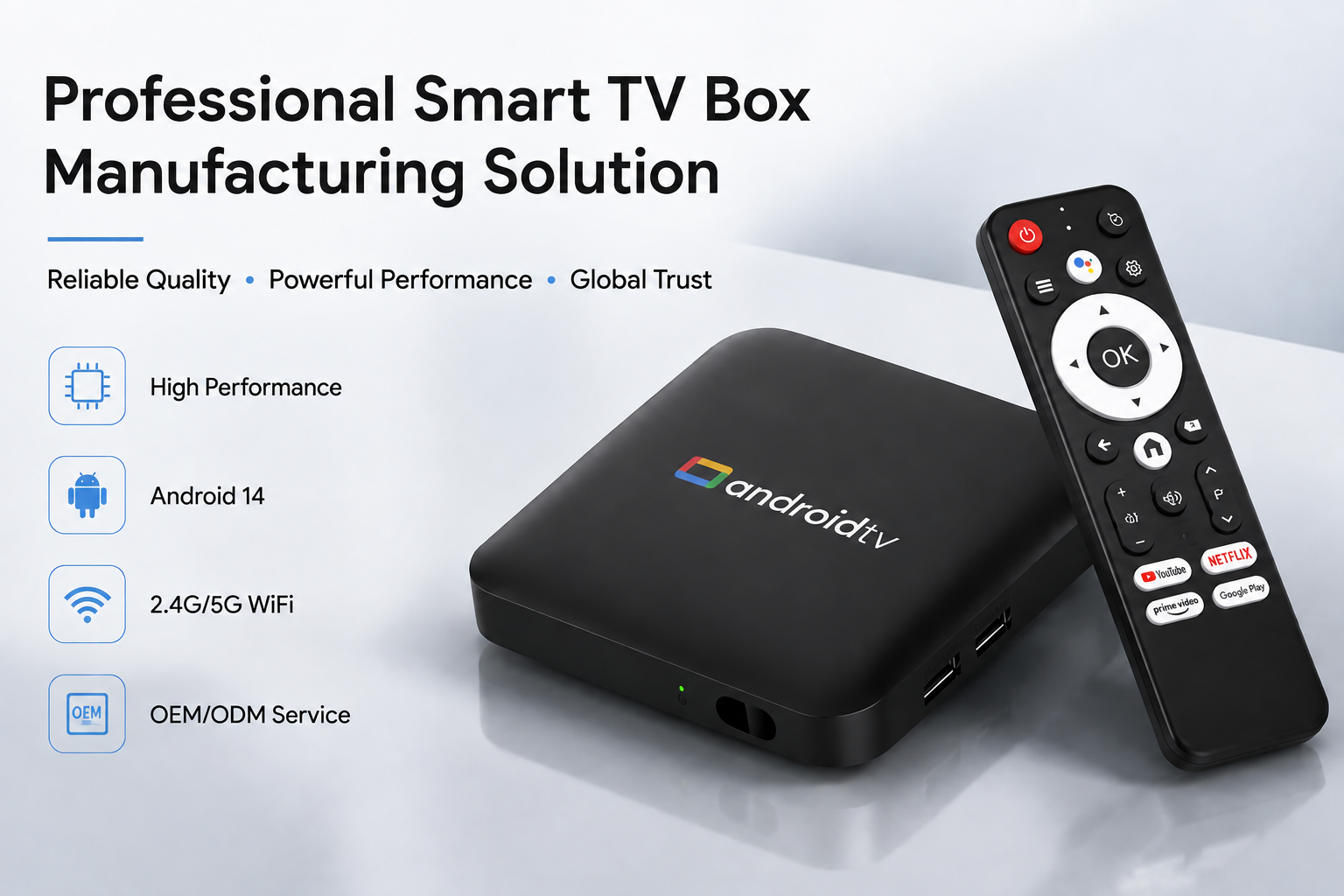
Hardware Specifications That Shape IPTV Operator Performance
A Smart TV Box for IPTV Operator deployment succeeds when hardware specifications translate into predictable viewing, manageable support, and long device life. A specification sheet can look impressive while still failing the operator’s real-world needs. The practical question is whether the box can decode the required streams, stay cool in a cabinet, hold a stable Wi-Fi connection, accept controlled firmware updates, work with the middleware client, and remain simple for subscribers. Hardware should be treated as the physical foundation of the whole IPTV service.
Processor Choice and Video Decoding
The processor is important, but operators should avoid judging it only by brand name or clock speed. IPTV workloads depend on video decode blocks, graphics responsiveness, memory bandwidth, and thermal stability. A chipset that handles H.265, AV1 where needed, VP9, HDR formats, and 4K output with low CPU load will usually perform better than a chip that posts good benchmark scores but becomes hot during long viewing sessions. The best Smart TV Box for IPTV Operator projects begin with the content roadmap: HD only, 4K live channels, catch-up TV, video on demand, or premium sports.
Hardware decoding also affects power consumption and device temperature. If decoding is inefficient, the box may play well in a short demo but throttle after several hours. Procurement teams should run long-loop tests with the actual bitrate profiles that will be used in production. They should include live channel switching, VOD playback, subtitles, audio track switching, and EPG navigation. A professional IPTV Smart Box Solution must remain smooth when multiple features are active, not only when playing a single test file.
Memory and Storage Planning
RAM determines how well the launcher, middleware client, background services, and streaming apps can coexist. For entry-level live TV, modest memory may be sufficient if the firmware is lean. For an Android TV Box for IPTV Business model that includes operator apps, third-party OTT apps, analytics, and remote support tools, higher memory is often safer. The goal is not to buy the largest number possible; the goal is to prevent slowdowns, app reloads, and support complaints after subscribers install updates or use the box for months.
Storage should be evaluated in the same way. Small storage can become a hidden problem when firmware partitions, app caches, logs, and future updates are considered. Operators should ask how much free space remains after the final firmware image, preloaded applications, and branding package are installed. They should also ask whether the update mechanism needs extra reserve space. A Smart TV Box for IPTV Operator may appear cost-effective at purchase, but inadequate storage can limit future security updates and shorten the commercial life of the device.
Network Interfaces and Wi-Fi Design
Network quality is where subscribers feel the service most directly. Ethernet should be available for installations that need maximum stability, especially hotels, premium homes, and multi-room deployments. Wi-Fi should be assessed through real tests, not only through chipset labels. Antenna placement, enclosure material, PCB design, router compatibility, and firmware drivers all influence performance. Operators should test the device in apartments, concrete buildings, and crowded Wi-Fi environments because those are the places where complaints usually begin.
Connectivity data reinforces this requirement. ITU reports that mobile broadband coverage is nearly universal, but quality and affordability gaps remain, and 5G coverage is still uneven by income group. This matters for fixed wireless and emerging-market IPTV strategies. A Smart TV Box for IPTV Operator should be designed for variable last-mile quality, with adaptive bitrate playback, reliable reconnection, and clear user messages when the network is the cause of failure. Blaming the household router is not enough; the device must help operators recover the viewing session.
Ports, Accessories, and Installation Reality
Ports define installation flexibility. HDMI is standard, but operators may also need AV output for older televisions, USB for service tools, microSD for special applications, optical audio for premium setups, or Bluetooth for modern remotes. The remote control itself should be treated as a hardware component, not an accessory afterthought. Button layout, key durability, infrared angle, Bluetooth pairing, battery type, and voice key planning can all affect call-center volume. An experienced IPTV Set Top Box Supplier will understand that the remote is often the subscriber’s first impression of the service.
Packaging and physical design also matter. A box that overheats when stacked under a router, or a power adapter that fails local certification expectations, can damage the operator brand. Labels should support serial number, MAC address, barcode scanning, and warehouse tracking. The enclosure should allow ventilation while still looking acceptable in a living room. A Custom Smart TV Box for IPTV Operators program can include brand color, logo, remote keys, quick-start guide, and carton design, but the industrial design should never compromise thermal behavior.
Security Hardware and Firmware Trust
Security cannot be added only at the middleware layer. Hardware should support secure boot where required, signed firmware, protected key storage, and controlled update flows. Operators working with premium content should review DRM levels, HDCP support, and device identity management. They should also decide whether the box will support app installation from unknown sources, how developer options are controlled, and how factory reset affects operator configuration. A Smart TV Box for IPTV Operator is part of the revenue system, so it must be protected as a revenue endpoint.
Security also has a direct commercial dimension. Synamedia’s report on piracy impact cited billions in losses across entertainment and sports content in analyzed markets. While piracy is a wider ecosystem issue, unmanaged endpoints can make enforcement harder. Operators should choose devices that help authenticate subscribers, secure firmware, and maintain traceability from factory to activation. The right IPTV Hardware Solution Provider will support these controls instead of treating hardware as a neutral commodity.
Thermals, Power, and Reliability Testing
Thermal design is one of the most underrated specifications. A box may pass a functional test at room temperature but fail in a cabinet, hotel room, or tropical market. Operators should request thermal test data and perform their own continuous playback tests under realistic conditions. They should monitor surface temperature, frame drops, Wi-Fi performance, and UI responsiveness after several hours. Fanless design is preferred for silence and reliability, but it requires correct enclosure and PCB planning.
Power adapters deserve equal attention. They should match local voltage requirements, plug standards, safety expectations, and cable length needs. Poor adapters create failures that customers interpret as box failures. Procurement should therefore include the complete kit: box, remote, power adapter, HDMI cable, printed materials, packaging, and firmware. A Smart TV Box for IPTV Operator project is not finished when the mainboard works; it is finished when every component supports predictable installation at scale.
Specification Tiers for Different Business Models
Not every IPTV market needs the same specification. An entry-tier box can serve HD live channels, basic VOD, and simple middleware in price-sensitive markets. A mid-tier model can support smoother 4K playback, stronger Wi-Fi, more storage, and branded launcher experiences. A premium model may add voice remote, better Bluetooth, stronger graphics, advanced codecs, and more sophisticated security. Operators should connect each tier to ARPU, expected support load, and service promise rather than chasing one universal configuration.
The streaming market also supports tiering. Omdia reported that online video revenue overtook pay TV revenue in 2025, while lower-cost ad-supported tiers helped drive subscription growth. For IPTV operators, this suggests that hardware tiers can support different commercial packages: affordable access, ad-supported bundles, premium 4K entertainment, and hospitality or enterprise services. A Smart TV Box for IPTV Operator strategy should give marketing teams room to package services without fragmenting operations.
A final specification review should also include lifecycle availability. Operators should ask whether the same chipset, Wi-Fi module, memory type, and enclosure can remain available through the planned order cycle. Component substitution can be acceptable when disclosed and tested, but silent changes can create firmware differences that complicate support. For this reason, the purchasing contract should define approved alternatives, sample revalidation rules, and production inspection steps. The strongest Smart TV Box for IPTV Operator programs treat consistency as a feature, because stable hardware reduces firmware branches, warehouse confusion, and field-support complexity.
How to Validate a Supplier’s Specification Claims
Operators should request engineering samples with final or near-final firmware, then test them against a written acceptance plan. The plan should include codec playback, channel zapping, Wi-Fi range, Ethernet stability, EPG loading, standby recovery, OTA update, factory reset, remote pairing, app launch, and heat. Ask the supplier to explain any difference between sample and mass production. A trustworthy supplier will document components, communicate firmware status, and be transparent about lead time and substitution risk.
H96 Max supports operators with source-factory hardware selection, OEM and ODM customization, firmware cooperation, remote-control options, packaging design, and production planning. For buyers comparing a Smart TV Box for IPTV Operator project across multiple vendors, direct factory communication can reduce uncertainty around specifications, cost, and delivery. Partner with H96 Max today to build a hardware roadmap that matches your IPTV market, budget, and subscriber experience goals.
READ MORE
Future Trends of Smart TV Box for IPTV Operators: AI, Cloud IPTV, and Next Generation Streaming
IPTV Middleware Integration with Smart TV Box: A Complete Technical Guide
How to Select a Reliable Smart TV Box Manufacturer for IPTV Business
Smart TV Box Solutions for Different IPTV Markets: Telecom, Hotel, and Enterprise Applications
How Smart TV Box Helps IPTV Operators Increase Revenue and Customer Engagement
Android Smart TV Box vs Traditional IPTV Set Top Box: Which Solution Is Better for Operators?
Custom Smart TV Box Solutions for IPTV Operators: OEM and ODM Services Explained
Smart TV Box Deployment Guide for IPTV Operators: From Installation to Management
How to Choose the Best Smart TV Box for IPTV Operators: A Complete Buying Guide
Quick Links

.png "Watch H96 Max Android TV Box reviews on our YouTube channel")

.png "Explore H96 Max product photos on Instagram")