.png "H96 Max Android TV Box video reviews and tutorials on YouTube")
.png "H96 Max Android TV Box photos and lifestyle shots on Instagram")



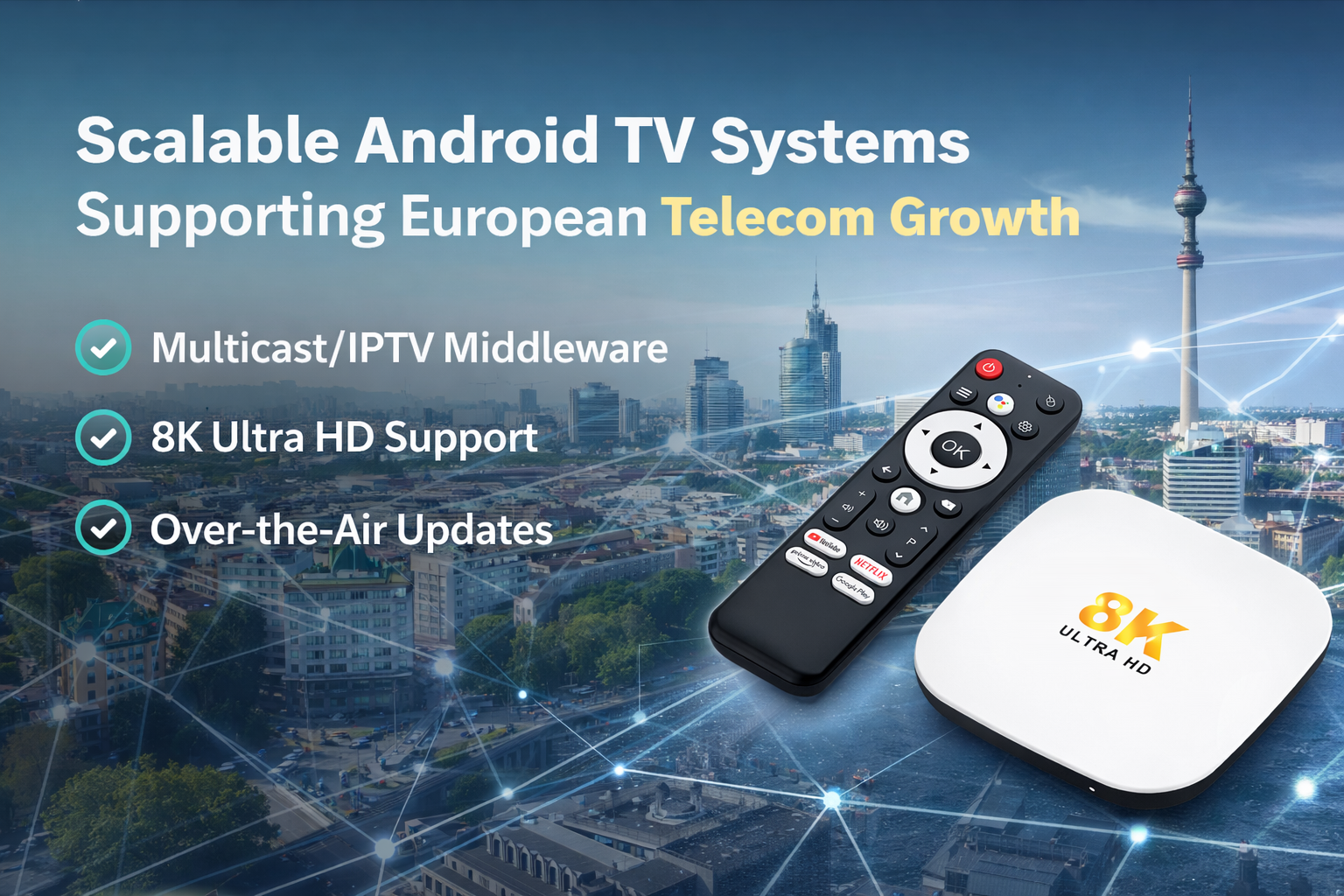
Supply Chain Stability and Manufacturing Capacity for Android TV Devices in European Telecom Networks
As IPTV adoption continues to accelerate across Europe, telecom operators are investing heavily in device ecosystems capable of supporting hybrid broadcast and OTT streaming platforms. Among the most widely deployed endpoints in these infrastructures is the Android TV Box for telecom operators Europe. These devices provide the technological foundation that allows telecom providers to deliver television services, streaming applications, and interactive digital experiences directly into subscriber homes. While much attention is often given to software capabilities and streaming performance, supply chain stability and manufacturing scalability are equally critical factors influencing the success of large‑scale IPTV deployments.
Telecom operators deploying an Android TV Box for telecom operators Europe must plan infrastructure rollouts that may involve hundreds of thousands of devices across multiple regions. Device shipments often occur in phases over several years as subscriber bases expand. If manufacturing partners cannot maintain consistent production capacity or component availability, operators may face delays that disrupt service launches and slow network expansion strategies.
Industry analysts from organizations such as Omdia and Digital TV Europe have repeatedly highlighted supply chain resilience as one of the most underestimated risks in modern IPTV deployments. Operators evaluating an Android TV Box for telecom operators must therefore assess not only device specifications but also the manufacturing ecosystems that support these products.
When selecting an Android IPTV box for telecom operators Europe, procurement teams increasingly analyze supplier production capacity, component sourcing strategies, logistics infrastructure, and long‑term manufacturing stability. These factors collectively determine whether device vendors can support the sustained growth of IPTV platforms operating across competitive European media markets.
The Scale of IPTV Hardware Deployment
The scale of hardware deployment within telecom IPTV networks is significantly larger than typical consumer electronics distribution. Major European telecom operators may deploy several hundred thousand devices during the initial rollout phase of a new television platform. Over time, as subscriber numbers increase and hardware refresh cycles occur, total device counts can exceed one million units.
This scale means that even small disruptions in the manufacturing supply chain can create major operational challenges. If a supplier cannot deliver devices according to deployment schedules, operators may be forced to delay subscriber activations or postpone marketing campaigns for new services.
A reliable Operator Android TV Box supplier Europe must therefore demonstrate the ability to maintain stable production output while meeting strict quality standards. Manufacturing facilities must be capable of scaling production volumes quickly in response to operator demand.
For telecom companies planning long‑term IPTV expansion, manufacturing scalability is a fundamental requirement rather than a secondary procurement consideration.
Component Sourcing and Semiconductor Availability
Modern streaming devices rely on complex semiconductor architectures that integrate processors, memory modules, wireless connectivity components, and video decoding hardware. Each of these components must be sourced through global semiconductor supply chains.
Recent industry disruptions have demonstrated how vulnerable these supply chains can become. Global chipset shortages during recent years caused delays across the consumer electronics sector, affecting production schedules for a wide range of devices.
For telecom operators deploying an Android TV Box for telecom operators Europe, semiconductor supply stability becomes a strategic consideration. Procurement teams often evaluate whether device manufacturers maintain long‑term component supply agreements and diversified sourcing strategies.
An experienced Android TV Box solution for telecom operators provider typically maintains relationships with multiple component suppliers, allowing production to continue even when specific components experience temporary shortages.
Diversified sourcing strategies therefore help ensure that IPTV deployment schedules remain stable despite fluctuations in global semiconductor availability.
Manufacturing Infrastructure and Production Capacity
Beyond component sourcing, telecom operators must also evaluate the manufacturing infrastructure supporting device production. A typical Android TV Box solution for telecom operators requires assembly facilities equipped with automated production lines, quality inspection systems, and packaging operations capable of handling large order volumes.
Manufacturing partners must demonstrate consistent quality control procedures to ensure that devices shipped across large deployments meet reliability standards. Even minor hardware defects can generate widespread technical issues when devices are deployed at scale.
Industry best practices often include automated functional testing, thermal validation, and network connectivity verification during the production process. These procedures ensure that each Android TV Box for telecom operators Europe leaving the factory meets strict performance and reliability requirements.
Operators evaluating suppliers frequently conduct factory audits to verify manufacturing capacity and quality control procedures before approving long‑term procurement agreements.
Global Logistics and Distribution Networks
Logistics infrastructure also plays a vital role in ensuring reliable device delivery. Telecom operators deploying IPTV services must distribute devices to warehouses, retail locations, and customer installation centers across multiple countries.
An effective Android TV Box solution for telecom operators in Europe therefore requires well‑established global shipping and distribution networks capable of handling large device shipments.
Manufacturing partners typically collaborate with international logistics providers to coordinate transportation from production facilities to regional distribution hubs. These logistics operations must be carefully managed to avoid shipment delays that could affect subscriber activation schedules.
Telecom procurement teams therefore examine logistics reliability and regional distribution infrastructure when selecting device suppliers.
Long‑Term Vendor Stability and Lifecycle Support
Another factor influencing supply chain reliability is the long‑term stability of device vendors themselves. IPTV deployments often extend over many years, and telecom operators rely on suppliers to provide continued production support throughout this lifecycle.
A dependable OEM Android TV Box manufacturer for European telecom operators should demonstrate strong financial stability, established manufacturing partnerships, and long‑term commitment to device platform development.
Vendors must also maintain the ability to produce replacement devices or updated hardware revisions as technology evolves. Without long‑term vendor stability, operators may face challenges maintaining consistent device ecosystems across their subscriber base.
These considerations highlight why telecom procurement teams increasingly evaluate vendor track records and industry experience when selecting an Android TV Box for telecom operators Europe.
Building Resilient IPTV Hardware Supply Chains
As IPTV services continue to expand across Europe, supply chain resilience will remain a central concern for telecom operators. Successful deployments require device platforms supported by stable manufacturing ecosystems, diversified component sourcing strategies, and reliable logistics infrastructure.
Operators that prioritize supply chain evaluation during procurement processes are better positioned to avoid deployment delays and maintain consistent service growth.
Manufacturing Expertise Supporting Telecom IPTV Infrastructure
H96 Max operates as a professional Android TV hardware manufacturing platform supporting IPTV infrastructure projects across global markets. With mature production facilities, strict quality control procedures, and scalable manufacturing capacity, H96 Max provides hardware platforms suitable for telecom‑grade deployments.
Through stable production planning, certified device platforms, and deep experience in Android device architecture, H96 Max collaborates with telecom partners seeking reliable Android IPTV device infrastructure.
For telecom operators planning large‑scale IPTV expansion, working with experienced manufacturing partners can significantly reduce supply chain risks while ensuring consistent device availability.
Partner with H96 Max today to explore professional Android TV device platforms designed for telecom‑scale IPTV deployments.
READ MORE
Strategic Outlook for Android TV Infrastructure Among European Telecom Operators
Remote Device Management Architecture for Telecom Android TV Deployments in Europe
Security and DRM Architecture for Android TV Infrastructure in European Telecom Networks
Technical Stability Requirements for Android TV Infrastructure in European Telecom Networks
Procurement Framework for European Telecom Operators Selecting Android TV Platforms
How European Telecom Operators Evaluate Android TV Device Architecture Before IPTV Deployment
Why Telecom Operators in Europe Fail Android TV Deployments and How to Avoid It
Quick Links

.png "Watch H96 Max Android TV Box reviews on our YouTube channel")

.png "Explore H96 Max product photos on Instagram")