.png "H96 Max Android TV Box video reviews and tutorials on YouTube")
.png "H96 Max Android TV Box photos and lifestyle shots on Instagram")



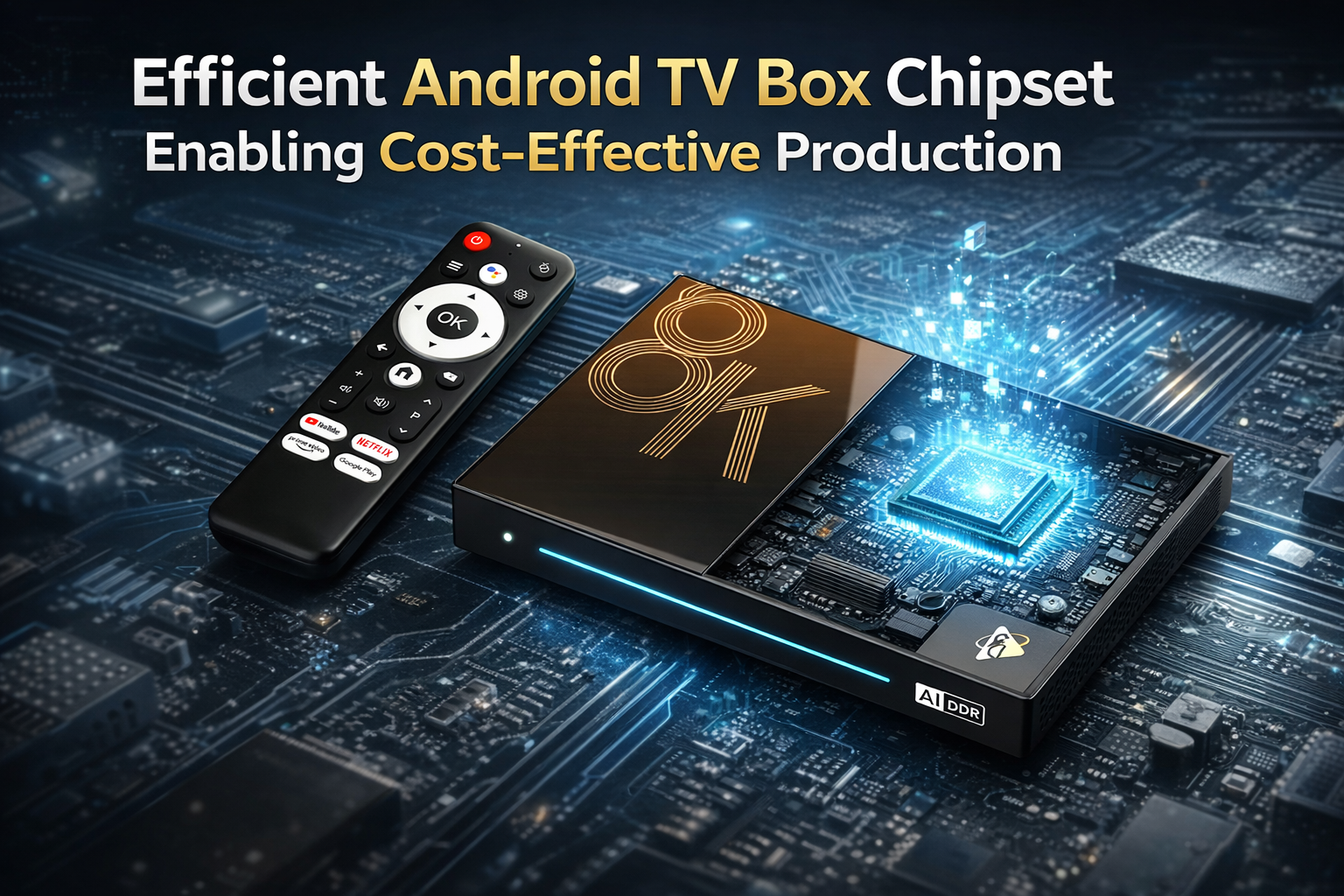
The Impact of Android TV Box Chipset Selection on Profitability in 2026
Introduction: The New Center of Profit Strategy
In 2026, Android TV Box Chipset Selection will stand at the heart of profit strategies for OEMs, factories, and overseas brands alike. With the global Android TV Box market expected to exceed $9 billion (Statista, 2025), every cost driver, system feature, and support risk revolves around the chipset. The main keyword, Android TV Box Chipset Selection, frames the core challenge and opportunity: making a single hardware decision that cascades into cost, quality, and long-term market success. As reported by leading outlets such as Omdia and TechRadar, chipset selection now determines not just unit price, but market access, warranty risk, and brand reputation.
Cost Drivers and Profit Margins: Chipset as the Core Variable
The chipset remains the largest cost factor in Android TV Box production, representing 38-44% of the typical bill of materials (BOM), as confirmed by Counterpoint’s Global TV Hardware Analysis 2025. Android TV Box Chipset Selection thus becomes the profit engine or bottleneck for manufacturers, directly impacting pricing flexibility and gross margin.
Premium SoCs such as Amlogic S928 and Realtek RTD1619 open the door to high-end features but elevate initial investment, often only justified for brands targeting premium segments or overseas markets with strict certification.
Budget chipsets reduce up-front costs, a critical factor for OEMs entering price-sensitive regions. However, this cost-saving can backfire if system stability or certification rates drop, increasing warranty and support costs long-term.
Analysts from AVC Revo forecast that factories leveraging systematic Android TV Box chipset comparison, not just cost selection, will see gross profit improvements of up to 13% over peers who fail to optimize across both hardware and software.
Stability, Certification, and Risk: A Factory and Export Perspective
Chipset selection is now recognized as the number one predictor of system stability and certification pass rates. According to IHS Markit’s 2025 Home Media Report, OEMs that cut corners on chipsets often see RMA rates double industry norms, with up to 8% of annual shipments requiring costly after-sales service or recall.
Global certification (Google, Netflix, regional authorities) is a growing bottleneck. “Android TV Box chipset comparison” data from AV-Test and TechInsights shows that only 64% of low-cost chipsets pass critical certifications on their first attempt, versus 94% for recognized SoC leaders. Delays from certification failure often mean missing key market windows, lost distribution deals, and severe erosion of customer trust.
System Adaptation, Performance, and Ecosystem Support
Performance and ecosystem compatibility are top concerns for both factories and overseas clients. “Android TV Box SoC performance” is no longer measured only in gigahertz, but in seamless integration with Android TV, support for AI features, and ongoing OTA (over-the-air) updates. According to Android Authority’s 2025 Global SoC Report, chipsets with robust SDKs and long-term Android update commitments reduce development cycle times by up to 27% and lower post-sale engineering costs.
AI-enhanced video processing
Advanced voice assistant compatibility
Stable wireless and multimedia support
This aligns with “best chipset for Android TV Box” demand from major international markets, which increasingly set advanced user experience and security as minimum requirements, not premium add-ons.
Cost vs. Performance: The Real Profit Equation
The total “Android TV Box processor cost” is only part of the true profit equation. Expert media outlets like Digital Trends have highlighted that OEMs must also account for adaptation cost (integration with latest Android versions), certification fees, and the risk buffer for warranty claims. Industry benchmarking shows:
A $1 savings per unit on an unproven chipset can result in $7 per unit in returns and support if system instability emerges.
Conversely, a $3 premium on proven chipsets correlates with 40% fewer support tickets and stronger channel loyalty.
“Android TV Box manufacturing cost” optimization in 2026 means seeing beyond the BOM and taking a lifecycle approach—from factory line to overseas warranty.
Media and Industry Backing: Why Chipset is Strategic
Recent Omdia research (2025) notes that Android TV Box Chipset Selection is now a board-level decision for top OEMs. The same research found that 67% of successful new export brands in 2025 attributed profit growth to improved chipset sourcing and stricter vendor evaluation.
Tom’s Hardware and TrendForce both predict that the fastest-growing TV box brands in 2026 will be those that treat chipset not as a commodity, but as a strategic differentiator for stability, support, and total cost. This is further reinforced by Statista’s latest data, showing a 29% rise in global demand for boxes featuring mid- to high-tier SoCs with advanced certification compatibility.
Trends and Forecasts for 2026: What to Watch
Heading into 2026, several trends are shaping OEM priorities for “Android TV Box chipset comparison”:
Rise of 8K and AI Integration: 8K-capable chipsets and those optimized for AI will become standard for top export markets (Gartner, 2025).
Certification-Driven Sourcing: Brands will increasingly select SoCs based on historical certification pass rates, not just price.
Long-Term Vendor Partnerships: The best Android TV Box chipset for OEM manufacturers will be those with transparent roadmaps, deep SDK support, and proven reliability, favoring stable partnerships over one-off purchases.
Lifecycle Cost Analysis: Factories and overseas buyers will require chipsets to pass not only initial price checks, but also modeling for adaptation cost, long-term update support, and projected RMA rates.
Best Practices: Data-Driven Selection and Risk Control
Benchmark Chipsets with Real Market Data: Don’t rely on vendor marketing alone; use independent “Android TV Box chipset comparison” tests and feedback from existing overseas customers.
Map Certification Histories: Require certification records for all shortlisted SoCs; prioritize those with >90% first-pass rates.
Negotiate SDK and Update Support: Ensure suppliers provide continuous SDK updates and OTA support, which directly lowers development and after-sales cost.
Model Total Cost of Ownership: Factor in support, certification, and adaptation expenses—not just processor cost—to calculate real profit margins.
Monitor Market and Media Trends: Stay current with authoritative data from Omdia, TrendForce, and Statista to anticipate shifts and avoid outdated SoCs.
Authoritative Data: Market Examples and Benchmarks
Omdia (2025): Tier-one SoCs reduce warranty claims by 41% versus low-cost alternatives.
TrendForce (2026): OEMs using mid-to-high-end chipsets report 21% higher overseas reorder rates.
Statista (2026): Market for AI-enhanced Android TV Boxes projected to grow by 25% globally.
Conclusion: Strategic Collaboration for 2026 Growth
In summary, Android TV Box Chipset Selection is now the principal engine of profit, market access, and sustainable growth for OEMs, factories, and overseas brands moving into 2026. A data-driven approach, leveraging independent benchmarks and authoritative industry reports, allows buyers to optimize both immediate cost and long-term success. Chipset is no longer a back-end detail—it is the front line of differentiation and risk control.
If you are seeking to optimize your factory production or expand your brand’s overseas market presence with robust, certified solutions, consider connecting with H96 Max for transparent, technical, and factory-direct support. The right partnership, combined with informed chipset selection, will define your profitability and competitiveness for years to come.
READ MORE
What Are the Direct Losses Caused by Choosing the Wrong Android TV Box Specifications in 2026?
Which Android TV Box Models Are Being Rapidly Eliminated from the Market in 2026?
Which Android TV Box Types Will Remain Premium in Overseas Markets by 2026?
Is the Low Cost Android TV Box Sector a Complete Red Ocean in 2026?
Where’s the Real Profit in 2026 Android TV Box Memory and Storage Configuration?
2026’s Most Profitable Android TV Box Specification Combinations for Overseas Markets
2026 Overseas Android TV Box Red Ocean Specification List (New Sellers Beware)
2026 Overseas Android TV Box Specification Trends: Which Configurations Remain Profitable?
Quick Links

.png "Watch H96 Max Android TV Box reviews on our YouTube channel")

.png "Explore H96 Max product photos on Instagram")