.png "H96 Max Android TV Box video reviews and tutorials on YouTube")
.png "H96 Max Android TV Box photos and lifestyle shots on Instagram")



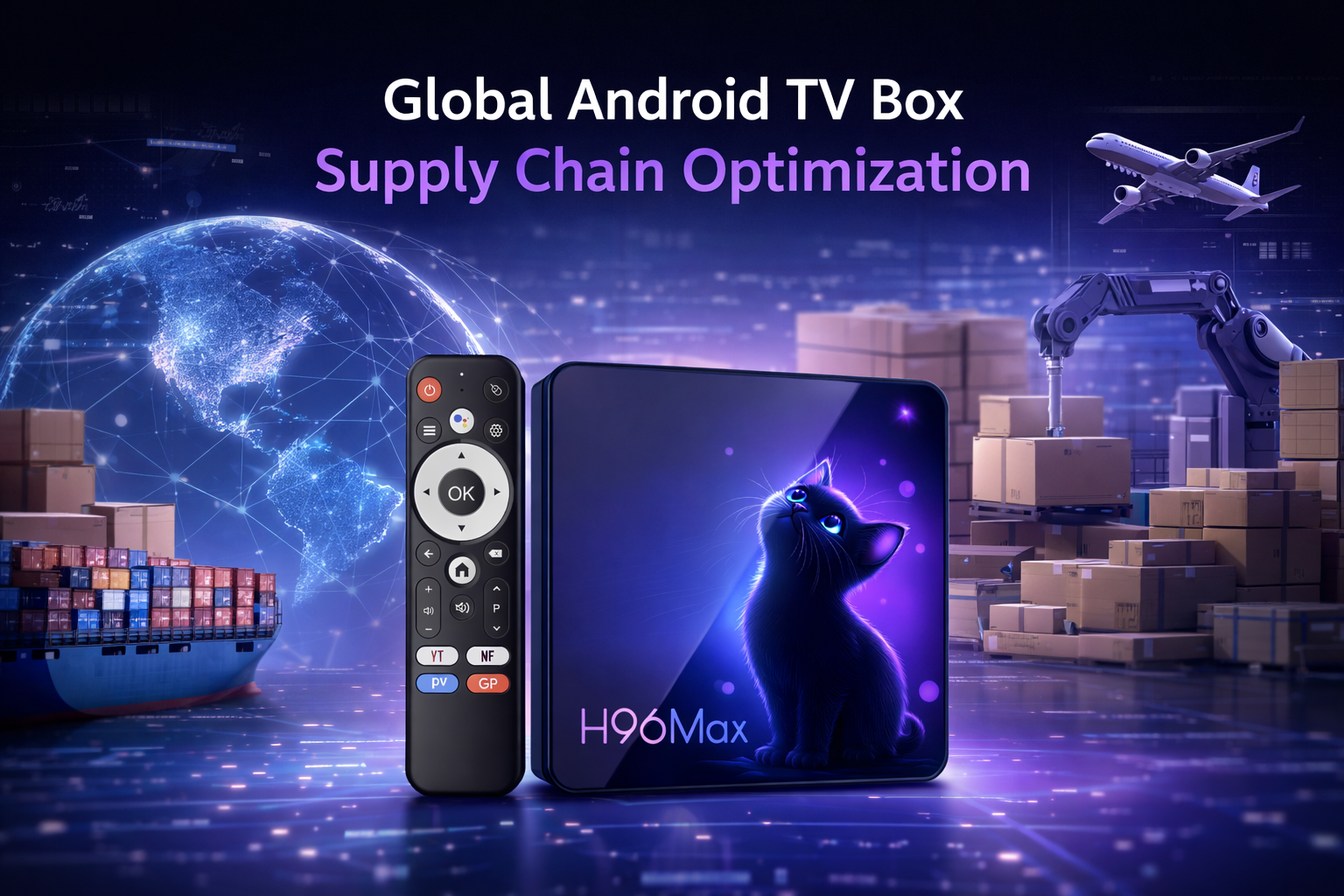
2026 Industry Outlook: Structural Forces Redefining Android TV Growth
Android TV Box Market Trends 2026 are entering a decisive phase of structural adjustment rather than cyclical fluctuation. After more than a decade of rapid expansion driven by cost efficiency and hardware iteration, the global streaming device ecosystem is transitioning toward maturity. Multiple Smart TV Box Industry Analysis reports from international research institutions indicate that shipment growth remains stable, yet profit distribution, channel structure, and competitive barriers are undergoing deep change. For every serious Android TV Box Manufacturer, understanding these structural certainties is more important than chasing short-term volume spikes. The 4K Android TV Box Market continues to expand as broadband penetration and OTT subscriptions increase across Asia, Latin America, Africa, and Eastern Europe. However, end users are no longer satisfied with basic decoding capability. Stability, certification, firmware continuity, ecosystem compatibility, and long-term service reliability have become baseline expectations. Android TV Box Market Trends 2026 therefore reflect a transformation from price-led expansion to capability-driven differentiation. Beneath the surface, three irreversible industry shifts are redefining the Future of Android TV Box Industry in 2026.
1. From Low-Price Internal Competition to Brand and Certification Upgrade
For many years, Android TV Box Wholesale channels were characterized by aggressive cost competition. Factories compressed margins to secure orders, resulting in homogeneous white-label products with minimal differentiation. While this model accelerated market penetration in developing regions, it also created instability: inconsistent firmware, weak compliance management, and high after-sales risk. Global regulatory standards are tightening. The European Union enforces CE and related directives. The United States requires FCC compliance. Increasingly, platform-level certification from Google and licensed ecosystem partners determines whether a device can access premium applications and official updates. According to industry data published by international consumer electronics associations, certified streaming devices demonstrate lower return rates and stronger retail channel confidence compared to uncertified alternatives. Android TV Box Market Trends 2026 clearly indicate that certification is no longer optional. A compliant OEM Android TV Box integrates hardware validation, DRM alignment, and secure OTA systems from the design stage. Brand credibility is directly tied to certification depth. Distributors evaluating an Android TV Box Manufacturer now prioritize documentation transparency, software maintenance capability, and regulatory preparedness over minor price differences. Branding is evolving alongside compliance. As consumer awareness grows, recognizable brand positioning improves channel negotiation power and long-term profitability. Instead of participating in destructive price wars, structured manufacturers are investing in firmware optimization, security updates, and lifecycle planning. In mature segments of the 4K Android TV Box Market, this shift is already visible: certified and well-supported models maintain stable pricing while low-end generic models experience shrinking margins. The first certainty shaping Android TV Box Market Trends 2026 is therefore the move from low-price internal competition toward branding and certification-driven value creation.
2. From Generic White-Label Products to Deep Customization and Operator Collaboration
The second structural shift concerns customization depth. Historically, most export-oriented factories produced standardized SKUs for Android TV Box Wholesale distributors. Product differentiation was limited to packaging and logo printing. However, telecom operators and IPTV service providers are expanding their influence across emerging markets, fundamentally changing demand patterns. Operators require integrated solutions rather than standalone hardware. These requirements typically include customized launcher interfaces, pre-installed regional OTT applications, DRM compliance for premium content, remote device management systems, and long-term firmware upgrade frameworks. Meeting these expectations demands engineering capability beyond simple assembly. Smart TV Box Industry Analysis increasingly highlights operator-driven deployments as a major growth engine. In Southeast Asia and Latin America, broadband providers are bundling Android-based streaming devices with subscription packages. In parts of Europe and the Middle East, IPTV operators seek tailored firmware ecosystems aligned with regional compliance standards. For an Android TV Box Manufacturer, this evolution transforms the competitive benchmark. Success depends on providing OEM Android TV Box solutions that combine hardware optimization with software customization. The Top Android TV Box Technology Trends for OEM Manufacturers include AV1 codec support for bandwidth efficiency, WiFi 6 and improved antenna architecture for connectivity stability, enhanced DRM frameworks, and AI-based user interface refinement. These features are not isolated technical upgrades; they enable scalable operator partnerships. Within the 4K Android TV Box Market, customization capability now functions as a market entry barrier. Generic white-label factories struggle to compete when operators demand deep firmware adaptation and long-term update commitments. Android TV Box Market Trends 2026 therefore confirm that integration strength is replacing superficial hardware differentiation. The Future of Android TV Box Industry in 2026 will reward manufacturers capable of collaborative development rather than transactional shipment. Operator partnerships are becoming multi-year engagements involving roadmap alignment, quality assurance systems, and dedicated technical support teams.
3. From One-Time Orders to Long-Term OEM and Strategic Supply Chain Cooperation
The third certainty arises from global supply chain restructuring. Semiconductor shortages and logistics disruptions in recent years exposed vulnerabilities in fragmented procurement strategies. Streaming device brands that relied on spot purchasing faced unstable lead times and unpredictable component costs. In response, buyers are transitioning toward long-term OEM Android TV Box cooperation models. Strategic agreements typically include forward component forecasting, shared chipset planning, dedicated production lines, and coordinated quality control procedures. This approach enhances both cost predictability and delivery reliability. Industry export statistics indicate that manufacturers with structured supply chain partnerships achieved stronger shipment stability during periods of global volatility. As a result, Android TV Box Wholesale buyers increasingly evaluate partners based on supply chain transparency and component sourcing strategy rather than solely on unit pricing. For a professional Android TV Box Manufacturer, long-term cooperation allows capital investment planning, R&D continuity, and production efficiency optimization. For brand owners and distributors, it reduces market risk and ensures consistent firmware evolution. Android TV Box Market Trends 2026 underscore resilience as a decisive competitive advantage. Within the 4K Android TV Box Market, scale is no longer measured purely by monthly output capacity. It is measured by supply chain coordination capability, certification preparedness, and lifecycle management strength. The shift from transactional procurement to strategic collaboration represents a structural maturation of the industry.
Why These Three Trends Are Structurally Certain
Several macroeconomic and technological forces reinforce these developments. Global OTT subscription numbers continue to expand, increasing consumer expectations for stable and secure streaming devices. Governments are strengthening electronic product compliance enforcement, naturally favoring structured and certified manufacturers. Telecom convergence accelerates integration between broadband services and streaming hardware, amplifying demand for customized solutions. Meanwhile, geopolitical and logistics uncertainties encourage buyers to prioritize reliable supply chain partnerships. Together, these forces make the three shifts embedded within Android TV Box Market Trends 2026 structurally irreversible rather than temporary fluctuations.
Strategic Implications for Global Buyers and Brands
For distributors, private label brands, and operators, adaptation requires strategic clarity. Evaluating a potential Android TV Box Manufacturer should involve assessing certification credentials, firmware development depth, OTA maintenance capability, chipset roadmap stability, and compliance documentation transparency. Price comparison alone no longer captures total risk exposure. Buyers participating in Android TV Box Wholesale markets should consider multi-year planning frameworks. Aligning product roadmaps with OEM partners improves market responsiveness and brand consistency. As Smart TV Box Industry Analysis increasingly emphasizes ecosystem maturity, fragmented procurement models become less sustainable. Android TV Box Market Trends 2026 signal that the industry is entering a disciplined phase. Companies that recognize these structural certainties early can reposition themselves advantageously within the evolving competitive landscape.
Conclusion: Positioning for a More Professional Industry Era
The Android TV Box industry in 2026 is not defined by rapid but unstable expansion. It is defined by certification upgrade, customization integration, and strategic supply chain cooperation. These three certain structural trends reshape profit distribution, partnership models, and technological priorities. Android TV Box Market Trends 2026 demonstrate that long-term competitiveness depends on branding credibility, OEM engineering capability, and resilient manufacturing systems. For global partners seeking structured collaboration aligned with the Future of Android TV Box Industry in 2026, H96 Max, as a source factory with mature OEM experience and international export expertise, is prepared for strategic dialogue and long-term cooperation.
READ MORE
Are Emerging Markets Still a Strategic Opportunity for Android TV Boxes?
Overseas Home Entertainment Device Trends in 2026: Where Does the Android TV Box Rank?
North America vs Europe vs Latin America: A Comparative Analysis of Android TV Box Market Maturity
2026 Android TV Box vs Built-in Smart TV Systems: Who Will Lead the Market in the Next Three Years?
From Fire TV to Android Box: The Shifting Landscape of Global Streaming Hardware
Overseas Smart TV Box Market in 2026: Who Is Being Threatened by Substitutes?
How Many More Years Can Android TV Boxes Thrive? An Industry Lifecycle Analysis for 2026–2028
Global Android TV Box Demand Shifts in 2026: Which Countries Are Still Growing?
Overseas Android TV Box Market Trends in 2026: Where Is the Next Wave of Growth?
Quick Links

.png "Watch H96 Max Android TV Box reviews on our YouTube channel")

.png "Explore H96 Max product photos on Instagram")