.png "H96 Max Android TV Box video reviews and tutorials on YouTube")
.png "H96 Max Android TV Box photos and lifestyle shots on Instagram")



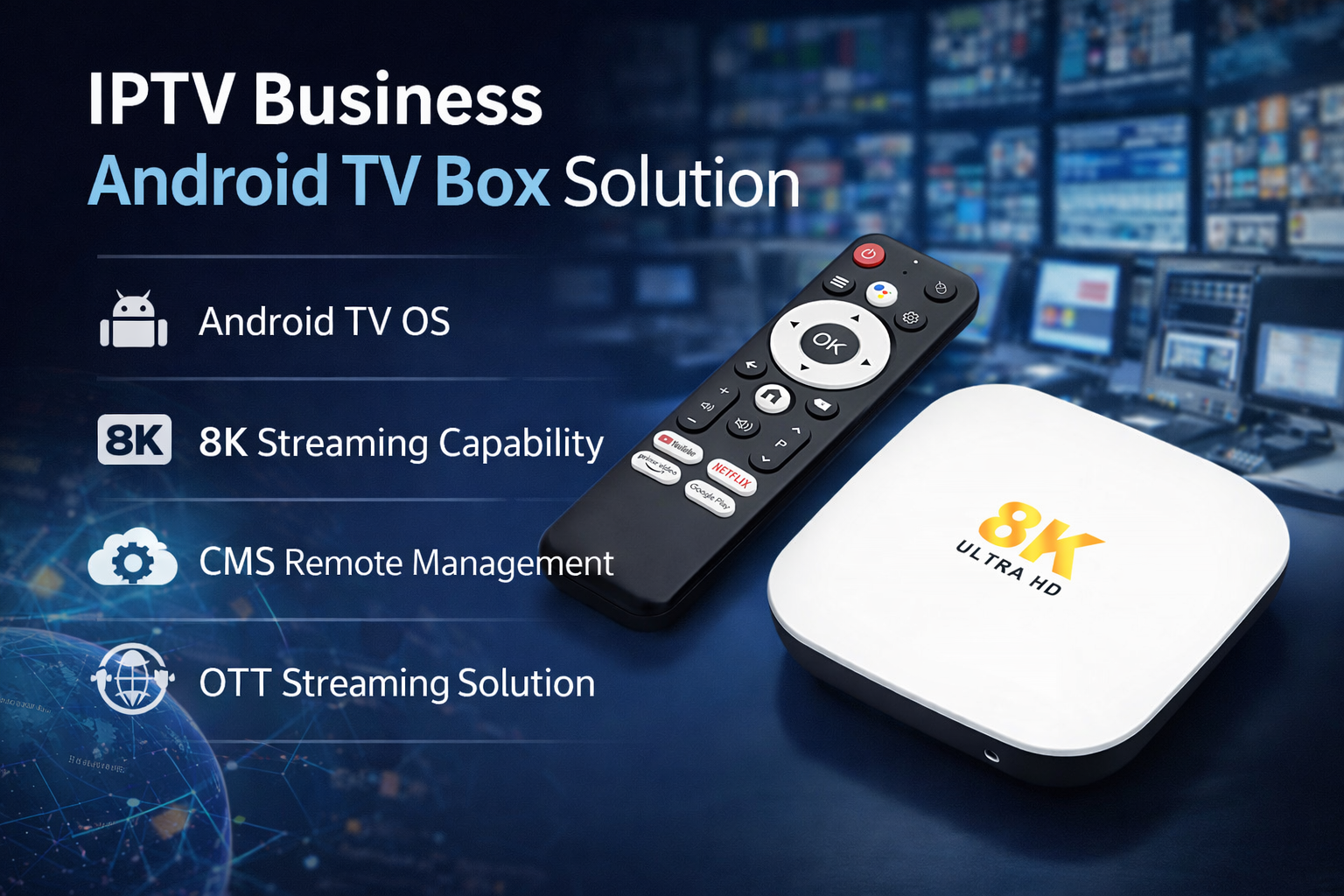
What Configuration Should You Choose for an IPTV Business Android TV Box?
For operators entering or scaling the IPTV market, choosing the right IPTV Android TV Box is not about chasing the highest specifications. It is about ensuring stable playback, long-term reliability, and cost efficiency under real IPTV usage conditions. Many service providers make the mistake of selecting hardware based on CPU frequency or marketing-driven memory claims, only to encounter buffering, overheating, or system crashes months later.
The real question is: What configuration is best for IPTV Android TV Box business? The answer lies in understanding how an IPTV set top box is actually used in daily scenarios — continuous streaming, high-bitrate decoding, background app caching, and often extended hours of operation per day.
Real IPTV Usage Scenario: Continuous Streaming Load
Unlike casual home users who stream occasionally, IPTV subscribers often watch live channels for extended periods. Average streaming time in many IPTV markets exceeds several hours daily. This means an Android IPTV box for streaming must operate under sustained decoding loads rather than short bursts.
Under these conditions, three stress factors dominate: continuous 4K decoding, persistent network throughput, and long-duration thermal pressure. Hardware decisions must prioritize stability under sustained use rather than peak benchmark scores.
Video Decoding: The Core of Stability
For any IPTV Android TV Box, decoding capability is more critical than raw CPU speed. IPTV services increasingly use H.265 to reduce bandwidth consumption, while AV1 adoption is growing rapidly across major platforms.
A practical IPTV box hardware specifications baseline should include native 4K decoding, H.265 hardware acceleration, and AV1 hardware decoding support. Without hardware-level decoding, the processor handles video via software processing, increasing heat and frame drops.
Why 4GB RAM Is the Mainstream Recommendation
Many entry-level IPTV set top box models still ship with 2GB RAM. In real deployment, this leads to app switching lag, background process shutdown, and slower EPG loading.
Under AOSP systems commonly used in IPTV environments, sufficient memory ensures smoother operation. 4GB RAM provides balanced performance, reduces system pauses, and supports firmware updates without instability.
Storage Capacity: 32GB or 64GB for Sustainable Use
Storage supports cached thumbnails, EPG data, application updates, and temporary buffering. 16GB devices often leave limited usable space after system allocation. Over time this reduces performance.
32GB is suitable for standard IPTV deployment, while 64GB offers additional margin for VOD-heavy ecosystems. In long-term operations, adequate storage lowers maintenance frequency.
Dual-Band WiFi and Network Reliability
Buffering complaints frequently stem from unstable networking. A modern IPTV Android TV Box should support dual-band WiFi and stable Ethernet connectivity. Dual-band capability improves performance in dense residential environments and ensures consistent streaming quality.
Thermal Design and Long-Session Stability
Continuous 4K playback generates sustained heat. Poor thermal layout causes throttling and random reboots. Reliable heat dissipation design ensures decoding stability during extended viewing sessions.
AOSP Compatibility and System Optimization
Most IPTV deployments rely on AOSP firmware for flexibility. Proper system optimization improves launcher performance, middleware integration, and playback smoothness. A Custom Android TV Box manufacturer experienced in IPTV integration can align firmware and hardware for stable performance.
Balanced Configuration Over Spec Inflation
An effective IPTV Android TV Box configuration typically includes stable chipset performance, 4GB RAM, 32GB or 64GB storage, advanced decoding capability, dual-band WiFi, and solid thermal design. Over-specifying CPU without optimizing cooling or networking does not improve IPTV service stability.
Operational Efficiency and Long-Term Reliability
Hardware reliability directly impacts customer retention and operational cost. Stable configuration choices reduce return rates and improve user satisfaction. Selecting the Best Android TV Box for IPTV requires focusing on sustained performance rather than marketing claims.
By aligning hardware decisions with real IPTV usage scenarios, service providers can build a stable and scalable deployment model. For operators seeking reliable production supply and firmware-level IPTV optimization, cooperation with an experienced source factory such as H96 Max can support long-term business development.
READ MORE
What Model Should Beginners Start With When Entering the TV Box Industry?
What Key Questions Should You Ask When Choosing an Android TV Box Supplier?
How to Choose the Right TV Box Model Based on Your Target Market?
How Big Is the Difference Between 2GB+16GB and 4GB+32GB Android TV Boxes?
What Certifications Are Required to Import Android TV Boxes in Different Countries?
How to Choose Between Amlogic and Rockchip Solutions for Android TV Boxes?
10 Core Technical Parameters You Must Understand Before Buying Android TV Boxes in Bulk
Quick Links

.png "Watch H96 Max Android TV Box reviews on our YouTube channel")

.png "Explore H96 Max product photos on Instagram")