.png "H96 Max Android TV Box video reviews and tutorials on YouTube")
.png "H96 Max Android TV Box photos and lifestyle shots on Instagram")



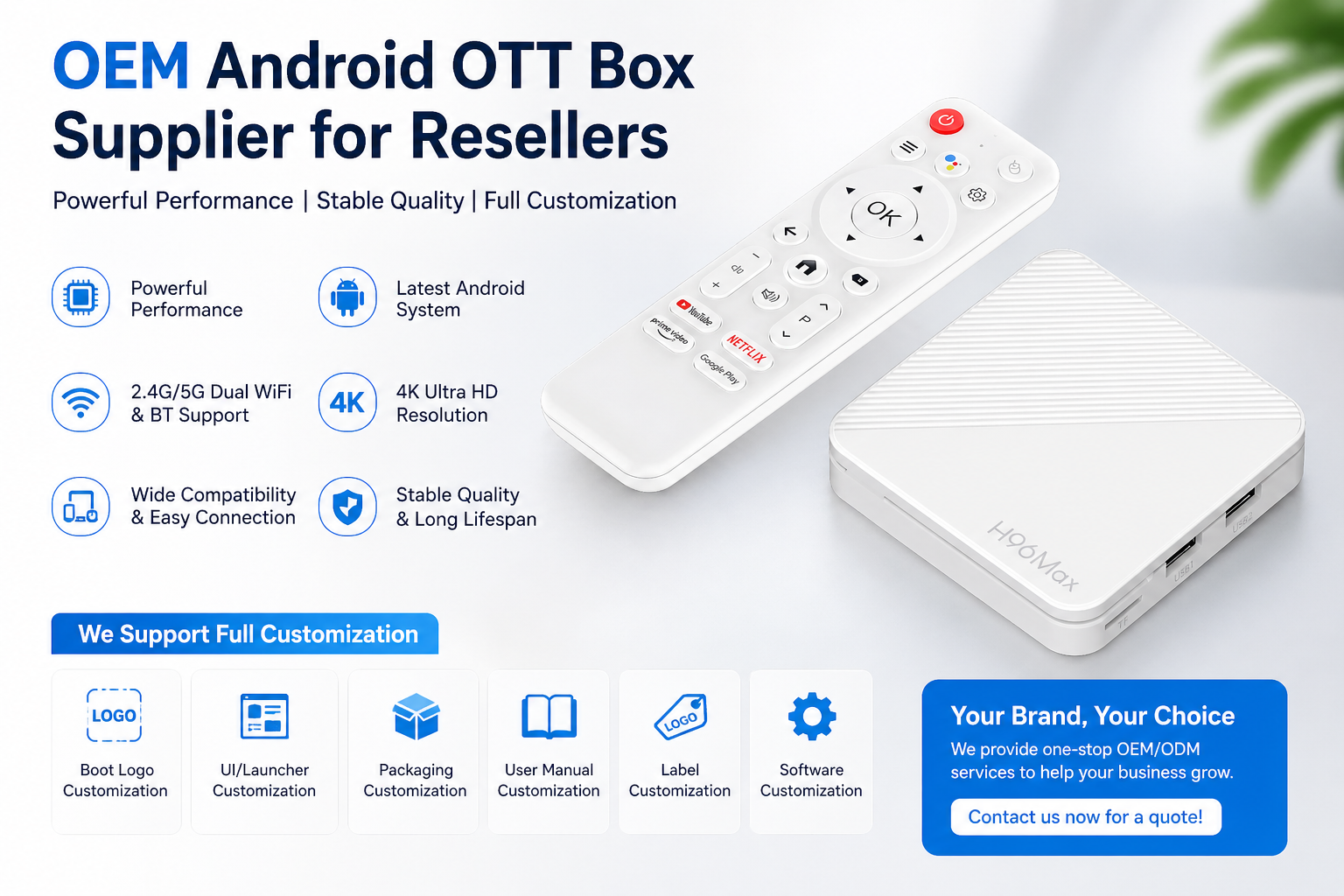
Understanding the Role of an Android OTT IPTV Box Supplier in Modern Streaming Ecosystems
An Android OTT IPTV Box supplier is a critical player in today’s rapidly expanding digital entertainment industry. As global OTT consumption continues to surge, driven by increasing broadband penetration and content demand, businesses entering the IPTV market must clearly understand what a supplier does and how to evaluate one effectively. According to Statista, OTT users worldwide are expected to surpass 4.5 billion, which significantly increases reliance on stable hardware ecosystems. Choosing the right Android OTT IPTV Box supplier is no longer a simple procurement task but a strategic decision that affects long-term scalability, user experience, and operational efficiency.
Many new entrants mistakenly assume that all suppliers offer the same value. In reality, the gap between a professional Android OTT IPTV box manufacturer and a basic IPTV box wholesale supplier can be substantial. Understanding these differences helps businesses avoid common pitfalls such as inconsistent product quality, delayed shipments, and lack of technical support.
What Does an Android OTT IPTV Box Supplier Do?
At a fundamental level, an Android OTT IPTV Box supplier provides hardware devices that enable end users to access streaming services. However, advanced suppliers go far beyond simple distribution. They often integrate firmware development, system optimization, and customization services into their offering. A professional Android TV box OEM supplier typically supports UI customization, middleware integration, and OTA upgrade capabilities.
In contrast, a standard IPTV box wholesale supplier may only focus on bulk distribution without offering deep technical customization. This distinction becomes crucial for businesses that want to differentiate their services in a competitive market.
Supplier vs Manufacturer vs Trading Company
Understanding the differences between these roles is essential. An Android OTT IPTV box manufacturer usually owns production facilities, R&D teams, and quality control systems. This allows for better consistency, faster iteration, and more reliable delivery timelines.
A trading company, on the other hand, acts as an intermediary, sourcing products from various factories. While this model may offer flexibility, it often lacks transparency and control over production quality. McKinsey research suggests that working directly with manufacturers can reduce procurement risks and improve cost efficiency by up to 20 percent.
Why Supplier Selection Impacts Business Success
Selecting the wrong Android OTT IPTV Box supplier can lead to significant operational issues. These include unstable firmware, high failure rates, and inconsistent performance. Deloitte reports indicate that supply chain inefficiencies can reduce operational productivity by nearly 30 percent, directly affecting profitability.
This is why many businesses actively search for guidance on how to choose a reliable Android IPTV box supplier. A structured evaluation process helps mitigate risks and ensures long-term stability.
Key Capabilities to Look For
A reliable custom IPTV box supplier should offer comprehensive capabilities, including strong hardware engineering, software customization, and quality assurance systems. Features such as AV1 decoding support, AI-based recommendations, and secure DRM integration are becoming increasingly important.
Additionally, a competitive OTT TV box supplier China should demonstrate strong R&D investment and the ability to adapt to emerging industry trends. IDC reports highlight that future IPTV devices will increasingly rely on advanced codecs and cloud-based processing.
Global Supply Chain Considerations
China remains the global hub for IPTV hardware production. Partnering with an experienced OTT TV box supplier China provides access to mature supply chains and cost advantages. However, global sourcing also introduces challenges such as logistics delays and regulatory compliance.
World Bank data shows that inefficient logistics can increase total costs by up to 15 percent. Therefore, supplier experience in international shipping and customs handling is a key factor.
Cost Structure and Hidden Risks
Many buyers focus solely on unit price, but the best Android OTT IPTV box supplier for wholesale business should be evaluated based on total cost of ownership. Hidden costs often include firmware customization, certification, and after-sales support.
Harvard Business Review emphasizes that lifecycle cost analysis provides a more accurate picture of supplier value. A low upfront price may result in higher long-term expenses due to maintenance and replacement costs.
Quality Control and Certifications
A professional Android OTT IPTV Box supplier must comply with international standards such as CE, FCC, and RoHS. These certifications ensure product safety and regulatory compliance. Gartner reports that compliance issues are among the leading causes of shipment delays in electronics trade.
In addition to certifications, suppliers should implement rigorous quality control processes, including batch testing and pre-shipment inspections.
Future Trends in IPTV Hardware
The IPTV industry is evolving rapidly, with trends such as 8K streaming, edge computing, and AI integration shaping future demand. An innovative Android OTT IPTV box manufacturer will continuously invest in research and development to stay competitive.
These advancements highlight the importance of choosing a supplier that can support long-term technological evolution.
Conclusion
Understanding the role of an Android OTT IPTV Box supplier is essential for building a successful IPTV business. By focusing on supplier capabilities, manufacturing strength, and long-term reliability, businesses can make informed decisions that support sustainable growth. The right supplier acts not only as a vendor but as a strategic partner.
H96 Max, as a professional source factory, offers strong OEM/ODM capabilities, stable production capacity, and strict quality control systems to support global IPTV businesses. Partner with H96 Max today to build a reliable and competitive IPTV solution.
READ MORE
Top Questions to Ask Before Choosing an Android OTT IPTV Box Supplier
Hidden Costs When Working with IPTV Box Suppliers (Avoid These Traps)
How to Reduce IPTV Box Procurement Cost Without Sacrificing Quality?
Certifications You Must Check Before Buying IPTV Boxes (CE, FCC, RoHS, Google)
IPTV Box Manufacturer vs Supplier vs Trading Company: What’s the Difference?
Quick Links

.png "Watch H96 Max Android TV Box reviews on our YouTube channel")

.png "Explore H96 Max product photos on Instagram")