.png "H96 Max Android TV Box video reviews and tutorials on YouTube")
.png "H96 Max Android TV Box photos and lifestyle shots on Instagram")



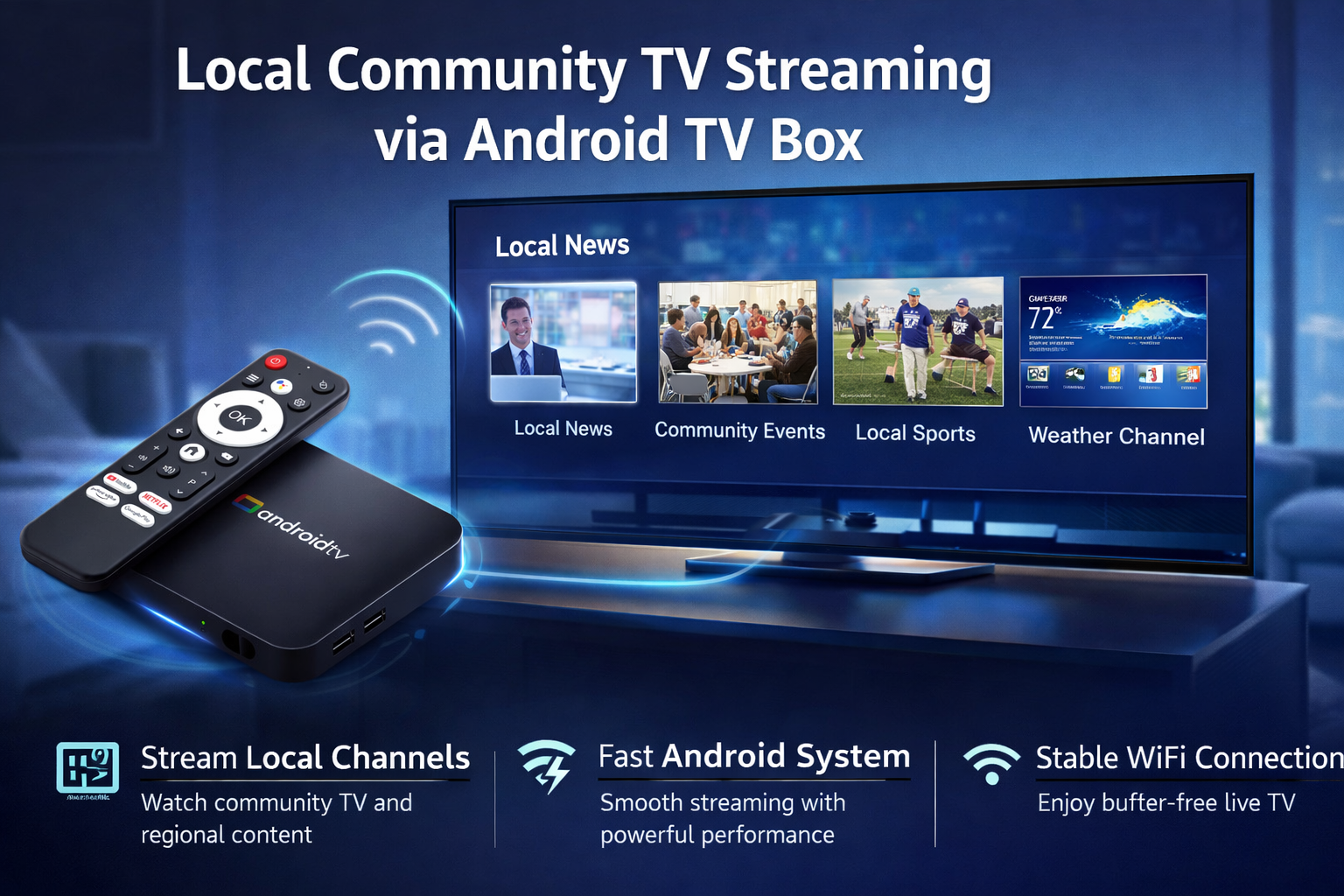
Designing a Scalable Community Media Infrastructure with Android Terminals
Deploying an Android TV Box for Community TV Network infrastructure has emerged as one of the most efficient ways for residential communities to distribute information, entertainment content, and public service announcements through a unified digital platform. Modern residential areas, apartment complexes, and gated communities increasingly require centralized communication systems capable of reaching thousands of households simultaneously. Traditional cable broadcasting systems were not originally designed for flexible information management or interactive services. By contrast, Android-based media terminals provide an adaptable platform that allows operators to manage community television services, digital notice boards, emergency broadcasts, and multimedia info
rmation channels through a single technology framework.
According to research published by Deloitte on digital media infrastructure, more than 65 percent of new residential development projects globally are exploring digital information platforms to improve resident communication and service efficiency. Within these environments, an Android TV Box for Community TV Network architecture allows property managers and community operators to broadcast centralized information such as maintenance notifications, event announcements, local government updates, and emergency alerts directly to household television screens. This approach transforms the television from a passive entertainment device into an active community communication interface.
The Growing Demand for Unified Community Information Channels
Modern communities face an increasing challenge in distributing information efficiently to residents. Traditional communication channels such as printed notices, mobile messaging groups, or bulletin boards often fail to reach every household in a timely manner. A centralized media system enables administrators to publish information instantly across an entire residential network.
Within such systems, the Android TV Box for Community TV Network functions as the endpoint terminal that connects each television to the central content management platform. Administrators can schedule messages, distribute video announcements, and update information in real time without physically accessing each building or apartment. This significantly improves communication efficiency while reducing operational workload.
Industry observers from the International Telecommunication Union have emphasized that community-level digital broadcasting platforms are becoming an important component of smart city infrastructure. When deployed correctly, an Android TV Box for Residential TV System enables television networks to integrate with public information services, municipal announcements, and local media resources.
Unified Content Distribution Across the Entire Community
One of the core advantages of deploying an Android-based television infrastructure is the ability to distribute content through a unified publishing platform. Community administrators can upload multimedia information such as video bulletins, text announcements, weather information, or service reminders to a central server. The content is then delivered to every connected device across the network.
This architecture forms the foundation of a scalable Android TV Box IPTV Solution that allows operators to manage both entertainment and informational programming. Residents may access live television channels, community news, educational content, and local service announcements through a single interface.
The ability to schedule and automate content distribution is particularly valuable for large residential complexes. A properly implemented Android TV Box for Community TV Network environment ensures that announcements, advertisements, and informational content appear simultaneously across hundreds or thousands of households.
Remote Device Management and Operational Efficiency
Large-scale device deployments require efficient management tools. When hundreds of media terminals are installed throughout a residential development, manually maintaining each device becomes impractical. Android-based television terminals support centralized device management platforms that allow operators to monitor and control all devices remotely.
Using remote management systems, administrators can update software, configure system settings, troubleshoot technical issues, and deploy application updates without visiting individual apartments. In an advanced Android TV Box for Community IPTV System deployment, over‑the‑air update technology ensures that every terminal receives firmware upgrades and security patches simultaneously.
Research from Gartner highlights that remote device management reduces operational maintenance costs by more than 40 percent in large digital device networks. This operational advantage is one of the reasons why the Android TV Box for Community TV Network model has gained widespread adoption among property developers and media operators.
Low-Cost Large‑Scale Deployment for Residential Networks
Cost efficiency plays a critical role when deploying digital infrastructure across entire communities. Traditional broadcasting equipment often requires expensive proprietary hardware and specialized installation processes. Android media devices provide a more accessible and scalable alternative.
Because Android operates on standardized hardware platforms, the cost per device is significantly lower than traditional broadcast receivers. This makes it feasible to deploy an Android TV Box for Community TV Network system across large residential developments without requiring excessive capital investment.
For apartment complexes and housing projects, an Android TV Box for Apartment IPTV configuration can support centralized television services while keeping deployment costs manageable. Property operators benefit from a scalable architecture that can expand as the community grows.
Multimedia Information Broadcasting Capabilities
Beyond traditional television channels, community media platforms increasingly rely on multimedia information displays. Android-based terminals support video playback, interactive applications, image slideshows, and digital signage content. This versatility allows the television network to serve as both an entertainment platform and an information broadcasting channel.
A comprehensive Android TV Box Network Broadcasting Solution enables operators to broadcast emergency alerts, safety instructions, community service information, and educational programming directly to household televisions. During emergency situations such as severe weather events or infrastructure maintenance, centralized broadcasting ensures that all residents receive critical information quickly.
In addition, multimedia broadcasting capabilities allow communities to promote local services, events, and cultural activities. A strategically designed Android TV Box for Community TV Network platform therefore becomes a digital communication hub that strengthens the connection between residents and community management.
Building the Technical Architecture
For organizations researching How to build a community TV network using Android TV Box technology, the architecture typically consists of several key components. A central content server manages programming, announcements, and multimedia files. Middleware platforms handle user authentication, device communication, and application management. Broadband infrastructure distributes video streams and data across the residential network. Endpoint devices installed in each household connect televisions to the platform.
In many implementations, an Android TV Box IPTV solution for residential communities integrates additional capabilities such as digital signage modules, video-on-demand libraries, and cloud-based content management systems. This modular design enables communities to expand services gradually while maintaining a stable infrastructure foundation.
Because Android supports open software development frameworks, developers can integrate customized applications that address local operational needs. This flexibility makes the Android TV Box for Community TV Network approach particularly suitable for community communication ecosystems where requirements evolve over time.
Future Outlook for Community Television Platforms
As residential communities continue adopting smart infrastructure technologies, digital communication platforms will play an increasingly important role in daily operations. Analysts from McKinsey suggest that integrated digital service platforms are becoming central to modern residential developments, enabling efficient information distribution, improved service transparency, and stronger resident engagement.
Within this evolving landscape, the Android TV Box for Community TV Network model provides a practical foundation for scalable community broadcasting. By combining unified content management, remote device control, multimedia broadcasting, and cost‑effective deployment, Android-based television terminals enable communities to build sustainable digital communication networks.
Organizations exploring new community television infrastructures often collaborate with experienced device manufacturers capable of supporting customized hardware platforms and long‑term system stability. For operators evaluating future deployments, working with specialized manufacturing partners can accelerate development timelines and ensure reliable device ecosystems. Partner with H96 Max today.
READ MORE
How Content Platforms Can Launch Subscription Services Through Android TV Boxes?
How to Build a Digital Signage System Using an Android TV Box?
How Can Schools Use Android TV Boxes for Campus Television Networks?
How Sports Bars Deliver Streaming Entertainment with Android TV Boxes?
How Mall Advertising Screen Systems Achieve Centralized Management with Android TV Boxes?
How Can Airports Build an Information Display System Using Android TV Boxes?
How Smart Home Platforms Use Android TV Boxes to Build a Home Entertainment Center?
Quick Links

.png "Watch H96 Max Android TV Box reviews on our YouTube channel")

.png "Explore H96 Max product photos on Instagram")