.png "H96 Max Android TV Box video reviews and tutorials on YouTube")
.png "H96 Max Android TV Box photos and lifestyle shots on Instagram")



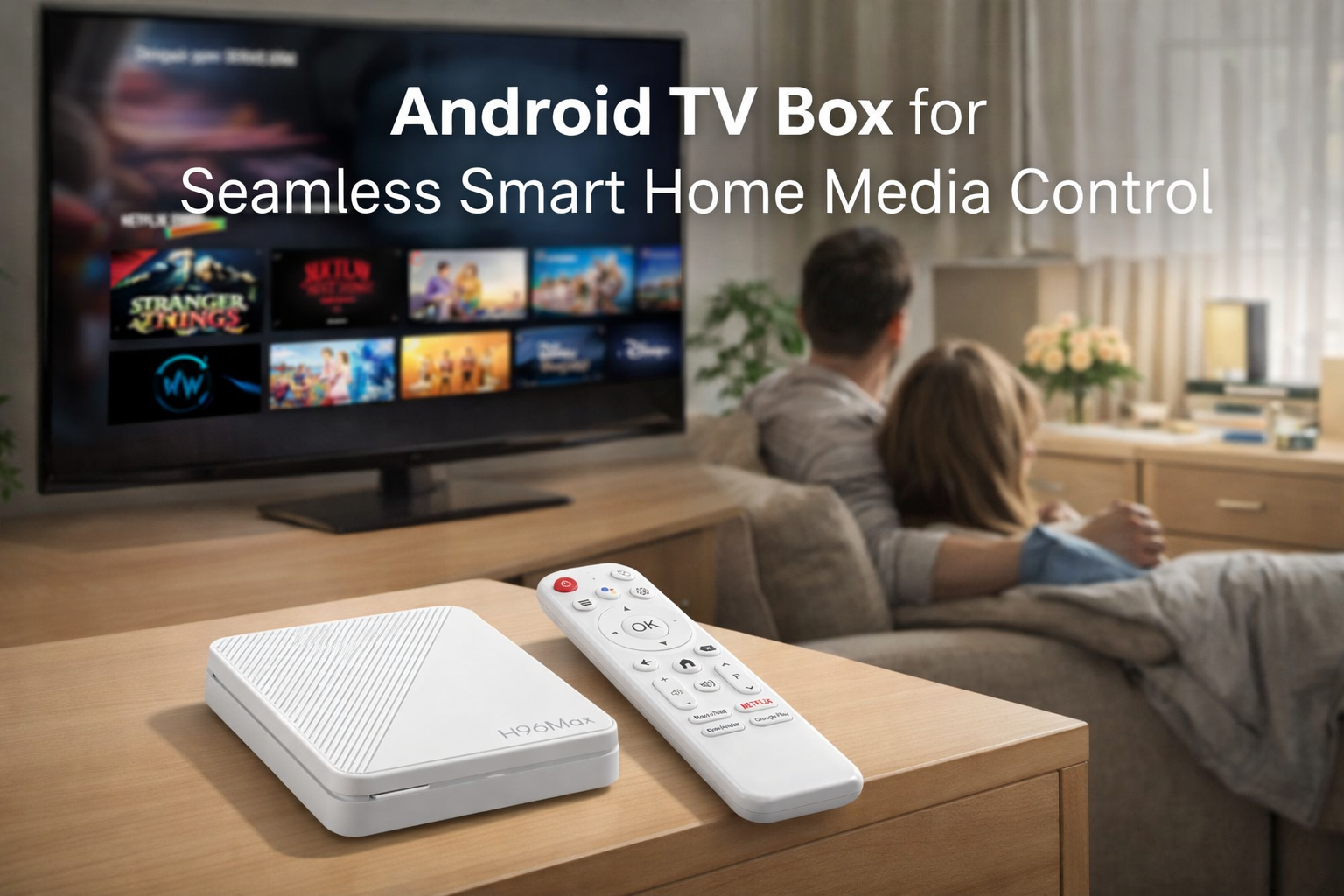
How Smart Home Platforms Build a Unified Living Room Experience
The rapid expansion of connected homes has forced platform providers to rethink how users interact with digital services in the living room. One technology increasingly positioned at the center of this transformation is the Android TV Box for Smart Home Entertainment. Rather than functioning only as a streaming accessory, the Android TV box is evolving into a unified gateway where media consumption, home automation dashboards, voice assistants, and shared family experiences converge. For smart home platform operators, this shift represents an opportunity to consolidate fragmented services into a single interface that is accessible through the largest screen in the home.
Industry analysts consistently highlight the living room as the most valuable digital space in the household. According to research from Statista and Deloitte, households worldwide are increasing their use of streaming devices and smart home controllers simultaneously. As these ecosystems grow more complex, platform providers face a challenge: simplifying control without sacrificing functionality. Integrating an Android TV Box for Smart Home Entertainment provides a practical solution because it combines computing power, app ecosystems, and connectivity within a familiar entertainment environment.
The Living Room as the Command Center of the Smart Home
For decades, the television has been the focal point of the living room. Smart home platforms are now extending this role by transforming TVs into command centers for digital services. By deploying an Android TV Box for Smart Home Entertainment, platform developers can merge home automation dashboards with entertainment experiences. Lighting control, security monitoring, climate adjustments, and media streaming can appear within the same interface.
This convergence addresses a key pain point: fragmentation across apps and devices. A Smart Home Entertainment System traditionally requires multiple applications or hardware hubs. However, when integrated with an Android TV Box Smart Home Integration architecture, the TV interface becomes a unified layer where automation and entertainment coexist. Users can check a door camera, dim lights, and launch a movie without switching devices.
Technology analysts at Parks Associates note that consumers increasingly prefer centralized smart home control through visual dashboards rather than mobile-only management. Large displays offer contextual awareness and intuitive navigation, which makes the television interface ideal for family environments where multiple users interact with smart home features.
Streaming Content Integration Creates the Foundation
Streaming remains the primary driver of living room technology adoption. The Android TV ecosystem allows smart home platforms to integrate major streaming applications directly into the Smart TV Box Entertainment Platform environment. Services such as Netflix, YouTube, and regional OTT providers become accessible alongside smart home services.
From a platform perspective, this integration significantly increases user engagement. Media consumption occurs daily, which means the interface of the Android TV Box for Smart Home Entertainment becomes a habitual touchpoint for the household. By embedding automation features within the same interface, smart home providers increase visibility and interaction frequency with their services.
Media research firm Nielsen reports that streaming accounts for over one third of television viewing time in many markets. When streaming and home control exist within a single Smart TV Box Entertainment Platform, the platform benefits from continuous exposure during daily entertainment routines.
Smart Home Dashboards on the Largest Screen
One of the most compelling reasons platform providers deploy an Android TV Box for Home Automation is the ability to visualize complex smart home data on a large display. Security camera feeds, energy consumption metrics, and device status dashboards become easier to interpret when displayed on a television rather than a small mobile screen.
An Android Set Top Box for Smart Home enables dynamic dashboards that aggregate information from multiple IoT systems. For example, a user might view the front door camera while adjusting lighting scenes or checking air quality sensors. The visual context improves decision-making and creates a more immersive control environment.
Industry publications such as Smart Home World emphasize that visual interfaces significantly improve adoption of home automation systems. Users are more likely to engage with features that are clearly visible and accessible through a shared household screen.
Voice Control Enhances Accessibility
Voice assistants have become a core element of modern smart homes. Integrating voice functionality into an Android TV Box for Smart Home Entertainment enables hands‑free control of both entertainment and automation features. Users can request a movie, adjust the thermostat, or check security cameras using a single voice interface.
Research from Juniper Networks suggests that voice assistant usage in connected homes continues to grow as consumers seek more natural interaction with technology. When voice services are integrated into the Smart Home Entertainment System through the television interface, the experience becomes accessible for all family members regardless of technical familiarity.
Voice integration also reduces friction for smart home adoption. Instead of navigating complex mobile apps, users simply speak commands that control both streaming media and automation devices.
Shared Family Interaction Drives Engagement
Unlike smartphones, televisions are inherently social devices. Families gather around the screen for entertainment, making it a natural environment for shared digital experiences. When a smart home platform uses an Android TV Box for Smart Home Entertainment as its central interface, automation features become visible to all household members.
Interactive applications can allow families to view security alerts together, manage routines, or participate in entertainment‑based smart home experiences. For example, lighting scenes might automatically adapt during movie playback, while smart speakers synchronize audio across rooms.
These shared experiences reinforce the role of the Smart Home Entertainment System as a household hub rather than a personal gadget. Analysts frequently note that technologies integrated into shared spaces have significantly higher adoption rates compared to those limited to personal devices.
Why Android Provides a Flexible Platform
The flexibility of the Android ecosystem is another major factor driving adoption. Developers can build customized applications and integrate IoT protocols within the same platform environment. This makes it easier to design an android tv box solution for smart home entertainment platform deployments that combine media services with device control.
Android also supports a large developer community, which accelerates innovation. Smart home platforms can create custom launchers, integrate automation dashboards, and optimize user interfaces for television screens. This adaptability allows the Android TV Box for Smart Home Entertainment to function as both a media device and an IoT gateway.
For platform architects exploring how to build a smart home entertainment center with android tv box technology, Android's open architecture enables integration with cloud services, AI assistants, and third‑party automation ecosystems.
Data and Market Momentum
Market indicators suggest that convergence between entertainment platforms and smart home ecosystems will continue accelerating. IDC and Strategy Analytics both report rising shipments of connected TV devices alongside rapid growth in smart home installations.
When these two trends intersect, the Android TV Box for Smart Home Entertainment becomes a strategic bridge connecting media platforms and IoT infrastructure. Rather than requiring separate hubs, the television interface becomes the single digital gateway of the home.
As smart homes evolve, the expectation of seamless integration will only increase. Users no longer want isolated devices; they expect a unified ecosystem that connects entertainment, automation, and communication.
Looking Ahead
For smart home platform developers, the challenge moving forward is designing cohesive experiences that combine convenience, entertainment, and automation. The Android TV Box for Smart Home Entertainment offers a powerful foundation because it merges computing capability with the central screen of the household.
By integrating streaming services, smart home dashboards, voice assistants, and interactive applications, platform providers can transform the living room into a digital command center. This convergence not only simplifies user interaction but also increases engagement with the smart home ecosystem.
As the connected home market continues expanding, platforms that successfully unify entertainment and automation will likely define the next generation of living room technology. Organizations exploring long‑term smart home strategies often look toward scalable hardware ecosystems that support this integration. For companies seeking manufacturing collaboration and platform development opportunities, partnering with experienced technology providers becomes essential. Partner with H96 Max today to explore how Android TV solutions can support the evolution of next‑generation smart home entertainment platforms.
READ MORE
How Content Platforms Can Launch Subscription Services Through Android TV Boxes?
How to Build a Digital Signage System Using an Android TV Box?
How Can Schools Use Android TV Boxes for Campus Television Networks?
How Sports Bars Deliver Streaming Entertainment with Android TV Boxes?
How Mall Advertising Screen Systems Achieve Centralized Management with Android TV Boxes?
How Can Airports Build an Information Display System Using Android TV Boxes?
How to Build a Community TV Network Using an Android TV Box?
Quick Links

.png "Watch H96 Max Android TV Box reviews on our YouTube channel")

.png "Explore H96 Max product photos on Instagram")